
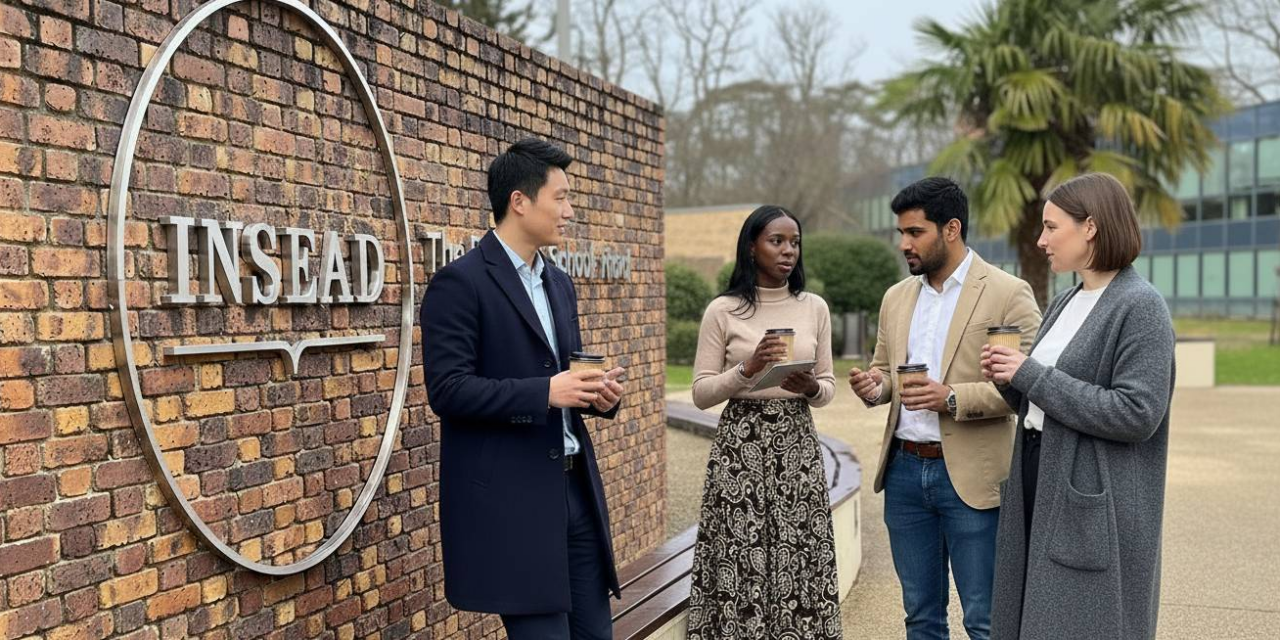
The tension now playing out among the INSEAD alumni over their former business school’s response to the war in Gaza is growing.
Following the October 7, 2023 Hamas attack on Israel, INSEAD Dean Francisco Veloso sent an email to his alumni with a clear message that the school, which he presided over, condemned the assault. In forceful terms, Veloso wrote that the school was sickened by the violence. The letter said nothing about the mounting toll of Israel’s bombing campaign in Gaza. Within days, the alumni and students pushed back publicly, and Veloso issued a follow-up acknowledging that his prior note had not adequately conveyed compassion for all civilians affected, Palestinian and Israeli alike.
The episode has continued to shape how a segment of INSEAD’s alumni network views the school’s leadership. The Times Higher Education later reported that Veloso himself described the backlash as a formative moment in his early deanship, and cited comments from other university leaders questioning whether institutions which spoke out forcefully on Ukraine were now invoking “institutional neutrality” on Gaza in a way they would not have applied to, say, Nazi Germany.
That gap concerning vocal solidarity with Ukraine in 2022, a more hedged posture on Gaza from late 2023 onward, is now central to a formal campaign led by the INSEAD Alumni Justice for Palestine Committee.
According to an exclusive account published by Rolling Stone MENA with additional reporting from Omar Zahzah , the committee’s petition has collected more than 1,000 signatures behind four demands: divestment from companies linked to violations of international law in Gaza, an end to research and exchange partnerships with Israeli academic institutions, official recognition of a Justice for Palestine student club, and a bar on admitting active members of military forces accused of war crimes or terrorism by recognized international bodies which is a provision organizers say would apply to current members of the Israeli military.
Rolling Stone MENA reported that committee co-founders Ezzeddin Zahzah and Salah Belkhayat describe the school’s engagement with the petition as minimal, alleging that Belkhayat faced a legal threat tied to European privacy law after trying to circulate the petition draft, and that a June 2026 board email described the matter as settled and consistent with existing school policy.
INSEAD has not issued a public statement responding to the committee’s specific demands. The dispute places INSEAD alongside a wider group of business schools and universities, including Harvard Business School, whose dean also weighed in after October 7, that have faced competing pressure from students and alumni over how, or whether, to take institutional positions on the war.
For now, the standoff described by organizers remains unresolved: a petition with four demands, a board that says the file is closed, and a dean whose first attempt at a public position was itself revised within days of being sent.
