
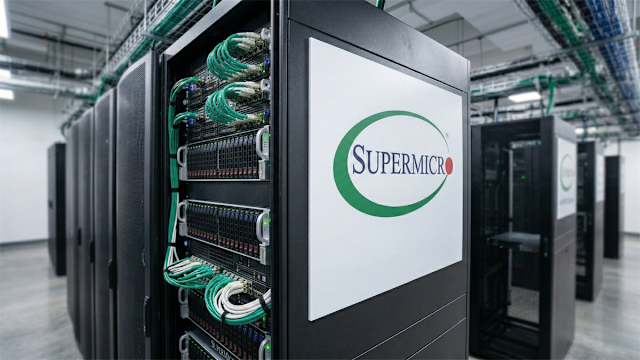
Super Micro Computer (NASDAQ: SMCI) disclosed in a preliminary fiscal fourth-quarter update that new orders during the quarter ended June 30 exceeded $60 billion, pushing its backlog to a record level.
Management guided revenue to come in near the low end of its $11 billion to $12.5 billion range for the quarter, a figure that initially underwhelmed some observers.
However, the company estimated gross margins of 15% to 17%, roughly double the 8.2% to 8.4% it had previously told investors to expect, representing a dramatic shift in the company’s earnings profile.
For a company long characterized as a lower-margin server hardware assembler, that margin expansion signals a meaningfully different business than the one Wall Street had been pricing in.
Despite those figures, Supermicro shares trade around $30, less than half their 52-week high, and at under 16 times earnings even as revenue climbed 56% over the trailing 12 months to $33.7 billion.
In June, Supermicro announced it had received substantial AI server orders and laid out a plan to raise $7 billion through concurrent equity and equity-linked financing to fund the components needed to fulfill them.
The company itself flagged a key risk in its filing, cautioning that some of the $60 billion in orders “may not constitute firm commitments and may be subject to cancellation or delays.”
That language captures the central tension: orders are not backlog, backlog is not revenue, and revenue is not profit, with potential for value to leak at every stage of conversion.
Fulfilling AI server orders also requires purchasing expensive components upfront, including graphics processing units, memory, and related hardware, long before customer payments arrive.
That dynamic explains why the June order announcement was paired directly with the proposed $7 billion financing raise, with dilution effectively serving as the price of growth for the company.
Ongoing concerns around order quality, stock dilution, and broader investigative scrutiny continue to weigh on investor sentiment, keeping the share price well below levels that the order volume alone might otherwise justify.
The disconnect between Supermicro’s surging demand figures and its subdued valuation reflects a market that is choosing to wait for firm revenue recognition before re-rating the stock higher.
