
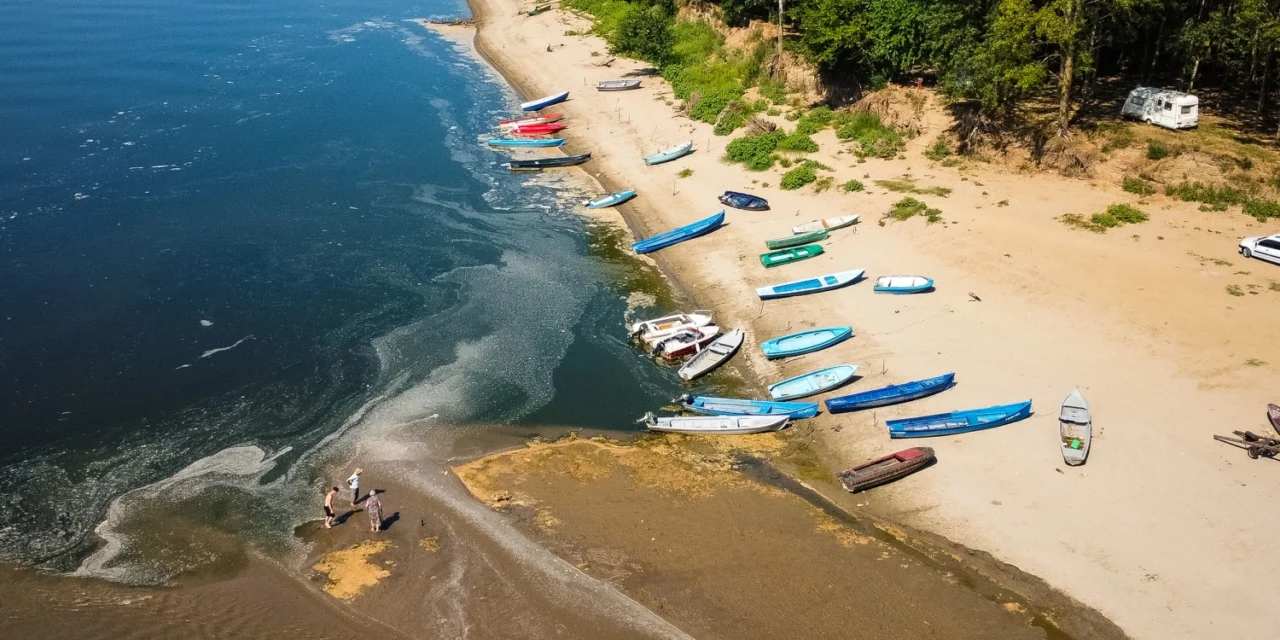
Central and eastern Europe is confronting serious energy shortages as record low water levels on the Danube River disrupt nuclear and hydroelectric power generation across multiple countries.
Romania’s military took drastic action by detonating a rocky outcrop exposed by low water levels on a branch of the Danube, aiming to restore cooling water flow to the Cernavoda nuclear plant.
The Cernavoda facility, which typically supplies around one-fifth of Romania’s total electricity, draws all of its cooling water directly from the Danube River.
Soldiers detonated a rock approximately 50 kilometers upstream, with the resulting debris to be sunk at a strategic location to help raise water levels in the affected stretch.
Romanian Defense Minister Radu Miruta declared the demolition operation a success, adding that the military had been waiting decades for the opportunity to access and clear those particular rocks.
Miruta also warned that if the partial water diversion effort fails, the Cernavoda plant would likely face a total shutdown by Thursday.
Caretaker Prime Minister Ilie Bolojan confirmed that carmakers Dacia and Ford had agreed to suspend production in Romania until August 19, following a crisis meeting with representatives of energy-intensive industries.
In Hungary, Prime Minister Peter Magyar announced Monday that an unprecedented total shutdown of the Paks nuclear power plant had been narrowly avoided, after such a closure was originally announced the previous week.
The four-reactor Paks facility, which typically generates almost half of Hungary’s electricity production and around a third of its total consumption, was running at little more than 10% capacity on Monday.
Magyar credited citizens with helping stabilize the grid, stating: “We have entered the critical period. The network is stable, consumption is currently well below planned levels, thanks to self-restraint. The last Paks turbine is operational.”
Magyar also noted that “water management forecasts for the coming days have become slightly more optimistic,” offering a cautious but welcome signal for grid operators.
Hungary halted electric-powered freight trains on Monday to reduce the load on the national grid, while industrial users were asked to curb consumption and households encouraged to make voluntary energy savings.
Serbia’s vast Iron Gate hydroelectric plant on the Danube was operating at only around one-fifth of its normal capacity Monday, with Prime Minister Djuro Macut convening an emergency meeting to address the growing energy crisis.
Macut appealed to Serbian residents to “minimize the use of big consumers of electricity in their homes, such as air conditioners,” having described the situation as “serious and demanding” the previous evening.
The crisis is also being felt in Germany, where new Transport Minister Steffen Bilger highlighted historically low levels on both the Danube and the Rhine, Europe’s busiest inland freight waterway, as an immediate challenge for his tenure.
“It is indeed a very tense situation with the low waters,” Bilger told Reuters TV on Monday, noting he would chair a crisis meeting on Thursday and adding: “This is really a very early point in the calendar year for problems of the kind we’re currently experiencing.”
European rivers typically reach their lowest levels later in the summer, raising the prospect that conditions could deteriorate further before any meaningful relief arrives.
