
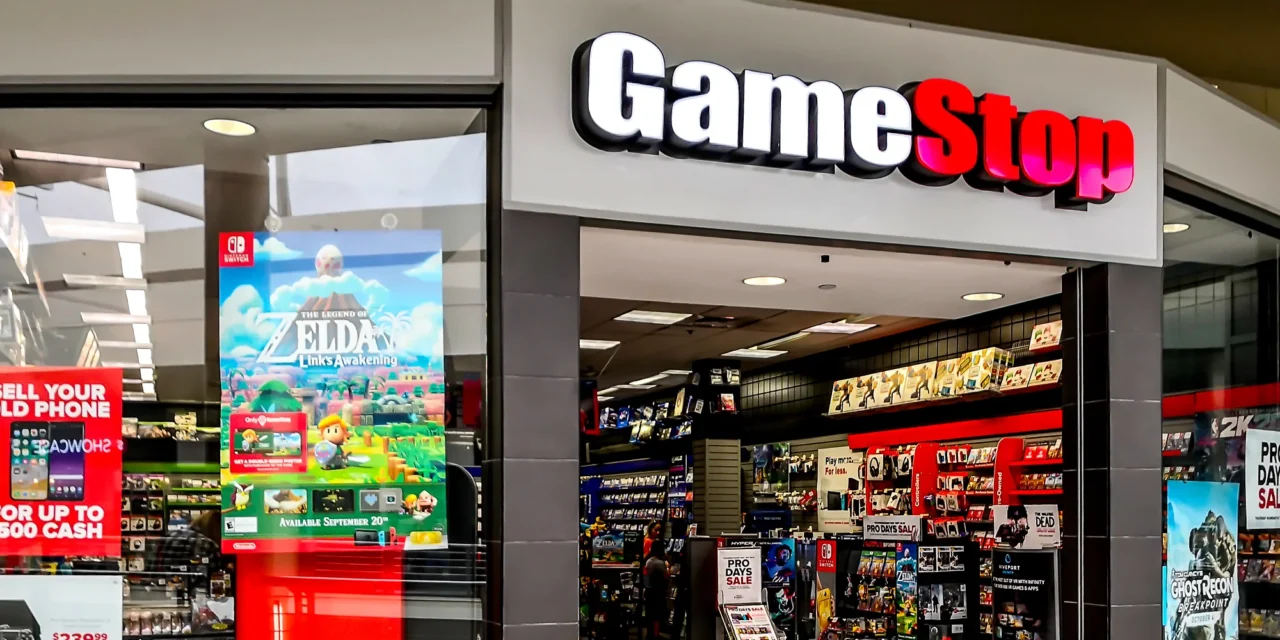
GameStop (NYSE: GME) has returned to the spotlight after announcing a nationwide partnership with Uber Technologies that places its games, consoles, and collectibles on the Uber Eats on-demand retail platform.
The deal represents one of the more headline-grabbing moves from the retailer in recent months, alongside its reported pursuit of eBay as it attempts to redefine its business model.
Despite the burst of corporate activity, GameStop’s share price performance tells a more complicated story, with a 30-day return of just 2.14% and a 90-day decline of 10.71%.
The 1-year total shareholder return sits at negative 5.22%, suggesting that investor enthusiasm for the company’s strategic pivots has yet to translate into sustained price appreciation.
GameStop last closed at $21.92, a figure that sits in sharp contrast to the most widely followed bullish narrative on the stock, which sets fair value at $220.
That $220 target implies the stock is trading at roughly a 69% discount to its intrinsic value estimate, a gap that investors are actively trying to interpret in light of recent developments.
The bull case leans heavily on margin expansion, a cash-rich balance sheet, and a profit multiple typically associated with fast-growing technology platforms rather than legacy retail operations.
Proponents of the optimistic view argue that “GameStop’s transformation from a legacy retailer to a crypto-invested, cash-rich entity underscores its long-term growth potential. Investors might be early, but they are not wrong.”
However, the bullish scenario depends on a series of assumptions holding together simultaneously, including stable demand for collectibles and disciplined management of any large acquisition or Bitcoin exposure.
If demand for collectibles weakens, or if balance sheet risks tied to cryptocurrency holdings materialize unexpectedly, the $220 fair value narrative could be stress-tested quickly.
The Uber Eats partnership does open a new retail distribution channel that could expand GameStop’s reach to consumers who would not typically visit a physical store location.
Still, the mixed momentum reflected in the share price data suggests the market has not yet been convinced that these strategic moves justify a dramatic rerating of the stock.
For investors weighing the bullish and cautious angles, the central question remains whether GameStop’s cash-rich positioning and platform ambitions can translate into the kind of earnings growth needed to support a premium valuation multiple.
Until that growth materializes in reported financials, the wide gap between the current share price and the most optimistic fair value estimates is likely to remain a source of debate.
