
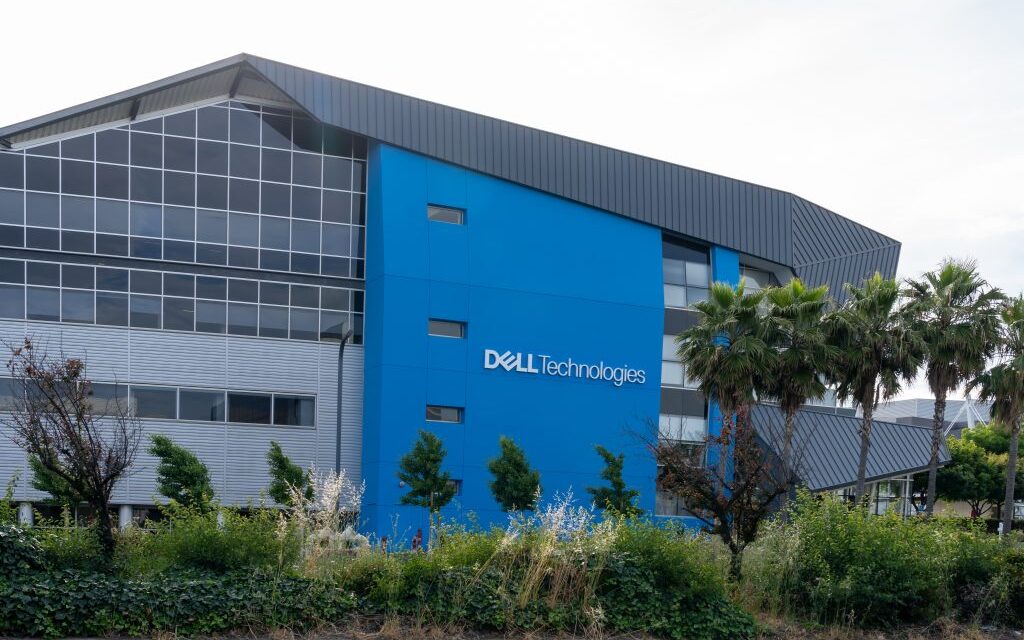
Dell Technologies (NYSE: DELL), Sandisk, and Micron Technology (NASDAQ: MU) led a sharp AI-sector sell-off during Wednesday’s trading session, even as megacap stocks cushioned broader market losses.
Apple and Alphabet’s Google (NASDAQ: GOOG) provided cover for the wider market, with Google shares climbing 3.60% while the Dow Jones Industrial Index edged up 0.29%.
Micron shares fell 8.02% on the session, representing one of the steepest single-day declines among major semiconductor names in recent weeks.
Dell dropped 9.80%, signaling growing investor concern over AI infrastructure valuations that have driven the stock significantly higher over the past year.
Sandisk joined the broader memory and storage sector retreat, adding to a pattern of volatility that has increasingly characterized AI-adjacent hardware companies.
The sell-off underscores a tension building in markets between enthusiasm for artificial intelligence investment and rising scrutiny over whether near-term earnings can justify elevated valuations.
SpaceX added to the day’s notable headlines after its shares undercut their IPO price, a development likely to draw attention from investors tracking the private space industry.
J.B. Hunt Transport Services (NASDAQ: JBHT) bucked the broader negative trend in technology, jumping in late trading though the stock still finished the session down 1.63%.
Taiwan Semiconductor Manufacturing Company and GE Aerospace are both scheduled to report earnings, with investors watching closely for signals on AI chip demand and industrial sector health.
Taiwan Semi’s results will be particularly scrutinized given the company’s central role supplying advanced chips to Apple, Nvidia, and other major technology customers worldwide.
GE Aerospace’s report will offer insight into the durability of commercial aviation demand, which has remained a bright spot in an otherwise uneven industrial recovery.
The divergence between megacap performance and mid-tier technology names reflects a market dynamic in which investor capital continues to rotate toward perceived safety in large, cash-generative businesses.
Wednesday’s session served as a reminder that the AI trade remains uneven, with hardware and memory suppliers absorbing sell pressure while software and platform giants continue to attract buying interest.
