
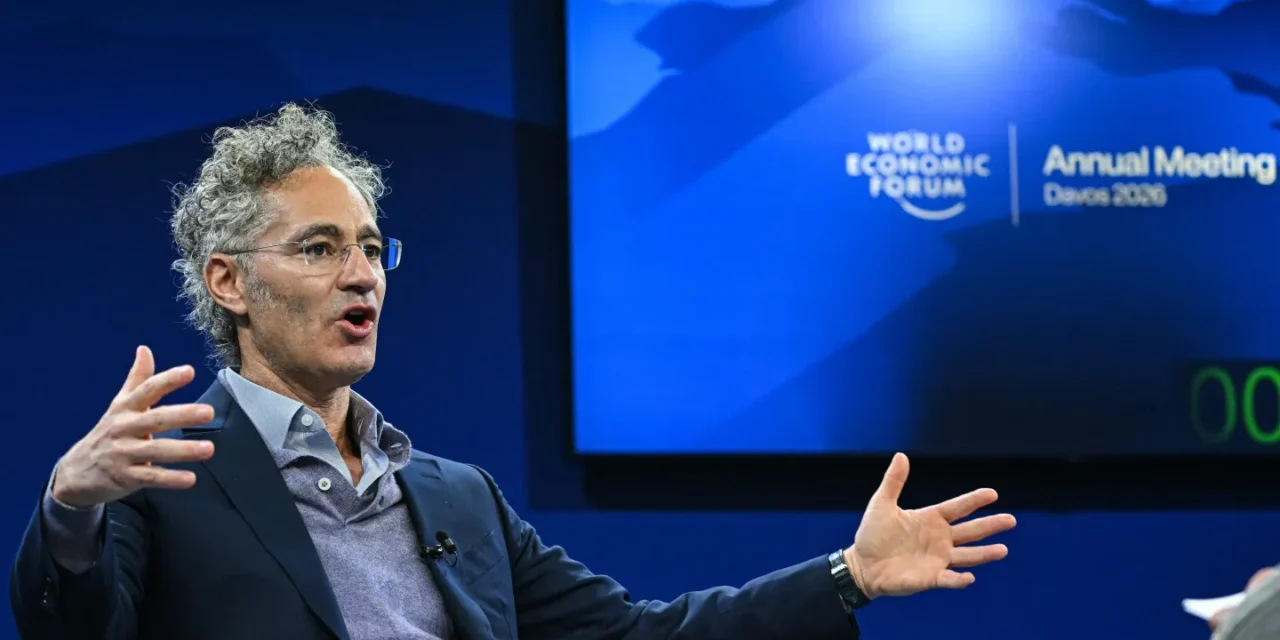
Palantir Technologies (NASDAQ: PLTR) Chief Executive Alex Karp has cautioned that artificial intelligence may dramatically improve living standards while simultaneously concentrating financial gains among a narrow group of beneficiaries.
Karp stated that the growing imbalance in wealth creation linked to AI represents a major economic concern for the broader population.
He suggested that individuals and companies at the forefront of developing AI could see their fortunes expand at a pace far outstripping gains felt by everyone else.
Karp’s warning reflects a broader anxiety taking hold among policymakers, businesses, and consumers as AI capabilities continue to advance rapidly across industries.
While acknowledging that AI could deliver meaningful economic benefits, Karp challenged narratives suggesting that the technology will produce equal gains for all participants in the economy.
The Palantir CEO also addressed public concerns that extend well beyond the widely discussed issue of potential job displacement driven by automation.
Karp noted that warnings from some leaders in the AI industry about workforce disruption may have contributed to widespread uncertainty surrounding the technology’s long-term impact on workers.
His remarks arrive at a moment when the debate over artificial intelligence is intensifying among governments, corporations, and the general public in nearly every major economy.
Palantir shares have rallied in recent months, benefiting from strong investor enthusiasm surrounding AI-driven software and data analytics platforms serving both commercial and government clients.
The company continues to expand its presence across those markets, positioning itself as a central player in an industry Karp himself describes as capable of generating “unimaginable wealth” for its biggest winners.
The tension Karp highlights, between AI’s broad promise and its potentially uneven distribution of rewards, is increasingly shaping regulatory conversations and corporate strategy decisions worldwide.
His comments add a notable voice to the growing chorus of technology leaders grappling publicly with the social and economic consequences of deploying increasingly powerful AI systems at scale.
