
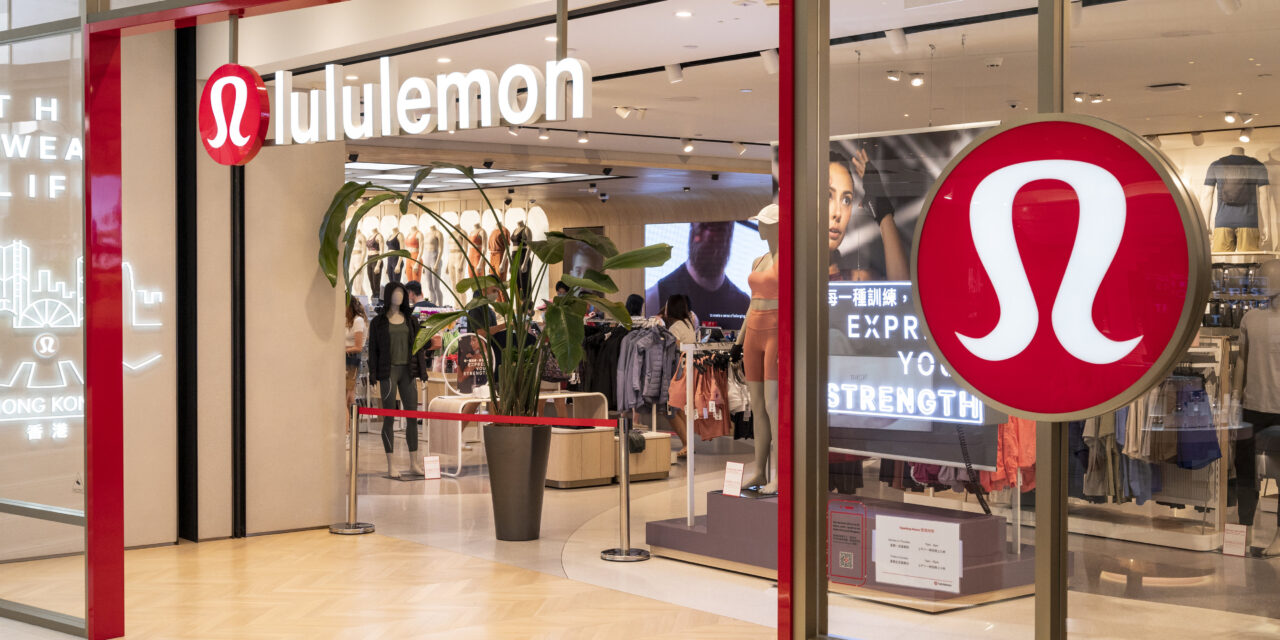
Lululemon (NASDAQ: LULU) closed at $119.26 in the latest trading session, recording a gain of 2.36% that comfortably outpaced the broader market’s advance.
The S&P 500 rose just 0.42% on the same day, while the Dow Jones Industrial Average climbed 0.29% and the tech-heavy Nasdaq also gained 0.29%.
Despite the single-session outperformance, Lululemon’s shares had shed 4.37% in the period leading up to that trading day, lagging both the Consumer Discretionary sector’s 0.02% gain and the S&P 500’s 2.2% rise.
Investors are closely watching the company’s upcoming earnings disclosure, where analysts anticipate a significant decline in profitability compared to the prior year’s comparable quarter.
The consensus estimate projects earnings per share of $1.79 for the upcoming report, representing a sharp 42.26% decline from the same quarter in the previous year.
On the revenue side, analysts are forecasting $2.47 billion, which would mark a 2.26% decline compared to the equivalent quarter last year.
Looking further out, the Zacks Consensus Estimates project full-year earnings of $11.08 per share alongside annual revenue of $11.08 billion, reflecting year-over-year shifts of -16.44% and -0.22%, respectively.
The consensus EPS projection has moved 1.51% lower over the past 30 days, a signal that analysts are growing increasingly cautious about Lululemon’s near-term business trajectory.
Lululemon currently carries a Zacks Rank of #5, designated as a Strong Sell, the lowest rating in the Zacks system, which ranges from #1 (Strong Buy) to #5 (Strong Sell).
From a valuation standpoint, the stock trades at a Forward P/E ratio of 10.52, a discount relative to the Textile – Apparel industry’s average Forward P/E of 15.73, which may reflect investor skepticism about the company’s earnings outlook.
Lululemon’s PEG ratio stands at 3.77, notably above the Textile – Apparel industry average of 2.14, suggesting the stock may be relatively expensive when factoring in its expected earnings growth rate.
The Textile – Apparel industry currently holds a Zacks Industry Rank of 191, placing it within the bottom 23% of more than 250 industries tracked, adding a further layer of caution for prospective investors.
Research from Zacks indicates that the top 50% of ranked industries outperform the bottom half by a factor of 2 to 1, underlining the significance of Lululemon’s unfavorable sector positioning at this time.
