
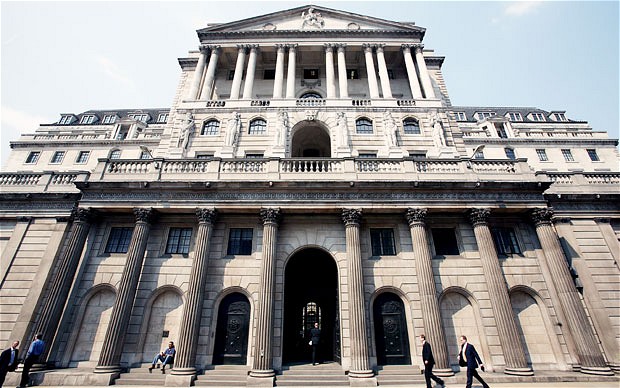
The Bank of England (BoE) has announced plans to loosen a key capital rule for UK lenders, aiming to help banks maintain lending and support financial markets during periods of stress.
The proposal centers on the leverage ratio, which limits borrowing by requiring banks to hold a minimum level of capital against their total assets.
The Financial Policy Committee (FPC) described the measures as part of a broader adjustment to the post-2008 banking regulatory framework that has governed lenders for over a decade.
The FPC wants part of the leverage requirement to become “releasable” in a crisis, allowing banks to deploy capital more freely when financial conditions deteriorate significantly.
The BoE also plans to remove an additional leverage buffer that primarily affects larger domestic-focused lenders, including Lloyds Banking Group, NatWest, Nationwide, and Santander UK.
In a downturn scenario, an extra capital buffer for those domestic banks would be cut to zero, specifically to help them continue extending credit to businesses and households.
A formal consultation on that particular change is expected to begin later this year, giving industry participants an opportunity to weigh in before any final decision is made.
The central bank said the overall change would lower the leverage ratio by approximately 0.2 percentage points of UK banks’ total assets, a modest but meaningful shift in requirements.
At the same time, the BoE said it would raise a separate leverage requirement for more globally active UK lenders with larger investment banking operations, including HSBC, Barclays, and Standard Chartered.
BoE Governor Andrew Bailey said the “targeted” changes were intended to address “the anomaly” of UK domestic-focused banks facing higher leverage ratio requirements than many overseas rivals and some UK peers.
The central bank’s decision to soften leverage rules follows a relaxation of U.S. leverage requirements in November, a development that had intensified competitive pressures on British lenders operating in global markets.
When the leverage ratio was originally introduced, it was designed as a backstop to risk-weighted capital requirements, but the BoE acknowledged it has since become binding for three out of seven major British banks.
That binding effect caused those lenders to carry higher obligations than their international counterparts, a situation regulators now view as an unintended competitive disadvantage requiring correction.
The BoE said the full package of changes would make it easier for banks to support lending and core markets during a crisis, while keeping the UK aligned with international regulatory standards.
However, the proposal did not pass without internal reservations, with the FPC noting that “some FPC members were concerned that the proposal might lead to an unwanted increase in market-based leverage, with implications for the resilience of core UK markets.”
Bailey acknowledged that “we have got some more work to do” on the risks associated with high leverage in both debt and equity markets, signaling ongoing scrutiny of the issue.
Separately, the central bank issued a broader warning that “recent rapid advances in frontier AI capabilities have increased financial stability risks related to cyber and operational resilience.”
The BoE also flagged additional pressure points, including high government debt issuance, heavy borrowing by hedge funds in gilt markets, and mounting risks building within the private credit sector.
