
Quantum computing is rapidly moving from theoretical promise to investable reality, drawing comparisons to the early days of artificial intelligence as a generational technology shift.
Unlike traditional computers that rely on binary bits representing either 0 or 1, quantum computers use quantum bits, or qubits, to process information in fundamentally different ways.
The unique properties of qubits allow quantum machines to process information exponentially faster than conventional computers, with the potential to solve problems currently considered impossible.
Scientists have been developing and theorizing about quantum computers for more than four decades, but recent breakthroughs have dramatically accelerated the timeline toward commercial viability.
Google’s (NASDAQ: GOOG) Willow chip can reportedly perform calculations in under five minutes that would take one of the world’s most powerful supercomputers virtually forever to complete.
Google’s CEO has stated the technology is now “where maybe AI was five years ago,” a comparison that carries significant weight given AI’s explosive growth and market impact over the past several years.
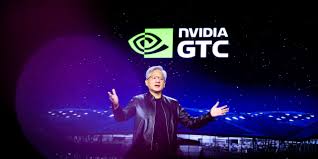
NVIDIA (NASDAQ: NVDA) CEO Jensen Huang recently argued that “AI is essential to making quantum computing practical,” framing the two technologies as complementary rather than competing forces.
Tech giants including IBM, Microsoft (NASDAQ: MSFT), Amazon, and NVIDIA remain at the forefront of quantum innovation, while pure-play companies such as IonQ (NYSE: IONQ), D-Wave Quantum (NYSE: QBTS), and Rigetti Computing (NASDAQ: RGTI) are pursuing their own distinct strategies.
The U.S. government recently announced $2 billion in grants to nine quantum computing companies in exchange for minority equity stakes, signaling strong federal commitment to the sector.
President Trump also signed two quantum executive orders, further underlining the strategic importance governments worldwide are placing on this potentially transformative technology.
Chris Gannatti, global head of research at WisdomTree, appeared on the ETF Spotlight podcast to discuss the investment landscape, noting that identifying long-term winners at this stage remains extremely difficult.
Because the competitive landscape is still evolving, Gannatti and others suggest that diversified exposure through ETFs such as the WisdomTree Quantum Computing Fund (NASDAQ: WQTM) and the Defiance Quantum ETF (NYSE: QTUM) may be the most prudent approach for most investors.
Both ETFs offer broad exposure across the quantum ecosystem, capturing potential upside from both established tech giants and smaller pure-play innovators without the concentrated risk of single-stock bets.
As government investment accelerates and private sector breakthroughs multiply, quantum computing is increasingly being viewed not as a distant possibility but as an imminent and investable technological revolution.
