
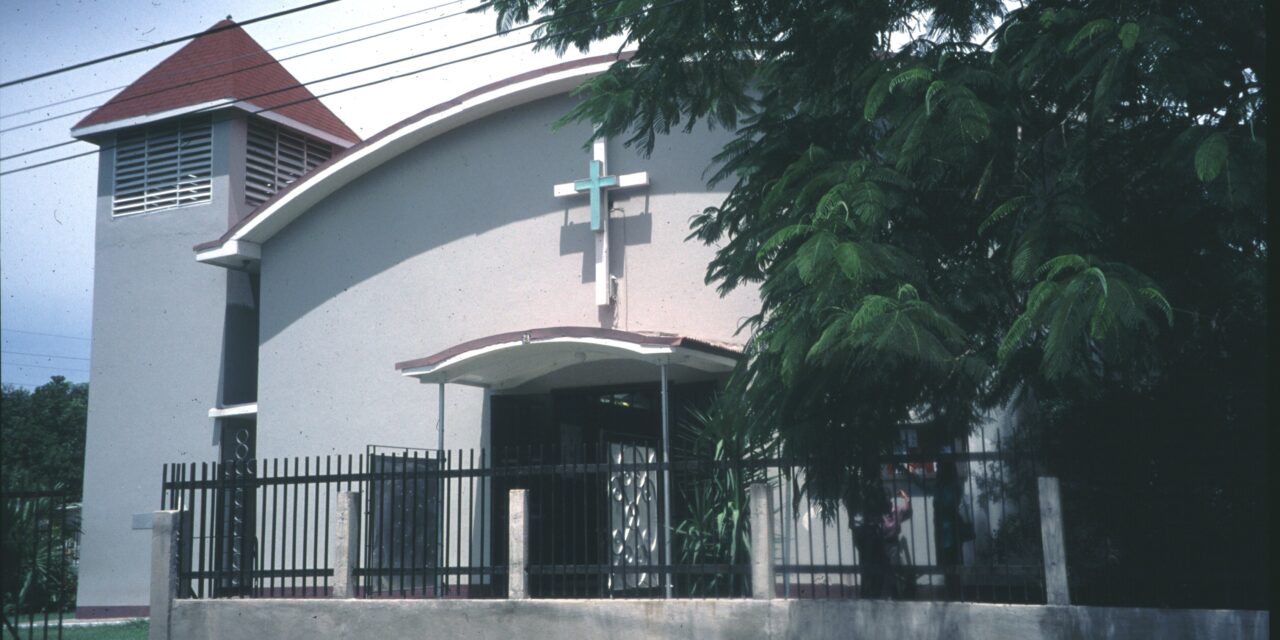
Across America’s sharpest political divides, one small North Carolina church has discovered a cause that unites conservatives and liberals without argument.
Trinity Moravian Church in Winston-Salem describes itself as a “purple congregation,” where Trump supporters and fierce critics of the president share the same pews each Sunday.
The Rev. John Jackman, who has led the 114-year-old red-brick church for more than four decades, says medical debt became the one mission nobody questioned or opposed.
“This is the easiest money I’ve ever raised,” Jackman says. “All I do is tell people what we’re doing, and they write me a check.”
Four years ago, Jackman launched what the church calls its Debt Jubilee Project, partnering with a nonprofit called Undue Medical Debt to purchase and retire unpaid medical bills at pennies on the dollar.
The church’s first campaign in 2022 set a goal of raising $5,000 to retire approximately $500,000 in unpaid bills owed by residents of surrounding Forsyth County, hitting that target in just six weeks through donations mostly under $50.
Earlier this year, Trinity completed its eighth campaign, raising more than $17,000 and retiring more than $2.2 million in medical debt, with 1,631 individual debts erased in a single jubilee ceremony.
Nationwide, an estimated 100 million adults carry some form of healthcare debt, and more than half of all U.S. adults have experienced such debt at some point in their lives.
Catherine Coe, a self-described conservative who voted for Trump and works in the accounting department of a hospital system, says the issue transcends any partisan label. “I see people going into debt every minute of every day,” Coe says. “We’re all just one medical bill from financial ruin.”
Longtime member Terri Mabe, 70, sits firmly on the opposite side of the political spectrum and says she cannot stand the president, who she says “had no real concern for the people of this country.”
Mabe, who spent years in the construction industry, has witnessed medical debt devastate workers caught between jobs and unexpected illness firsthand.
“In between projects you are a lot of times without a job,” she said. “Then you get sick. Next thing you know, you owe $5,000, $10,000 that you cannot pay.”
Despite their sharp disagreements on most political matters, both Coe and Mabe say the debt campaign dissolves those differences entirely. “There isn’t a political divide when it comes to medical debt,” Coe says. “It all brings us together.”
Paul Sluder, 78, a former debt collector who does not identify with any political party, says he watched firsthand how illness strips people of financial agency. “You have kind of no control. You have to take care of yourself or your loved ones,” Sluder says. “It’s incredibly unfair, and I think the system’s out of whack.”
Broader polling supports the congregation’s instinct that this issue crosses party lines, with a 2025 survey for Undue Medical Debt showing roughly 75% of Republicans and 90% of Democrats agreeing that collection agencies should not be allowed to garnish patients’ wages over medical debt.
The church’s work has also drawn national attention, including praise from conservative radio host Glenn Beck, and has inspired North Carolina government officials to pursue their own medical debt initiatives.
Jackman says the congregation’s shared motivation comes from a foundational church ethos. “One of our ideas is that we cannot fix everything, but we have to fix what we can in the place where we’re planted,” he says.
The most recent campaign concluded with a ceremony in which Jackman held up a list of 1,631 names before the congregation, flicked on a lighter, and burned it as scouts set off confetti poppers and the choir sang.
Cynthia Tesh, 72, reflecting on the celebration, expressed hope the effort could inspire wider cooperation across the country’s political fractures. “We need to look out for one another,” she says. “If we start looking out for one another, things will change.”
