
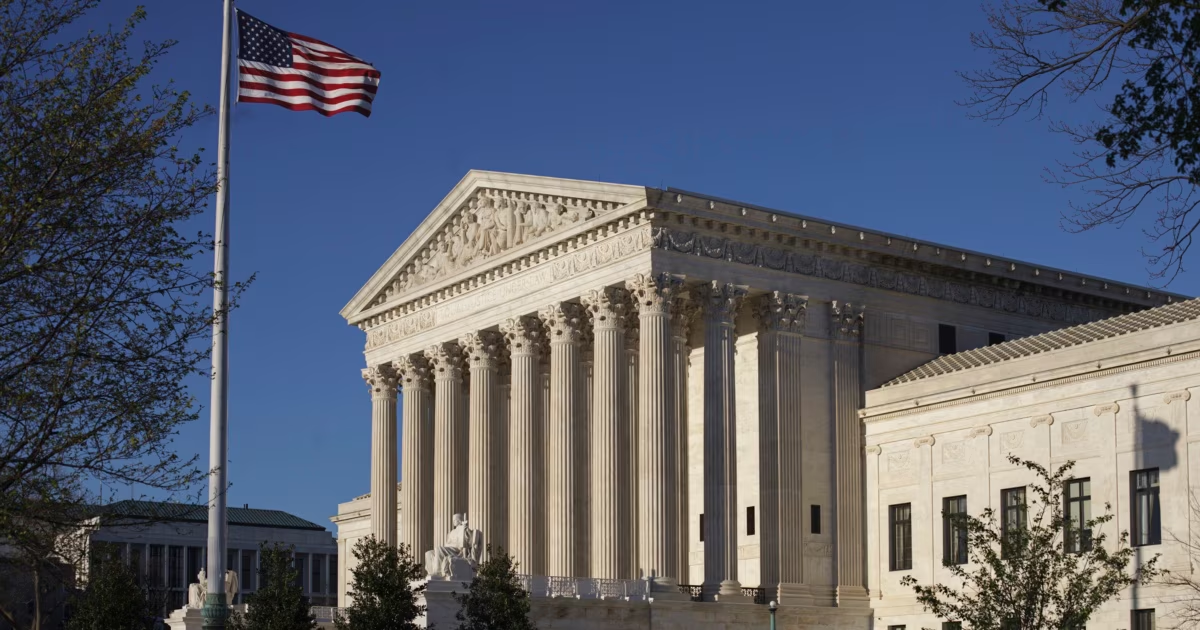
In a 6-3 ruling divided along ideological lines, the Supreme Court has ruled that a Rastafarian prisoner cannot sue individual prison officials who forcibly shaved his dreadlocks in violation of a court order.
The case centered on Damon Landor, who was incarcerated at the Raymond Laborde Correctional Center in Louisiana when guards handcuffed him to a chair and sheared off his knee-length dreadlocks.
Landor had grown those dreadlocks over nearly two decades as part of a practice known as the Nazirite vow, a religious commitment that he had honored for 20 years prior to the incident.
Minutes before the guards cut his hair, Landor handed them a judicial opinion confirming that prisoners had a legal right to maintain dreadlocks for religious purposes, which the guards discarded in the trash before proceeding.
The majority opinion, authored by Justice Neil Gorsuch, held that the Religious Land Use and Institutionalized Persons Act, or RLUIPA, does not permit plaintiffs to sue non-consenting state employees in their private capacities for monetary damages.
Gorsuch wrote: “Under the Spending Clause, Congress’s power to spend money does not include the power to regulate. Spending Clause statutes can bind only those who voluntarily and knowingly undertake obligations by agreement with the federal government.”
The ruling upheld a 5th Circuit decision that, while Landor could sue the prison system directly, he could not pursue damages against the individual officials who physically carried out the act.
The appellate judges had previously written that they were bound by precedent even while they “emphatically condemn the treatment that Landor endured,” and called on the Supreme Court to resolve the question of individual liability.
Notably, the Trump administration had supported Landor’s appeal, arguing that holding officials accountable was necessary to protect the free exercise of religion in correctional settings.
Louisiana Attorney General Liz Murrill said in a statement: “We condemn the conduct as alleged in this case and have taken steps to prevent this problem from recurring, but we are grateful the court agreed with the state in this matter.”
Murrill added that religious rights are “deeply important” but that Louisiana has its own laws designed to protect them, and the state had already revised its grooming policy to prevent similar incidents affecting Rastafarian prisoners.
Landor’s legal team had argued that damages should be permitted under RLUIPA, pointing to a 2020 ruling that allowed damages under the related Religious Freedom Restoration Act as supporting precedent.
Justice Ketanji Brown Jackson, writing in dissent, called the ruling a development “as new as it is peculiar, and it devalues precedent and congressional authority alike.”
Legal observers warn the decision will meaningfully reduce the ability of religious prisoners across faiths to enforce federal protections against officials who violate their rights.
