
The S&P 500 Index ($SPX) (SPY) closed up +1.08% on Thursday, while the Nasdaq 100 Index ($IUXX) (QQQ) surged +2.48% and the Dow Jones Industrial Average ($DOWI) (DIA) edged up +0.14%.
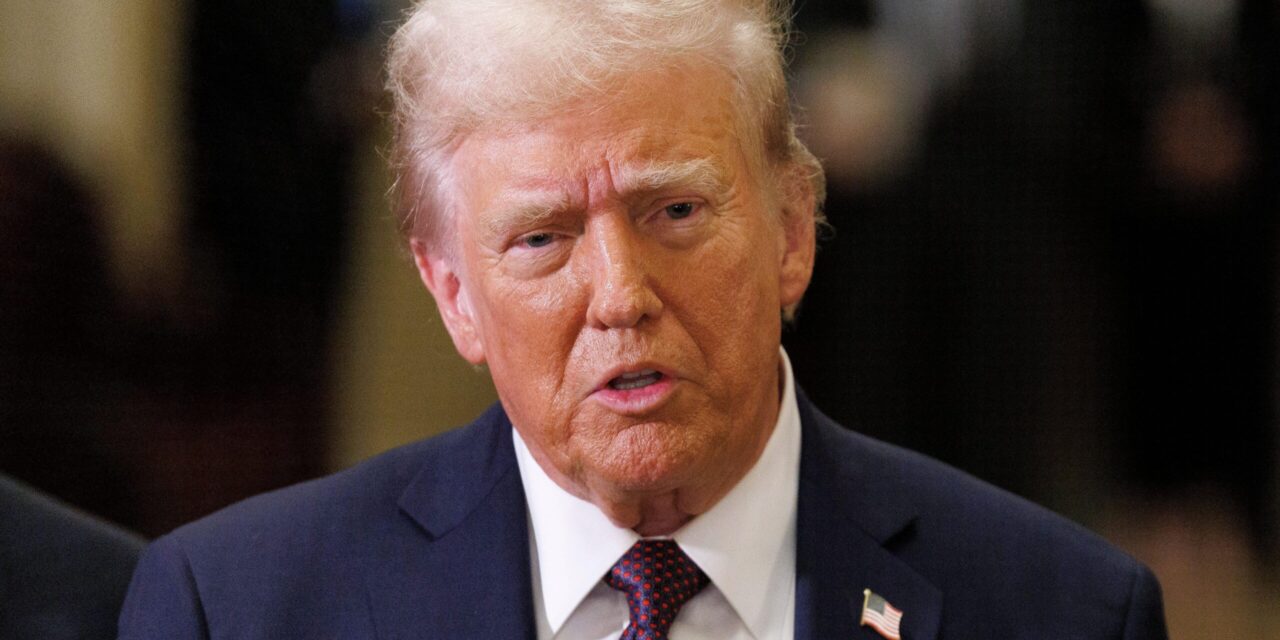
President Trump signed a preliminary deal on Wednesday night to end the US-Iran war, sending crude oil prices to a 3.5-month low and sparking broad risk-on sentiment across asset markets.
The agreement formally extends the US-Iran ceasefire for 60 days, allows the Strait of Hormuz to reopen, and initiates a further round of negotiations aimed at permanently ending the conflict.
The resumption of vessel traffic through the Strait of Hormuz could release more than 100 oil-laden tankers stuck in the Persian Gulf, effectively adding significant supply to global market stockpiles.
Goldman Sachs cut its Brent crude price forecast to $80 a barrel in Q4, down from $90, and said it expects Persian Gulf crude exports to return to pre-war levels by the end of July, one month earlier than previously expected.
Chipmakers led the broader market rally, with the iShares Semiconductor ETF (SOXX) climbing more than +7% to a new record high on the session.
Intel (NASDAQ: INTC) closed up more than +10% after President Trump said the chipmaker will work alongside Apple to design and produce semiconductors domestically, fueling a sector-wide surge.
Micron Technology (MU) and KLA Corp (KLAC) each closed up more than +8%, while Advanced Micro Devices (AMD) and NXP Semiconductors NV (NXPI) both gained more than +5% on the day.
IT service stocks retreated sharply, with Accenture (ACN) plunging -17% after it forecast Q4 revenue of $17.75-$18.40 billion, falling short of the consensus estimate of $18.47 billion.
The disappointing Accenture forecast deepened concerns that consulting firms could face significant disruption from artificial intelligence adoption in the coming years.
Huron Consulting Group (HURN) fell more than -14%, and Cognizant Technology Solutions (CTSH) dropped more than -10%, while International Business Machines (IBM) shed more than -5% to lead Dow Jones Industrials losers.
Falling crude oil prices weighed heavily on energy producers, with SLB Ltd (SLB) down more than -4% and ConocoPhillips (COP) and Halliburton (HAL) each declining more than -3%.
Airline and cruise line stocks benefited from the oil price drop, with American Airlines Group (AAL), Royal Caribbean Cruises (RCL), Carnival (CCL), and Norwegian Cruise Line Holdings (NCLH) all gaining more than +3%.
The 10-year T-note yield fell -3.6 basis points to 4.451%, pressured lower by declining crude prices and the resulting drop in inflation expectations, which hit a 6-month low of 2.218%.
Thursday’s US economic data added to the positive tone, as weekly initial unemployment claims fell -4,000 to 226,000 and the June Philadelphia Fed business outlook survey rose by +10.7 to 10.3, beating expectations.
Market moves were amplified by the quarterly triple witching event, involving the simultaneous expiration of June options, futures, and derivatives, with US markets closed Friday for the Juneteenth holiday.
Centrus Energy (LEU) closed up more than +13% after signing a letter of intent to supply domestic high-assay low-enriched uranium to Oklo to power up to five Aurora powerhouses for multiple years.
Kroger (KR) dropped more than -7% after reporting Q1 adjusted EPS of $1.58, missing the consensus of $1.59, and forecasting 2027 adjusted EPS of $5.10 to $5.30, with the midpoint below the consensus of $5.23.
BOE Governor Andrew Bailey called the recent fall in crude oil prices “encouraging,” but warned that “the situation remains unpredictable and there is clearly a risk that energy prices remain elevated for an extended duration.”
