
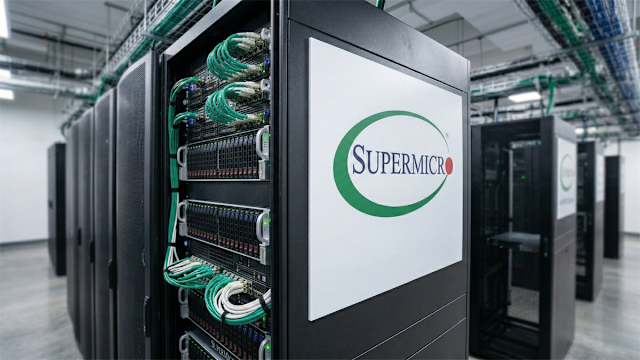
Super Micro Computer (NASDAQ: SMCI) is seeking to raise $7 billion through an equity offering to purchase components required to fulfill AI server orders totaling $39 billion.
The capital raise has alarmed investors, with concerns about dilution sending SMCI stock down 28% over the course of just five trading days.
Where a large order backlog would typically signal strength, funding its fulfillment through share issuance has raised questions about the company’s financial positioning.
This is far from the first time Supermicro has faced severe stock volatility, with 2024 bringing a 70% share price collapse after the company’s auditor resigned over accounting irregularities.
That accounting crisis brought Supermicro to the brink of delisting from the Nasdaq Exchange, leaving lasting concerns among shareholders about management quality and financial discipline.
The $39 billion backlog is primarily a product of surging demand for AI infrastructure, driven in significant part by Supermicro’s role as one of Nvidia’s (NASDAQ: NVDA) major server assembly partners.
The scale of the backlog is striking when measured against Supermicro’s most recent fiscal year revenue of $22 billion, underscoring just how challenging fulfillment will be.
Still, the company has guided for fiscal 2026 revenue of between $38.9 billion and $40.4 billion, and is set to deliver servers powered by Vera Rubin architecture.
Supermicro designs and manufactures data centers, enterprise IT systems, and edge computing products for AI, high-performance computing, telecom, 5G, and IoT workloads, and is headquartered in San Jose, California.
SMCI shares have traded between a 52-week low of $19.48 and a 52-week high of more than $62, reflecting a turbulent period for investors who have watched other AI infrastructure stocks surge.
The stock currently trades at a forward price-to-earnings ratio of 14.4 times, a relatively modest valuation that some analysts argue fails to reflect the underlying demand tailwinds the company is positioned to capture.
Bears point to dilution risk and a history of governance concerns, but bulls argue the sheer volume of incoming orders and the company’s central role in AI infrastructure buildout make the current selloff an overreaction.
