
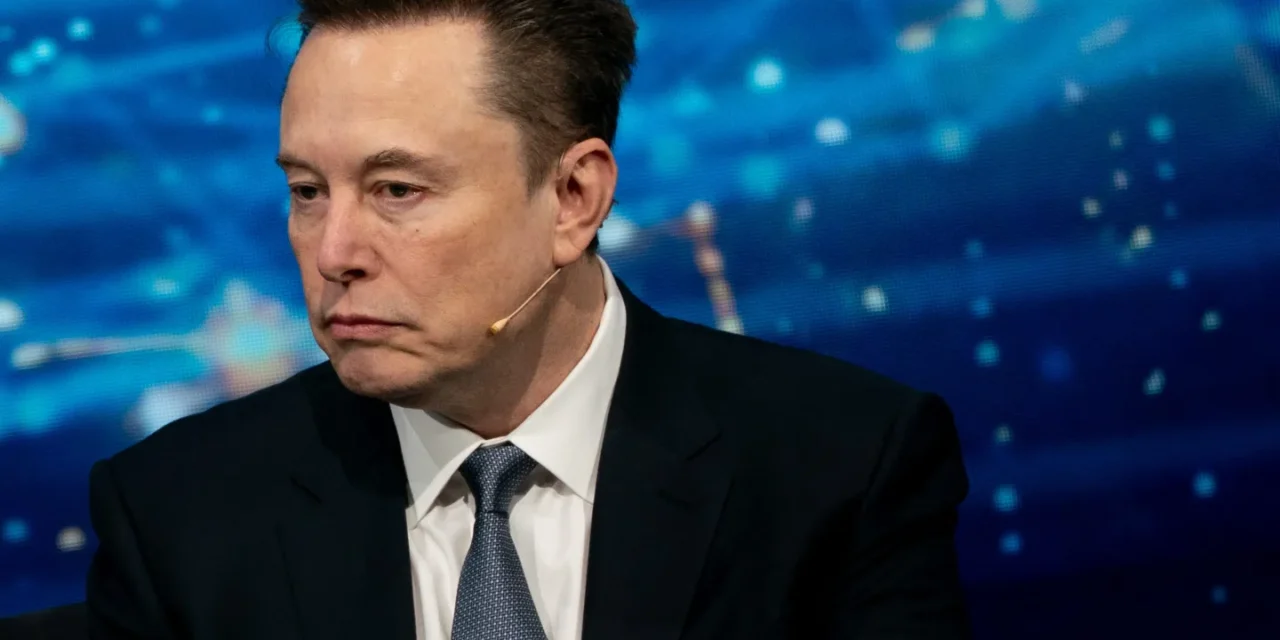
SpaceX (SPCX) closed its first day of public trading above a $2 trillion valuation, immediately drawing scrutiny over whether its most ambitious growth thesis can actually be delivered.
The company already generates meaningful revenue through its Starlink satellite internet service and commercial launch operations, giving investors a concrete foundation beyond pure speculation.
However, the core investment argument hinges on a single economic bottleneck: the cost of reaching orbit remains too high for SpaceX’s most ambitious growth markets to function profitably at scale.
Orbital data centers, next-generation Starlink deployment, and lunar logistics are not stalled by a lack of technology but by the economics of moving mass into space affordably and frequently.
Starship is the company’s proposed solution, designed to be six to eight times larger than the Falcon 9 rocket, with size functioning as the primary cost-reduction mechanism.
Falcon 9 currently delivers payloads to low Earth orbit at roughly $2,720 per kilogram, itself a dramatic improvement over prior rocket generations, but Starship’s long-term target is below $100 per kilogram.
Achieving that figure requires roughly 70 or more flights per vehicle, with marginal refueling and maintenance costs of approximately $2 million per launch, representing a 27x reduction from Falcon 9’s current cost.
Those economics only materialize under conditions of high launch cadence and near-zero refurbishment time between flights, assumptions that remain completely unproven at any meaningful commercial volume.
SpaceX spent approximately $3 billion on Starship research and development in 2025 and recorded an overall loss of roughly $4.9 billion that year, underscoring the scale of the program’s financial demands.
As of June 2026, Starship has completed 12 test flights, recording seven successes and five failures, with the program still formally classified as a test operation rather than a commercial service.
The latest variant, designated V3, flew for the first time in May 2026, incorporating more powerful Raptor 3 engines, a simplified structural design, and new orbital refueling hardware intended to support deep-space missions.
SpaceX is targeting commercial satellite launches in the second half of 2026, which would represent the first time Starship generates revenue that can be measured in any significant way.
The central engineering hurdle at this stage is not the rocket’s performance but achieving rapid, full reusability, with SpaceX having demonstrated booster catches using the launch tower’s mechanical arms but not yet a reliable 24-hour commercial turnaround.
The FAA currently permits up to 25 Starship launches per year from Starbase, a figure that falls well short of the flight rate SpaceX needs to validate the cost model investors are being asked to price in today.
The most immediate and tangible source of internal demand comes from SpaceX’s own next-generation V3 Starlink satellites, which are too large for Falcon 9 and are expected to rely heavily on Starship from the outset.
NASA’s selection of Starship as the Human Landing System for the Artemis program adds another layer of institutional demand, though the scale and timing of future lunar missions depend heavily on government budget decisions.
SpaceX’s IPO filing references orbital data centers and large-scale space infrastructure as potential future markets, though the commercial viability of those applications remains largely unproven and faces hurdles beyond launch costs alone.
The investment logic is therefore circular in an important sense: lower costs must generate enough new demand to keep Starship flying at the cadence required to sustain those lower costs in the first place.
A rocket flying only a handful of times per year cannot achieve the economics underpinning the current valuation, meaning market creation is as critical to the thesis as the engineering breakthroughs themselves.
If new space markets develop quickly enough to absorb Starship’s growing capacity, today’s $2 trillion valuation becomes easier to defend, but slower demand growth could leave investors waiting far longer than current pricing implies.
