
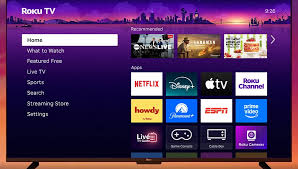
Roku (NASDAQ: ROKU) has quietly become the default operating system for televisions across the United States, shifting its core business from selling streaming sticks to operating a large, high-growth advertising and subscription platform.
After a 78% run-up over the past year, the stock is now trading near the top of its 52-week range, forcing a direct question for anyone considering a position today.
The company trades at a price-to-earnings ratio of 87.6, a stark premium compared to the S&P 500’s average of 24.0, signaling that the market is paying for future growth rather than current profits.
On a cash flow basis, Roku’s multiple of 32.4 is more than double the market’s 15.0, reinforcing just how much confidence investors are pricing into the stock at current levels.
Revenue has grown at a 16.6% average annual rate over the last three years, nearly triple the 5.8% pace of the average S&P 500 company, which goes some way toward justifying the premium.
The Platform segment is the engine driving that optimism, with revenue growing 28% year over year in the most recent quarter, fueled by a 27% jump in advertising revenue and a 30% increase in subscription revenue.
Management has stated its goal is to build the “most performant CTV ad platform in the industry,” and the company recently passed 100 million streaming households, adding tier-one partners including Apple TV and Peacock.
The Devices segment tells an entirely different story, with device revenue falling 16% in the same quarter and the segment running at a negative 14% margin, weighed down by falling selling prices and what management described as “higher memory costs.”
Roku’s strategy is deliberate here, using hardware at a loss to acquire the households that feed its far more profitable platform business, a trade-off that requires continued platform momentum to hold up financially.
The balance sheet provides meaningful runway for that strategy, with debt sitting at just 2.8% of market value compared to 21.5% for the typical S&P 500 company, and cash making up 54.7% of total assets versus the market average of just 6.6%.
The company generated $148 million of free cash flow in the last quarter, giving it the financial flexibility to absorb device-segment losses while continuing to invest in platform growth.
Prospective investors should, however, weigh the stock’s historical behavior during market downturns, as ROKU fell 92% during the 2022 inflation shock, far exceeding the S&P 500’s 25% decline over the same period.
During the 2020 Covid pandemic crash, the stock dropped 55% while the broader market fell 34%, a pattern that underscores the amplified volatility investors must be prepared to absorb.
The bull case rests on the Platform business continuing to scale its high-margin advertising and subscription revenues while the user base expands and profitability steadily improves.
The bear case centers on a hardware business that is simultaneously shrinking and losing money, a premium valuation that leaves little room for error, and a demonstrated tendency to fall harder than the market when sentiment shifts.
