
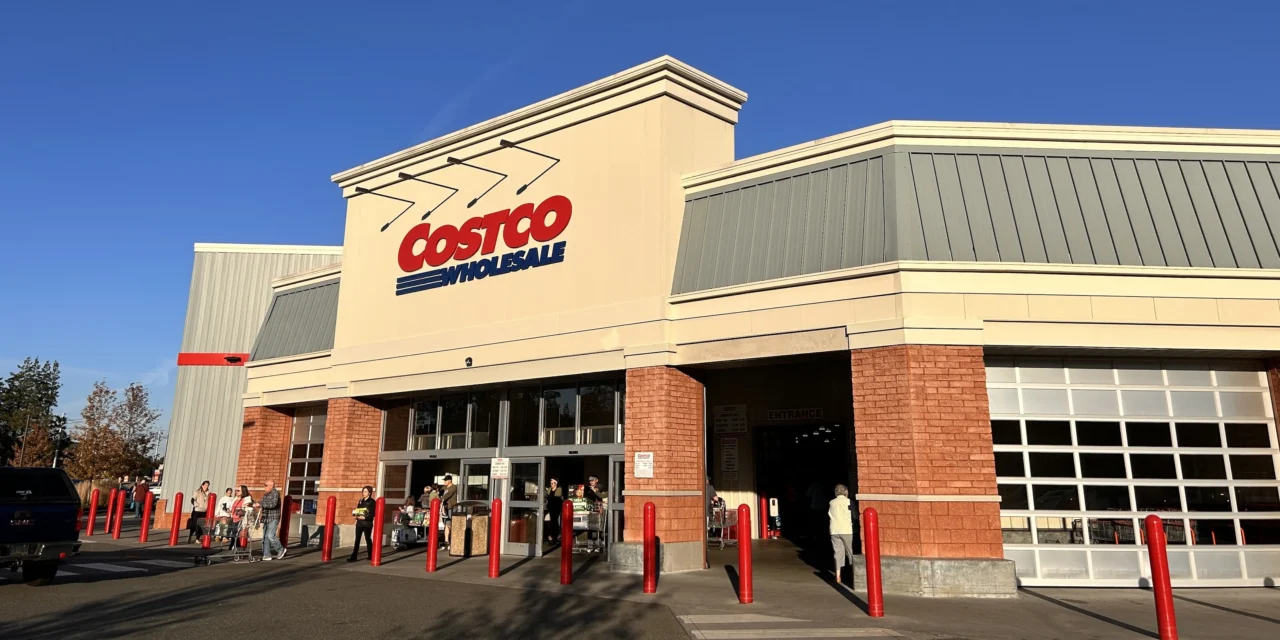
Costco Wholesale (NASDAQ: COST) has outperformed Walmart (NYSE: WMT) in 2026, and analysts believe elevated gas prices could extend that gap further.
U.S. military strikes tied to the Iran conflict have pushed oil prices higher, raising costs at the pump for millions of American consumers.
Both Costco and Walmart are outperforming the S&P Retail Select Industry Index in 2026, but only Costco is outperforming the broader S&P 500 index.
Higher gasoline prices are reshaping consumer behavior in ways that appear to benefit Costco’s business model more than Walmart’s.
During Walmart’s most recent earnings call on May 21, CFO John David Rainey noted that lower-income customers are becoming “more budget-conscious,” even as higher-income shoppers continue spending “with confidence.”
Rainey also revealed a striking data point: Walmart fuel-center customers are now buying an average of less than 10 gallons of gas per visit, the lowest figure recorded since 2022.
That trend signals financial strain among Walmart’s core customer base, raising concerns about reduced foot traffic and weaker discretionary spending inside its stores.
Costco is telling a very different story at the pump, with CEO Ron Vachris announcing on the company’s May 28 earnings call that Costco achieved “record-breaking volumes” in its latest fiscal quarter.
Vachris added that the final five weeks of the quarter were “our top five volume weeks ever,” underscoring the scale of Costco’s gasoline demand surge.
Gasoline accounts for roughly 10% of Costco’s total net sales according to its 2025 annual report, making the fuel business a meaningful revenue driver rather than a minor ancillary service.
Costco’s gas customers also tend to behave differently from those at competing retailers, frequently entering the warehouse to shop after filling up their tanks.
Vachris said on May 28 that company executives believe higher gasoline sales volumes “will drive even greater loyalty with these members in the future, as members who use our gas stations typically spend more with us in the warehouse.”
During a separate earnings call on March 5, Costco’s CFO noted that approximately 50% of gas shoppers also “cross-shop” at the nearby Costco warehouse, turning a fuel stop into a broader retail visit.
That dynamic gives Costco a structural advantage in a high-gas-price environment, as budget-conscious shoppers seeking cheap fuel end up spending money on groceries and merchandise inside the store.
Costco currently carries a price-to-earnings ratio of 48.8, compared to Walmart’s P/E multiple of 42.3, with neither stock appearing cheap against the S&P 500’s current P/E ratio of 31.3.
If the Iran conflict drives a prolonged spike in oil prices, inflation pressures could intensify, hitting Walmart’s lower-income customer base harder and pushing more value-seeking consumers toward Costco’s membership model.
The contrasting gas-pump data from both retailers offers investors a concrete and timely signal about which company is better insulated from the economic pressures currently facing American consumers.
