
The relationship between U.S. foreign policy ambitions and domestic political messaging has rarely been more closely intertwined than in the debate over America’s posture toward Cuba.
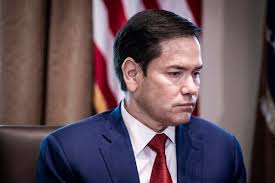
Secretary of State Marco Rubio, a Cuban-American with deep personal ties to the issue, has long argued that a free Cuba aligns directly with American strategic and moral interests in the Western Hemisphere.
Rubio’s case to the Trump administration centers on the idea that destabilizing the Cuban regime serves broader goals of reducing foreign adversary influence in the region, including that of China and Russia.
Cuba has maintained close ties with both Moscow and Beijing in recent years, giving Washington a strategic rationale that extends well beyond traditional Cold War-era arguments about democracy promotion.
For Trump, whose foreign policy brand is built on tangible results and transactional logic, the challenge is framing Cuban regime change as something that delivers measurable benefit to American interests.
Rubio has spent years cultivating this argument, positioning Cuban freedom not as idealism but as a hard-nosed calculation that removes a hostile government from America’s doorstep.
The Cuban government has survived more than six decades of U.S. sanctions, diplomatic isolation, and political pressure, making any claim of imminent change difficult to sustain without concrete policy levers.
Migration is one such lever, as Cuba has been a significant source of irregular migration into the United States, a pressure point that resonates strongly within the Trump administration’s political priorities.
Economic desperation inside Cuba has accelerated in recent years, with widespread shortages of food, fuel, and medicine driving some of the largest protest movements the island has seen in generations.
Whether Rubio can translate that internal instability into a coherent policy win for an administration focused primarily on economic nationalism and border security remains the central political question.
The broader foreign policy establishment has watched Rubio’s influence within the Trump team closely, given that his hawkish ideological instincts do not always map neatly onto Trump’s more transactional worldview.
If Rubio succeeds in aligning Cuban policy with the America First framework, it could set a precedent for how ideologically motivated foreign policy goals are packaged and sold within this administration.
