
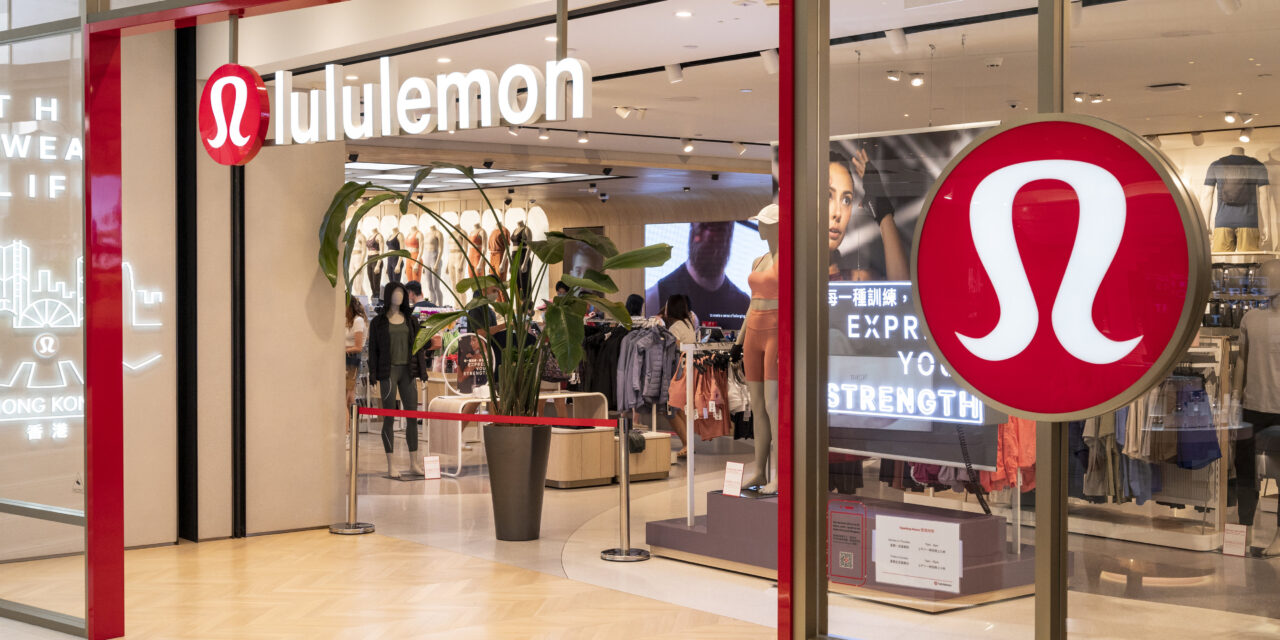
Lululemon Athletica (NASDAQ: LULU) has drawn renewed investor attention after its share price settled near $124.92, reflecting significant declines over the past month and the past three months.
The stock’s year-to-date performance and one-year total shareholder return have both posted substantial losses, signaling fading momentum among investors reassessing the brand’s growth trajectory.
With shares down sharply over the past year, the central question facing the market is whether LULU represents a deeply undervalued athletic apparel leader or whether its current price already reflects future growth expectations.
The most widely followed valuation narrative, tracked by analyst tripledub, places fair value at $220 per share, implying the stock is roughly 43.2% undervalued relative to its last close of $124.92.
That valuation case rests on several compelling financial metrics, including a 24% return on invested capital, which signals the business is generating strong value from the capital it deploys.
Lululemon generates approximately $920 million in free cash flow annually against $11 billion in revenue, a combination that points to meaningful operational efficiency and pricing power in the premium athletic apparel segment.
The company also carries more cash than debt on its balance sheet and has an active share repurchase program, both of which are indicators of financial discipline and management confidence in the business.
Despite these fundamentals, the stock currently trades at around ten times trailing earnings and six times EBITDA, multiples that some analysts view as unusually low for a brand with Lululemon’s global recognition and margin profile.
The bull case, however, is not without risk, as deeper promotional markdowns or a prolonged slowdown in the Americas could quickly erode the assumptions underpinning the $220 fair value target.
Investors considering a position in LULU will need to weigh the brand’s proven ability to generate cash and maintain premium pricing against the real possibility that consumer sentiment in core markets continues to soften through the rest of 2026.
The gap between the current share price and the analyst fair value estimate is wide enough to attract value-oriented investors, but the path to closing that gap depends heavily on margin stability and top-line resilience holding through an uncertain macro environment.
