
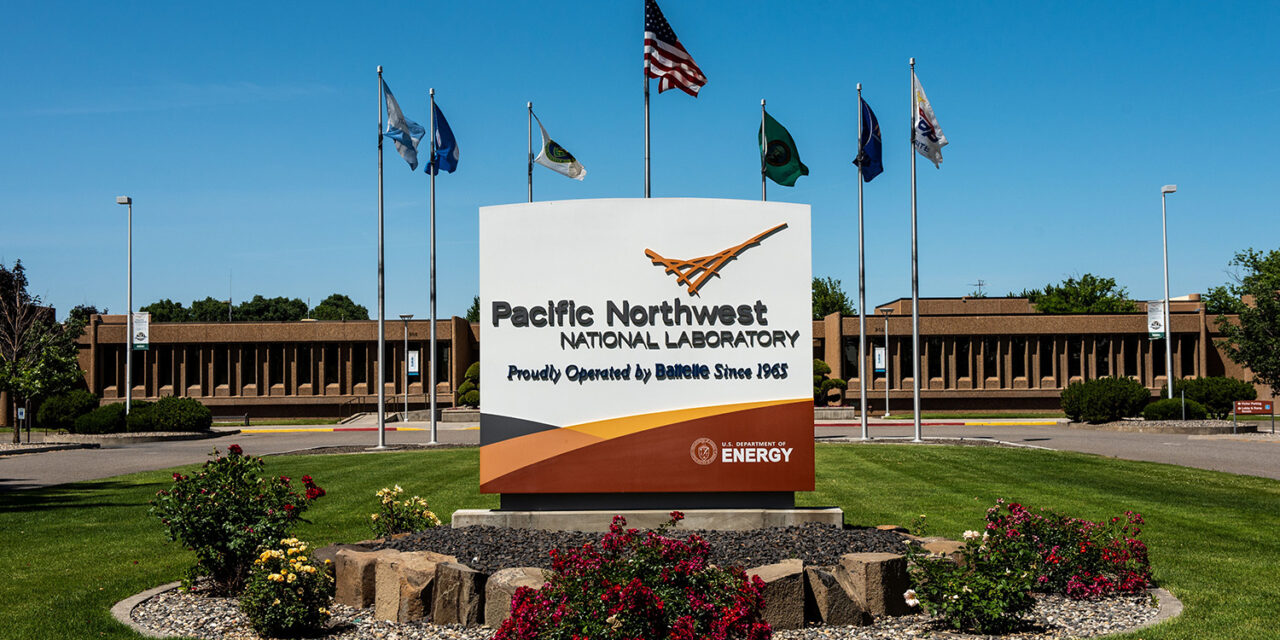
Pacific Northwest National Laboratory has commissioned a 16-piece prismatic battery cell production line inside the Department of Energy’s Grid Storage Launchpad in Richland, Washington.
The facility represents a significant step forward in domestic battery research, giving scientists the infrastructure needed to test energy storage technologies at a more practical and realistic scale.
The new production line is designed to move researchers beyond the limitations of small coin-cell tests, which have historically constrained the scope of battery validation work.
Coin-cell testing, while useful in early-stage research, often fails to capture how battery chemistries perform under conditions that more closely resemble real-world grid applications.
By validating chemistries at a larger and more representative scale, researchers can generate data that is far more relevant to the demands of commercial and utility-grade energy storage.
Initial research efforts at the facility will focus on two specific battery chemistries: sodium-ion and lithium-iron-phosphate cells, both of which are widely regarded as strong candidates for next-generation grid storage.
Sodium-ion technology has attracted growing interest because it relies on sodium, a far more abundant and geographically widespread resource than the lithium used in conventional battery designs.
Lithium-iron-phosphate chemistry, meanwhile, has established itself as one of the safer and more thermally stable options available, making it particularly well-suited to large-scale stationary storage applications.
Together, these two chemistries represent a strategic focus on reducing both the cost and the safety risks that have historically complicated the widespread deployment of grid-scale energy storage systems.
The Grid Storage Launchpad itself is a dedicated DOE facility purpose-built to accelerate the development and commercialization of next-generation energy storage technologies for the American electricity grid.
The commissioning of the production line positions PNNL as a more central player in the national effort to build domestic battery manufacturing expertise and reduce reliance on foreign supply chains.
As the United States continues to expand its renewable energy capacity, the ability to store that energy reliably and affordably at the grid level becomes an increasingly critical technological and economic challenge.
