
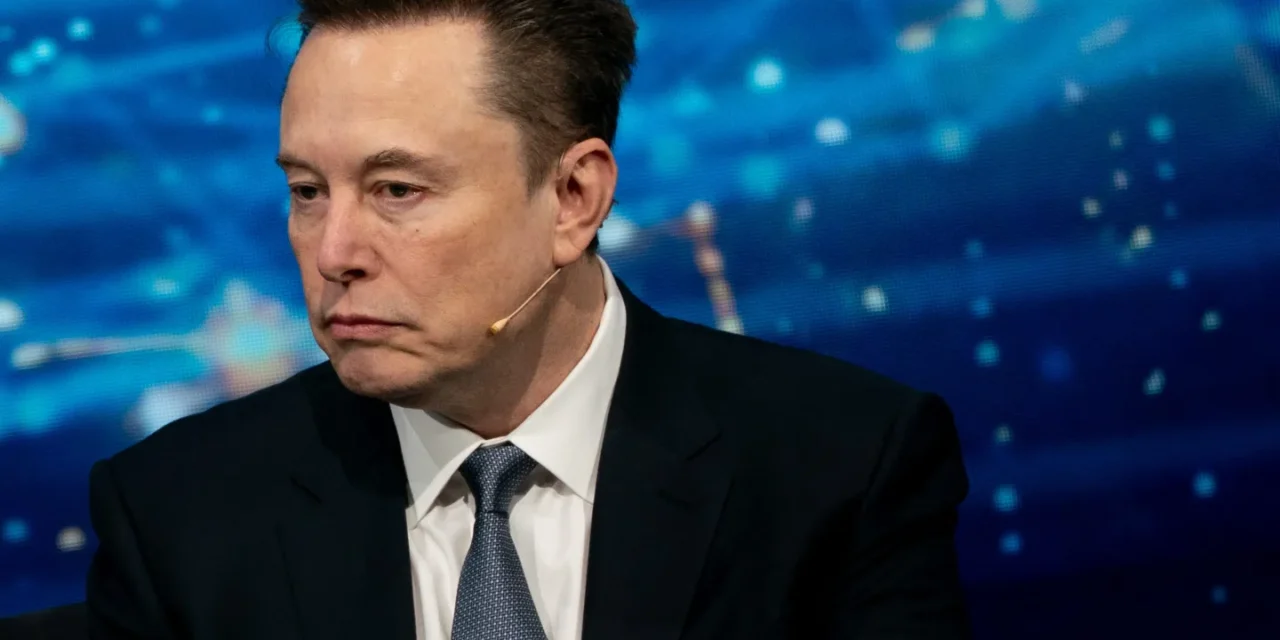
Tesla (NASDAQ: TSLA) has staged a significant recovery after hitting a multi-month low earlier this spring, climbing more than 30% since early April to trade near $440 a share.
Much of that renewed investor optimism has centered on Tesla’s long-term prospects in full self-driving technology, robotaxis, and the Optimus humanoid robot program.
A new and potentially transformative discussion is now gaining traction among investors, one that could dramatically reshape how Tesla is valued in the years ahead.
Growing reports in recent weeks suggest that Elon Musk has explored the idea of combining Tesla with SpaceX (NASDAQ: SPCX), his privately held aerospace and satellite business.
The prospect has drawn considerable attention because SpaceX is widely expected to pursue a public listing that could become the largest IPO ever completed.
Wedbush analyst Dan Ives, one of Tesla’s most prominent supporters, has estimated there is an 80% to 90% probability that a merger could occur by early 2027.
According to Ives, Musk’s broader strategy increasingly revolves around controlling a larger portion of the artificial intelligence ecosystem, making a Tesla-SpaceX combination a logical extension of that vision.
Earlier this year, Tesla invested $2 billion in xAI, Musk’s artificial intelligence venture, which had previously acquired X, formerly known as Twitter, after Musk purchased the social media platform.
More recently, SpaceX acquired xAI, creating an increasingly interconnected web of ownership and strategic interests that already gives Tesla investors indirect exposure to SpaceX-related assets.
The two companies are also collaborating on the Terafab semiconductor manufacturing facility, which is expected to produce advanced chips for multiple Musk-led enterprises.
SpaceX brings a dominant launch business, the rapidly expanding Starlink satellite network, and AI capabilities through its links to xAI, while Tesla contributes large-scale manufacturing, energy storage, and an ambitious robotics program.
Ives has described such a combined entity as the “holy grail” of Musk’s empire-building ambitions, representing a technology platform spanning transportation, energy, communications, artificial intelligence, computing, and space exploration.
Despite the excitement, significant obstacles remain, including questions over SpaceX’s reported valuation, with some critics arguing that estimates approaching $1.7 trillion are difficult to justify.
Prediction markets are considerably more cautious than some Wall Street analysts, with current market-implied odds placing the likelihood of a merger before May 2027 at roughly one-third.
Regulatory scrutiny would likely be intense, and a transaction of this scale could face legal challenges and resistance from investors on multiple fronts.
