
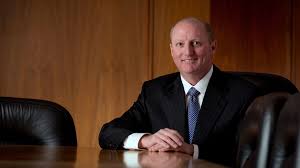
Greg Abel has stepped into one of the most closely watched leadership roles in investing as the new CEO of Berkshire Hathaway (NYSE: BRKA) (NYSE: BRKB), taking charge of its vast portfolio of marketable equities.
Abel made three significant capital deployments in his first quarter at the helm, and each investment has produced positive results so far.
The first major move was the closing of Berkshire’s acquisition of OxyChem from Occidental Petroleum (NYSE: OXY), a deal originally agreed upon last October when Warren Buffett was still CEO.
Berkshire paid Occidental $9.7 billion in cash for its chemicals business, with Abel having been instrumental in negotiating the transaction.
The acquisition was structured at an estimated 8 times OxyChem’s 2025 EBITDA, roughly in line with comparable chemical stocks such as Eastman Chemical and Dow at the time the deal was struck.
The ongoing conflict in Iran and the closure of the Strait of Hormuz have disrupted international commodity supply chains, giving American chemical producers significant pricing power that OxyChem stands to benefit from.
Berkshire also retained its preferred shares of Occidental Petroleum, continuing to receive an 8% dividend on approximately $8.3 billion as part of the broader arrangement.
Abel’s second major move was a $1.8 billion strategic investment in Japanese insurer Tokio Marine (OTC: TKOMY), securing a 2.5% stake with permission to increase that position to 9.9% through open market purchases.
As part of the deal, Berkshire subsidiary National Indemnity entered a quota-share agreement to absorb some of Tokio Marine’s insurance risk, creating the potential for additional upside assuming sound underwriting results.
Tokio Marine reported underlying profit growth of 17% year over year in its most recent results, with adjusted earnings per share climbing 11%, and management guided for similar profit growth going forward.
The Berkshire alliance has given Tokio Marine more capacity to return capital to shareholders through dividends and buybacks, further supporting its stock price and earnings per share trajectory.
Abel’s third and largest move was tripling Berkshire’s position in Alphabet (NASDAQ: GOOG) (NASDAQ: GOOGL), pushing it to become the conglomerate’s fifth-largest marketable equity holding.
Abel spent an estimated $11 billion on Alphabet stock last quarter, with Berkshire’s total stake valued at approximately $22.5 billion at the time of reporting.
The timing proved particularly effective, as the market’s April recovery and strong first-quarter earnings sent Alphabet’s stock up roughly 35% since the end of last quarter.
Alphabet reported Google Cloud revenue growth of 63% in the first quarter, with operating margin expanding to 32.9% from 17.8% a year ago, driven in large part by momentum in its artificial intelligence business.
AI Overviews and AI Mode have increased engagement with Google Search, and management noted that Gemini models have improved the company’s ability to understand user intent, leading to more relevant search results and stronger advertising performance.
Search revenue growth reached 19% last quarter, with generative AI tools making it easier for marketers to create and target new campaigns, contributing to the acceleration.
With Alphabet trading at approximately 27 times forward earnings estimates, further additions to the position by Abel would not come as a surprise given the stock’s continued strong performance.
Across all three investments, Abel’s debut quarter as Berkshire CEO has been marked by decisive capital allocation and results that will provide shareholders with early confidence in his leadership.
