
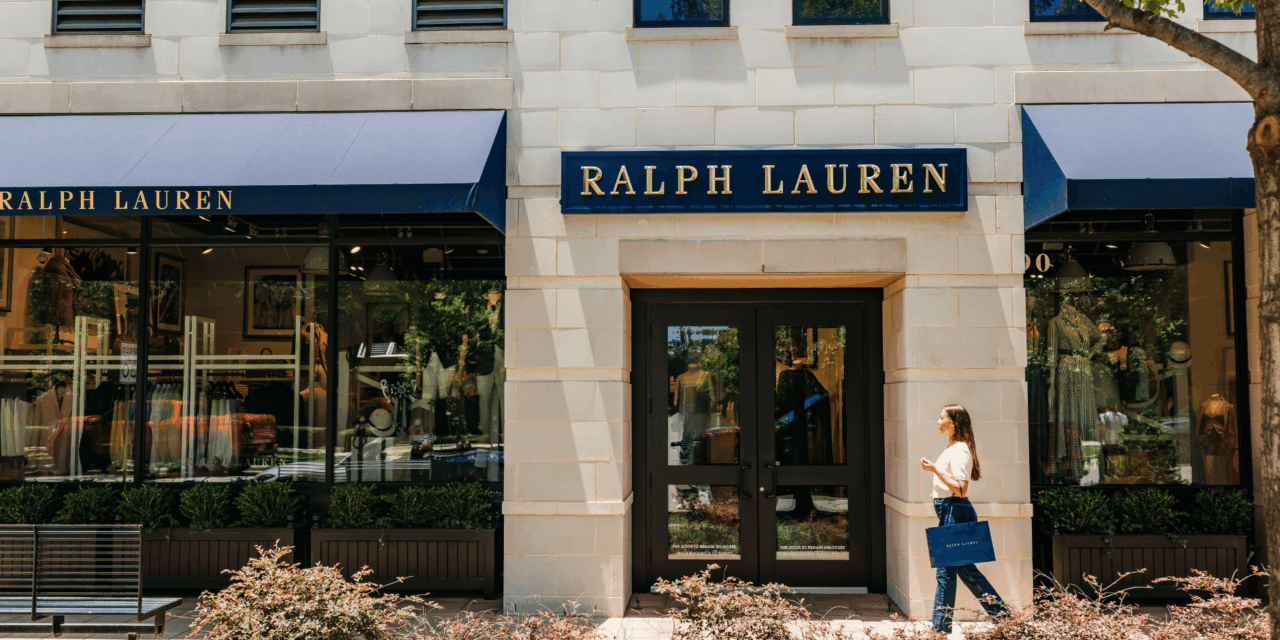
Ralph Lauren (NYSE: RL) has crossed $8 billion in annual revenue for the first time in company history, capping what analysts are calling a standout fiscal year for the brand.
Fourth-quarter sales jumped 17%, while full-year adjusted earnings per share climbed to $16.59 from $12.33 in the prior year, as reported by Vogue Magazine.
The board approved a 10% dividend increase, adding another signal of management’s confidence in the company’s financial position.
Despite outperforming peers on growth and margin expansion, RL ranks last in search interest among major apparel names, trailing lululemon (NASDAQ: LULU), Tapestry (NYSE: TPR), V.F. Corp. (NYSE: VFC), and Under Armour (NYSE: UAA).
Full-year revenue grew 14.6% to $8.1 billion, a significant acceleration from 6.8% growth the prior year and 2.9% the year before that.
Gross margin expanded to 69.9% from 68.6%, driven by favorable product mix, average unit retail growth, and lower cotton costs that helped offset U.S. tariff headwinds.
Operating margin improved to 14.5% from 13.2%, and net income rose to $941.1 million from $742.9 million in the previous fiscal year.
Asia led regional performance with 31% reported growth, fueled by strong Lunar New Year sales in China, while Europe grew 18% and North America rose 8%.
The company added 6.5 million new direct-to-consumer customers in FY26, with capital expenditure nearly doubling to $408 million as RL opened new stores in Chengdu, Sydney, Bangkok, Newport Beach, and London.
Free cash flow came in at $746.1 million, down 26.8% from the prior year, a decline attributed entirely to the increased capital spending rather than any deterioration in underlying business performance.
The balance sheet holds $2.1 billion in cash and short-term investments against $1.2 billion in total debt, with inventory growth of just 7%, well below the pace of sales expansion.
CEO Patrice Louvet’s strategy, called “Next Great Chapter: Drive,” centers on brand elevation, full-price selling, key-city retail expansion, and category growth in women’s wear, outerwear, and handbags.
The company’s newest handbag line, Polo Blaze, is set to debut in Fall 2026 at Paris Fashion Week.
On a valuation basis, RL trades at 23.0x trailing earnings and 20.9x forward earnings, a steep premium compared to lululemon’s 9.6x trailing and 10.4x forward multiples.
Ralph Lauren’s 14.6% revenue growth topped lululemon’s 4.9%, while VFC managed just 1.1% growth and Under Armour contracted by 3.8% over the same period.
EBITDA growth of 29.6% year-over-year far outpaced lululemon’s negative 8.3%, and diluted EPS growth of 30.2% compared favorably against lululemon’s 9.4% decline and Tapestry’s 18.0% drop.
Return on equity of 34.7% edges lululemon’s 34.0%, though it trails Tapestry’s 60.9%, and RL’s EBIT margin of 15.9% sits below both lululemon’s 19.9% and Tapestry’s 23.1%.
The premium valuation reflects accelerating growth, but as one analysis notes, lululemon’s recent struggles serve as a warning about what happens when apparel premiums unwind.
