
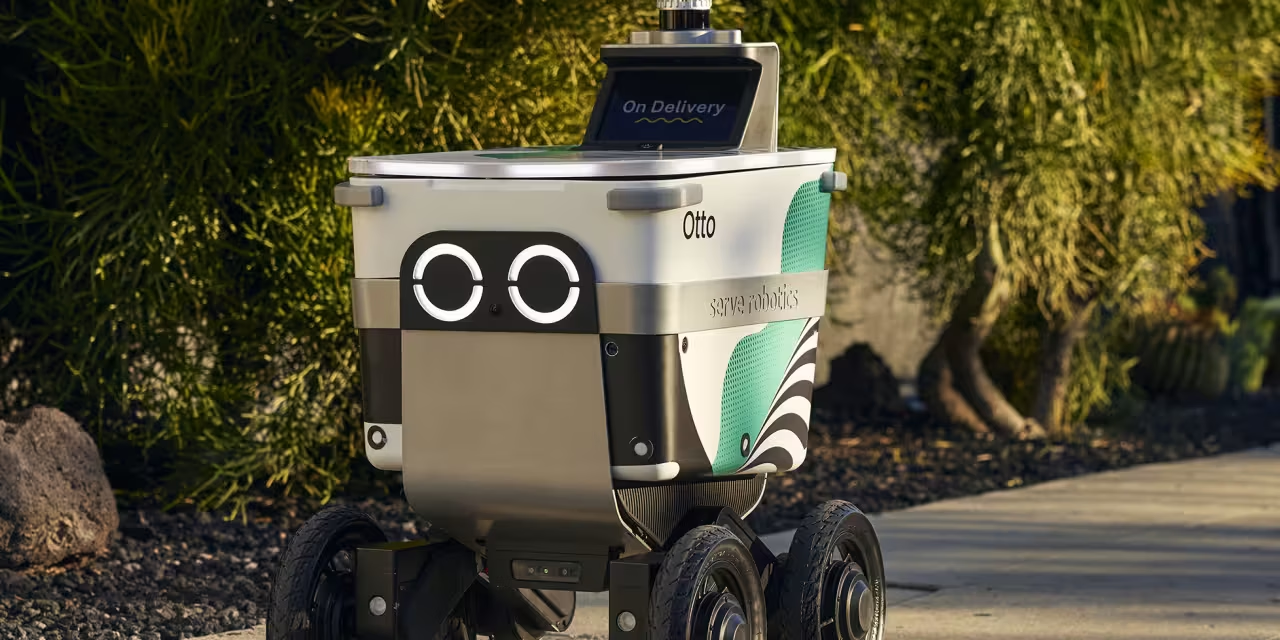
Serve Robotics Inc. (NASDAQ: SERV) is gaining stronger traction through its DoorDash partnership, adding a demand-side lever as the company works to improve productivity across its deployed robot fleet.
In the first quarter of 2026, Serve Robotics reported faster delivery-volume growth with DoorDash than with other partners, signaling the channel is becoming increasingly relevant to operations.
DoorDash’s merchant count has also increased approximately six times since the beginning of 2026, expanding the potential order base available to Serve Robotics’ autonomous delivery network.
The update comes as SERV shifts its near-term strategic focus away from fleet expansion and toward improving utilization rates across its existing robot base.
The company is not deploying additional sidewalk robots in the first half of 2026, instead prioritizing operational growth, efficiency and stronger performance from robots already in service.
Key initiatives include activating more merchants, integrating additional delivery platforms, expanding coverage across cities and neighborhoods, and increasing the number of robots running on a daily basis.
DoorDash’s growing merchant base could support that strategy by improving demand density within SERV’s operating zones, potentially reducing idle time and improving revenue per robot and per operating hour.
If order density improves across served markets, the DoorDash channel could become a more meaningful contributor to SERV’s 2026 productivity and monetization goals.
Shares of Serve Robotics have fallen 27.6% over the past year, compared with the broader industry’s decline of 29.6%, while Vertiv Holdings Co. (VRT) and BigBear.ai Holdings, Inc. (BBAI) have gained 194.8% and 12.9%, respectively, over the same period.
SERV stock is currently trading at a forward 12-month price-to-sales multiple of 14.62, well above the industry average of 12, while Vertiv and BigBear.ai carry price-to-sales ratios of 7.99 and 13.74, respectively.
The Zacks Consensus Estimate for Serve Robotics’ 2026 loss per share has widened from $2.42 to $2.64 over the past 30 days, reflecting deteriorating near-term earnings expectations.
Projections indicate a 62% decline in 2026 earnings for Serve Robotics, while Vertiv and BigBear.ai are expected to deliver year-over-year earnings growth of 51.4% and 69.5%, respectively.
SERV stock currently carries a Zacks Rank of 3, equating to a Hold rating, as the company navigates a critical transition toward improved operational leverage and revenue quality.
