
Nvidia (NASDAQ: NVDA) claimed the title of the world’s most valuable company in July 2025, becoming the first to break both the $4 trillion and $5 trillion barriers.
Nvidia currently sits at a market capitalization of $5.15 trillion, holding the top position on the global rankings.
Alphabet (NASDAQ: GOOG) occupies second place, with a market cap of $4.67 trillion, narrowly ahead of Apple’s $4.55 trillion.
Alphabet owns Google, YouTube, Waymo, and Gemini, giving it one of the most expansive product ecosystems of any company in the world.
Google commands a 92% market share in the global search industry, according to some sources, though it remains unclear whether that figure includes Russia and China.
YouTube accounts for 9.7% of total TV viewership time among American viewers, placing it ahead of Netflix (NASDAQ: NFLX), which holds second place at 7.6%.
YouTube visitors watch five billion individual videos per day, and no other video platform comes close to matching that volume.
In its most recent quarter, Alphabet posted total revenue of $109.8 billion, with Google Search generating $60.3 billion and YouTube contributing $9.9 billion.
Gmail is the most widely used free email platform in the world, with 1.8 billion users, while Google Maps controls 68% of the world’s map software market.
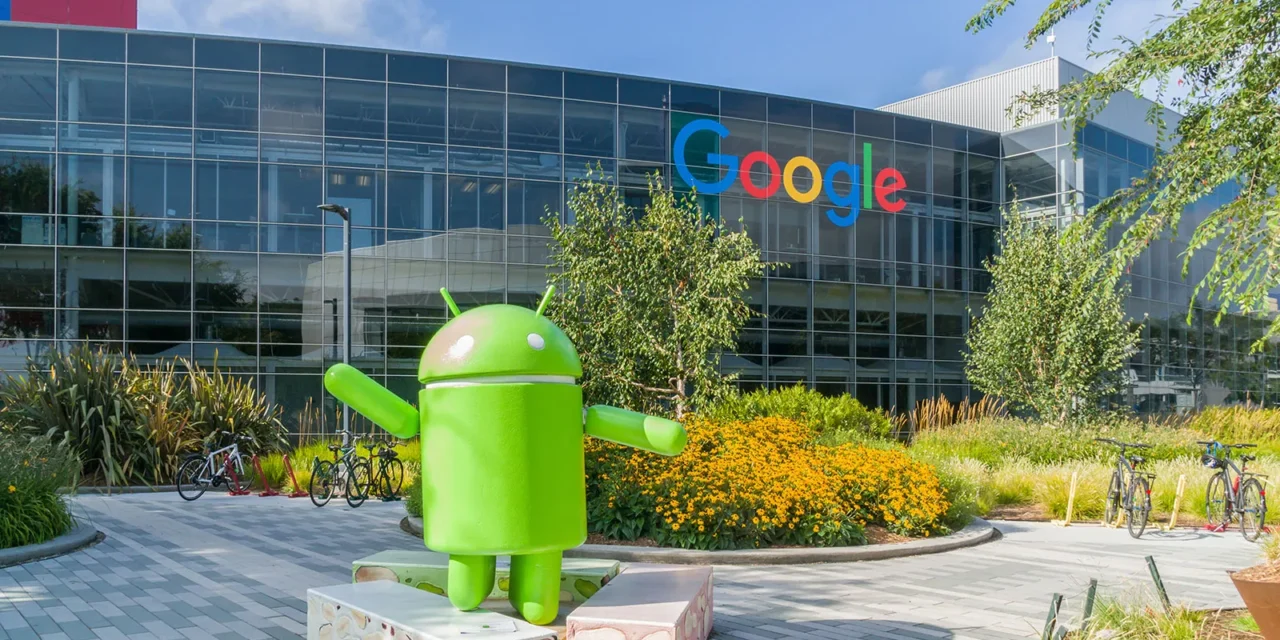
Android holds a 70% share of the global mobile operating system market, compared to Apple’s (NASDAQ: AAPL) iOS at 29%, giving Alphabet significant reach for distributing its software products on smartphones.
Rather than being undermined by the rise of artificial intelligence, Alphabet integrated its Gemini AI product directly into Google Search, with AI Overview now appearing as the first result for many queries.
By some measures, Gemini holds second place among AI platforms by download market share, while other measures place it first, meaning the contest for dominance in AI is still unresolved.
Alphabet’s interconnected suite of products has created what business school professors describe as a “moat,” a term Warren Buffett coined to describe companies whose competitive advantages are extremely difficult to overcome.
