
Rocket Lab Corporation (NASDAQ: RKLB) has seen its stock rise 12.5% following a significant U.S. Space Force contract award and the successful completion of a new satellite deployment mission.
The company recently completed the “Viva La StriX” mission from New Zealand, successfully deploying Synspective’s ninth StriX synthetic aperture radar satellite to a 572 km low Earth orbit.
The mission extended a series of customized Electron launches for the Japan-based Earth observation constellation, demonstrating continued demand for Rocket Lab’s small-satellite launch capabilities.
Rocket Lab secured a $90 million U.S. Space Force contract for two Heimdall-equipped geostationary satellites, further reinforcing its vertically integrated business model spanning launch, hardware, and spacecraft delivery.
The Heimdall award moves Rocket Lab into geostationary satellite production and multi-year on-orbit operations, utilizing its Lightning bus and in-house optical payloads.
The contract underscores how Rocket Lab’s model now covers precision small-satellite launch, tailored hardware, and end-to-end spacecraft delivery for high-priority defense missions.
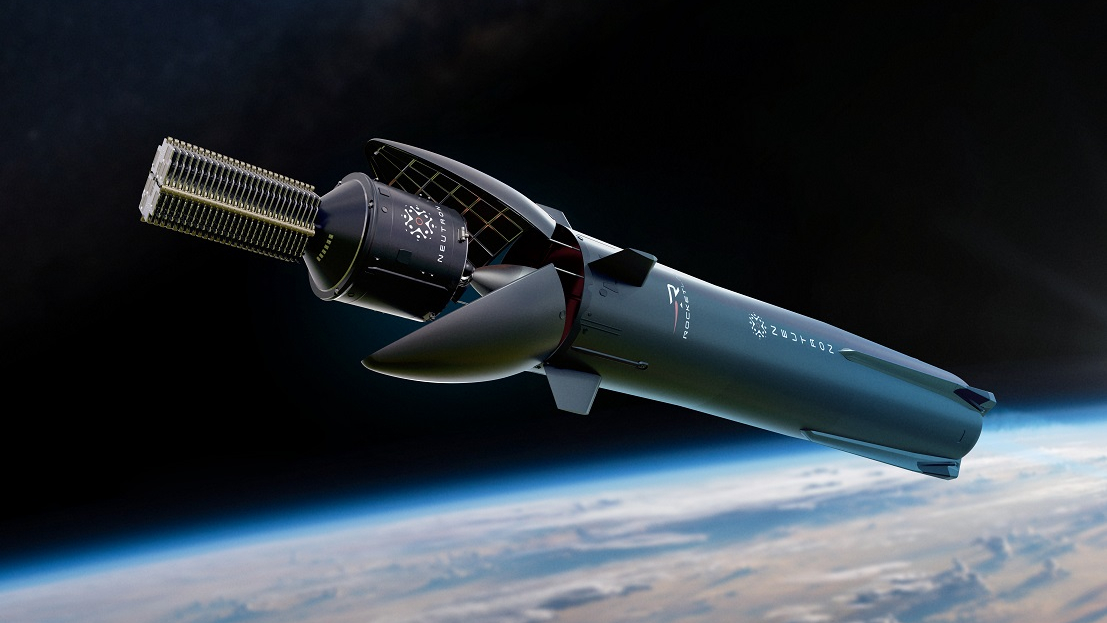
For investors watching Rocket Lab’s Neutron program slip to a planned Q4 2026 debut alongside rising capital expenditure, the higher-value Space Systems work from contracts like Heimdall could become a key catalyst.
However, analysts caution that the new contract does not eliminate near-term risks around cash burn or potential dilution from the company’s $3.0 billion ATM program.
Some of the more cautious analysts were already modeling revenue of approximately $1.3 billion and only $16.4 million in earnings by 2028, a far more conservative outlook than optimistic projections suggest.
Rocket Lab’s narrative projects $1.7 billion in revenue and $167.5 million in earnings by 2029, while separate analysis suggests a fair value of $103.91, representing a 27% downside to the stock’s current price.
Owning Rocket Lab requires belief that its vertically integrated model across launch, spacecraft, and space hardware can eventually support sustainable profits despite heavy Neutron spending and ongoing losses.
While the Heimdall contract and continued Synspective missions reinforce backlog and business diversification, execution risks tied to Neutron’s delayed first flight and equity dilution concerns remain central to the investment debate.
