
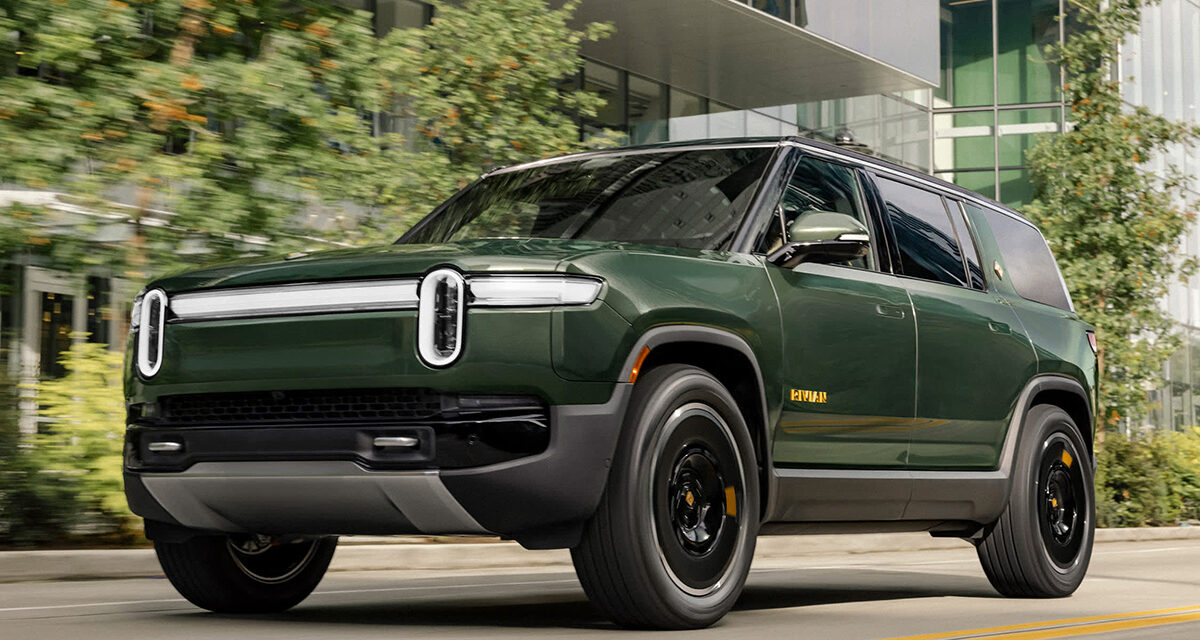
Rivian Automotive Inc. (NASDAQ: RIVN) was trading at approximately $14 on Friday, May 22, consolidating within a narrow range as investors weighed the company’s improved near-term financial position following the completion of the Volkswagen joint venture investment against the ongoing challenge of scaling electric vehicle production to profitability.
RIVN’s 52-week range of approximately $10 to $18 captures a period of relatively limited movement for the stock compared to the dramatic gyrations it experienced in 2022 and 2023, reflecting a market that is awaiting tangible evidence of manufacturing efficiency improvement before re-rating the company higher.
Volkswagen completed its investment in the Rivian joint venture in late 2024, committing up to $5.8 billion over several years in exchange for access to Rivian’s next-generation electrical architecture and software platform, a deal that significantly extended Rivian’s financial runway and validated its technology stack.
Rivian has been ramping production at its Normal, Illinois plant and preparing its Georgia manufacturing facility for the launch of the R2 mid-sized SUV, the model that management has positioned as the volume vehicle that will drive Rivian toward profitability at scale.
The R2 is expected to be priced meaningfully below the existing R1T pickup truck and R1S SUV, at approximately $45,000 starting price, targeting the mainstream electric vehicle market that accounts for the largest segment of total automotive sales volume.
Rivian delivered 51,579 vehicles in 2024, a figure that demonstrated its manufacturing capabilities but fell short of the volumes required to achieve positive gross margins, with the company working through engineering and supply chain improvements intended to reduce variable cost per vehicle.
The company reached a gross profit milestone in the most recent quarter, achieving a positive gross margin for the first time in company history, a result that analysts described as a critical de-risking of the investment case.
Analyst coverage of RIVN is broadly divided between those who see the Volkswagen partnership, gross profit inflection, and R2 launch as a compelling recovery story and those who question whether the company can sustain competitive differentiation against Tesla, Ford, and emerging Chinese EV rivals in the volume market.
The launch timeline for the R2 remains one of the most closely watched milestones for RIVN investors, with any delay in the Georgia plant ramp-up or R2 production start date likely to trigger significant selling pressure on a stock that is already pricing in a fairly optimistic recovery scenario.
RIVN’s next major catalyst is expected to be the R2 production launch update, which will provide the market with its clearest indication yet of whether Rivian can execute the volume manufacturing ramp that the current stock valuation implicitly requires.
