
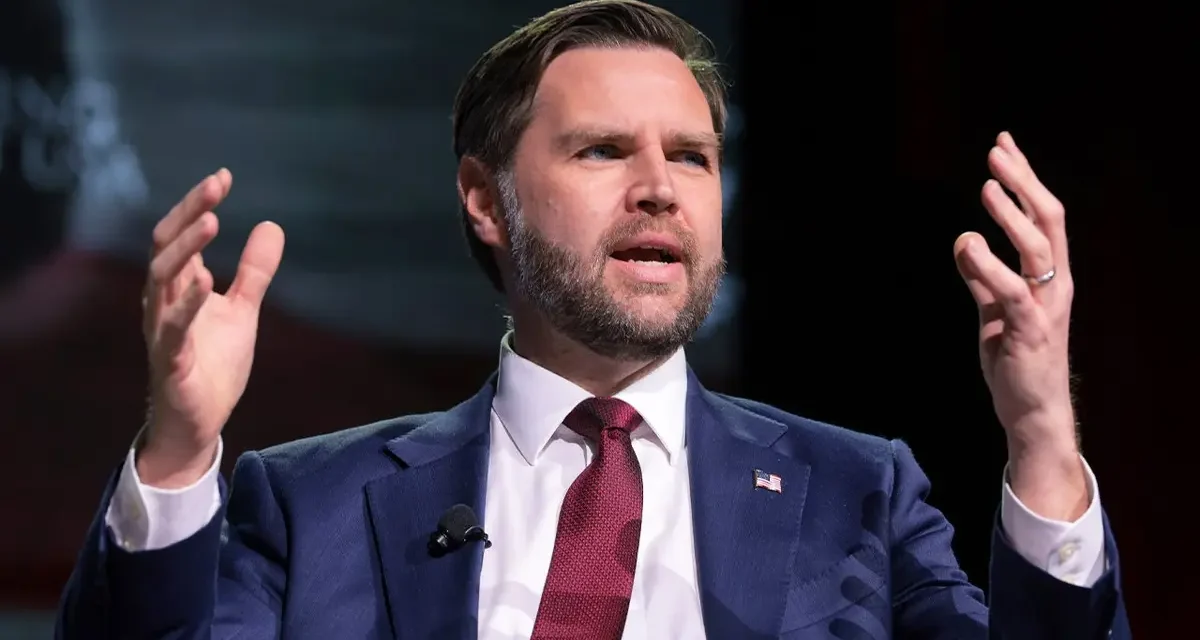
Former Vice President Kamala Harris holds a lead over Vice President JD Vance in a new hypothetical 2028 presidential matchup, according to a survey published on Thursday by the Public Sentiment Institute, though analysts caution that early polling at this stage of the cycle reflects name recognition more than actual voter preference.
The poll, which surveyed 893 likely voters on 21 May and carries a margin of error of 3.8 percentage points, shows Harris at 48.5 percent against Vance’s 42.1 percent in a direct matchup, with 9.4 percent of respondents undecided.
California Governor Gavin Newsom also leads Vance in the same survey, taking 45.1 percent to Vance’s 38.6 percent, and trails him narrower than Harris in matchups against Secretary of State Marco Rubio and Texas Senator Ted Cruz.
The results add to a body of polling that has been building throughout 2026, suggesting that while Vance enters the cycle as the clear front-runner for the Republican nomination, a range of prominent Democrats could mount competitive general election campaigns.
Within the Democratic primary, Harris still leads the field in most surveys, though her advantage over Newsom has narrowed considerably since the start of the year.
A separate Echelon Insights poll conducted in late April across 1,012 likely voters placed Harris at 22 percent among Democrats, with Newsom at 21 percent, Pete Buttigieg at 12 percent, and Alexandria Ocasio-Cortez at 10 percent, leaving a significant proportion of the Democratic primary electorate still undecided.
Harris publicly stated she is “thinking about” another White House run, while Newsom has spoken about 2028 without formally committing to a campaign.
Vance, meanwhile, has gone out of his way to appear uninterested in early positioning, telling reporters during a White House news conference earlier in May that he has little appetite for discussing “someone who’s barely been in one office for a year and a half angling for a job two and a half years down the road.”
President Trump has spoken favourably about both Vance and Rubio as potential successors, describing them as a potential “dream team” in August 2025, though his comments have been interpreted cautiously by analysts who note that Trump’s endorsement preferences are subject to change.
Among Republicans, Vance’s polling strength has shown some softening since the start of the year.
A YouGov survey from January 2026 placed him at 41 percent among Republican-leaning voters as their ideal 2028 candidate, but a follow-up survey in April showed his support had declined by five points, suggesting some volatility in his front-runner status.
Political scientists have repeatedly cautioned against placing too much weight on polls conducted two years ahead of a presidential election, noting that they measure name recognition rather than the actual dynamics that will shape the race once campaigning formally begins.
