
Lockheed Martin (NYSE: LMT) has received a cluster of international contract awards in recent weeks that analysts say deepens the revenue certainty underpinning the company’s $186 billion order backlog and strengthens its position at the centre of allied defence modernisation.
The awards span three separate programmes across two continents and extend Lockheed’s contractual relationships with Canada, Australia, and the United States well into the 2030s.
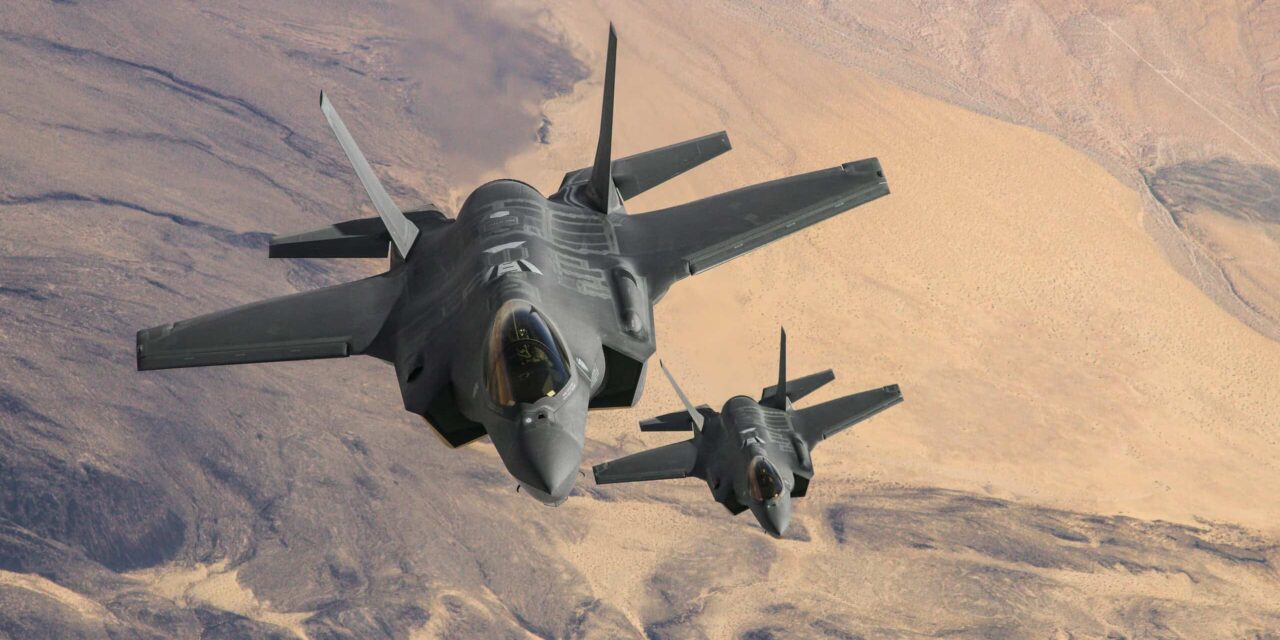
The most commercially significant of the three developments is a Pentagon award of an $879.1 million F-35 armament equipment contract running through 2030. The F-35 programme remains the largest single source of revenue in Lockheed’s portfolio, and each incremental multiyear contract reinforces the structural durability of that income stream against the backdrop of ongoing Washington budget debates about the fighter’s long-term production volumes.
Canada added two amendments to its existing CC-130J Hercules support agreement. The first, valued at $462.5 million, covers extended in-service support for the programme through June 2029. The second, estimated at $684.3 million, relates to RCAF 105 upgrades.
Taken together, the Canadian amendments add more than $1.1 billion in committed backlog and represent a vote of confidence from an allied military customer that recently acquired a significant fleet of F-35s. The continuity of the Hercules relationship also matters for the sustainment and services segment of Lockheed’s business, where margin profiles tend to be more stable than on fixed-price development work.
Australia’s contribution to the recent contract momentum is structurally the most interesting. Lockheed Martin has been designated as the preferred combat systems integrator for Australia’s future Virginia-class submarines. The Virginia programme is the centrepiece of the AUKUS agreement between the United States, United Kingdom, and Australia, and Lockheed’s preferred status as combat systems integrator places it inside one of the most strategically significant multinational defence procurement exercises of the current decade. Full contract value for this role has not been publicly specified, but the scope of Virginia-class combat systems integration across a multi-submarine fleet represents a meaningful long-duration revenue opportunity.
The investment narrative for Lockheed rests on a relatively simple thesis: that large, long-lived programmes like the F-35, missile defence, and allied modernisation will continue to underpin the backlog and support steady earnings growth. The most pessimistic analysts had modelled revenue growth of around 3.1% annually through 2029, reaching roughly $82.2 billion. The bullish projection sits at $87.8 billion by 2029, implying 5.4% annual growth and a step-up in earnings from around $4.8 billion today to $8 billion. The recent contract cluster does more to support the optimistic scenario than the cautious one.
Near-term execution risk remains a genuine concern. Fixed-price development programmes have generated charges at Lockheed in past quarters, and investors have been watching margin repair progress closely as the company navigates cost inflation across several classified and unclassified programmes. The Canadian and F-35 awards are incremental additions to well-established programmes, which reduces execution uncertainty compared to new development starts.
Concentration risk in a small number of government customers remains the central structural vulnerability. Any significant shift in US or allied defence priorities, budget priorities, or geopolitical appetite for major procurement could introduce volatility into a backlog that looks extremely durable today. For now, that risk appears remote. The AUKUS programme, the F-35 production ramp, and Canada’s modernisation commitments are all in active execution phases.
The stock has rallied through 2026 on the back of elevated global defence spending sentiment. At current levels, fair value estimates cluster in a range that implies modest additional upside, with one investor consensus model suggesting a fair value of approximately $637.60.
