
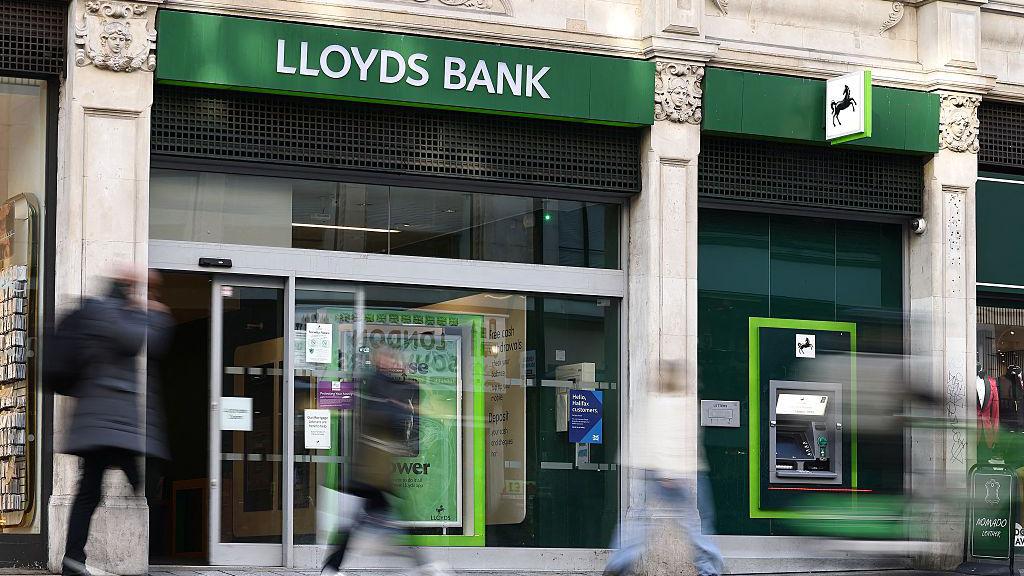
Lloyds Banking Group plc (LSE: LLOY) has come under sustained pressure in recent sessions, with shares falling 2.65% to GBX 94.04 on Friday May 15 and the stock sitting well below its 52-week high of GBX 114.60 as a combination of macro forces and domestic political uncertainty bear down on UK-focused banking stocks.
The session’s weakness was not specific to Lloyds but reflected a broader sector pattern, with NatWest Group (LSE: NWG) declining 1.61% to GBX 561.20 and Barclays (LSE: BARC) falling 3.04% to GBX 421.50 in parallel moves that confirmed the selling was driven by external headwinds rather than any company-specific development.
UK 10-year gilt yields have moved above 5% in recent weeks, a level that represents one of the most significant sources of pressure on domestically-exposed UK financial stocks.
Higher yields can benefit bank net interest margins in the short term but erode loan volumes and mortgage demand over time, creating a mixed and uncertain outlook for a bank as heavily mortgage-focused as Lloyds, which holds mortgages as roughly 66% of its total loan portfolio.
Lloyds’ first quarter 2026 results had been operationally solid, with pretax profit rising 33% to £2.025 billion, ahead of analyst forecasts, and management reaffirming full-year performance targets.
The bank booked a £295 million provision in Q1, part of which related to the Middle East conflict and the resulting more cautious outlook for the UK economy.
Morningstar’s analysis notes that Lloyds’ heavy reliance on net interest income makes its performance particularly susceptible to changes in interest rates, a dynamic that cuts both ways depending on the direction and reason for rate movements.
The political backdrop has added an additional layer of uncertainty, with Prime Minister Keir Starmer facing significant internal pressure following Labour’s poor performance in the May local elections, where the party lost more than 1,400 councillors primarily to Reform UK and the Greens.
The scale of those losses has sharpened internal calls for a leadership transition and introduced new questions about the stability and direction of Labour’s economic programme, with bond markets pricing in that political risk alongside the inflation outlook.
Despite the share price weakness, Lloyds has maintained an active capital return programme, repurchasing and cancelling over 100 million shares across multiple tranches in May 2026 alone through its ongoing buyback scheme operated via Goldman Sachs International.
The bank’s P/E ratio stands at 12.25 times and its 52-week low is GBX 72.85, meaning the stock has recovered significantly from last year’s lows even as it sits in the lower half of its annual trading range.
For investors assessing whether the recent drop represents a buying opportunity, the key questions centre on how long gilt yields remain elevated, whether the political uncertainty resolves or deepens, and whether the UK mortgage market holds up under the pressure of higher borrowing costs.
Lloyds’ operational performance and capital discipline have been consistent, but the macro and political environment it is navigating in 2026 is among the most demanding for UK domestic banks in recent memory.
