
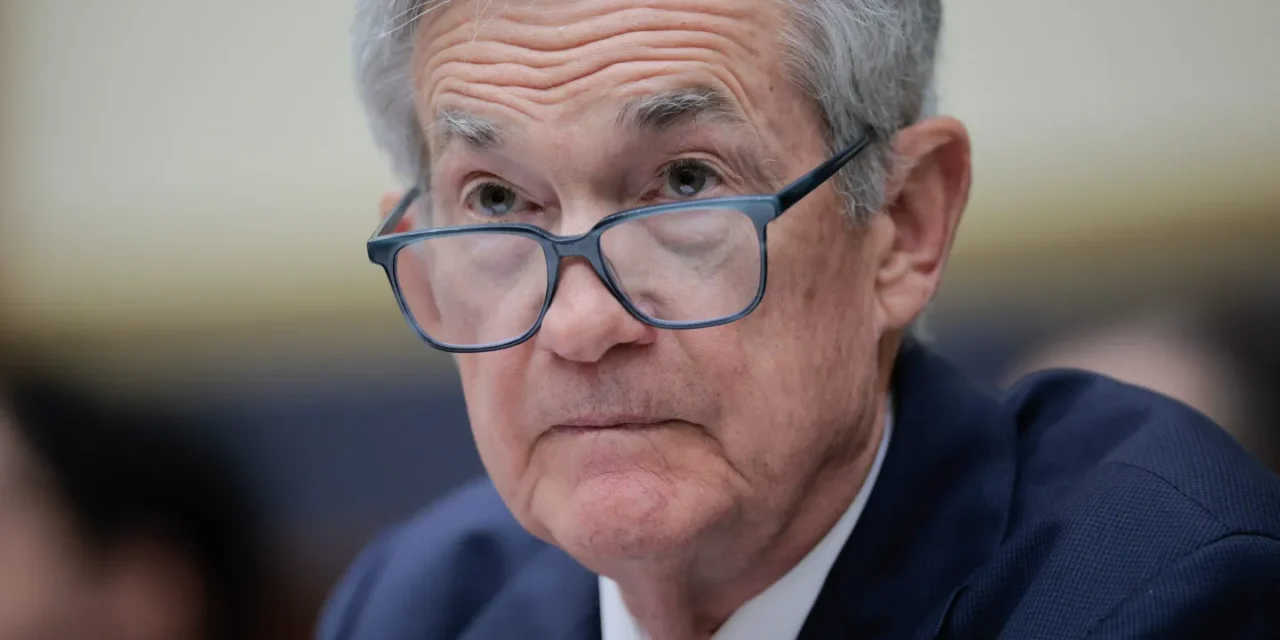
The Senate confirmed Kevin Warsh as the 17th chair of the Federal Reserve in a 54-45 vote on Wednesday, May 13, the closest and most politically divided confirmation in the modern era of Fed leadership, handing President Donald Trump a long-sought victory that comes at one of the most challenging moments for US monetary policy in decades.
The vote was almost entirely along party lines, with only Pennsylvania Democrat John Fetterman crossing the aisle to support Warsh, whose confirmation had been delayed for months by a dramatic standoff with North Carolina Republican Senator Thom Tillis, who had initially blocked a committee vote to protest a Justice Department criminal investigation targeting outgoing Fed Chair Jerome Powell.
Tillis eventually dropped his opposition after a US attorney agreed to drop that probe, clearing the path for Warsh’s confirmation just days before Powell’s eight-year tenure as chair formally expires on May 15.
Powell has indicated he will remain on the Federal Reserve’s Board of Governors for a period after stepping down as chair, a rare departure from historical precedent driven by his stated intention to stay until a separate investigation into a multibillion-dollar renovation of the Fed’s Washington headquarters is resolved.
Warsh, 56, served on the Federal Reserve’s Board of Governors from 2006 to 2011 and has been a consistent public critic of the central bank’s approach to monetary policy, having called for “regime change” at the Fed in a CNBC interview last year and arguing that the institution’s balance sheet should be reduced at a faster pace than currently planned.
Trump has made no secret of his expectation that Warsh will deliver the interest rate cuts the president has repeatedly demanded, though the new chair inherits an economy where April inflation came in at 3.8% year-over-year, the highest reading in nearly three years, making aggressive rate reductions extremely difficult to justify without triggering a credibility crisis at the central bank.
Trump’s allies acknowledged this tension, with some warning publicly that rate cuts may have to wait given current inflationary conditions, while Wall Street analysts noted that Warsh’s long track record as a monetary hawk suggests he is unlikely to cave to political pressure in ways that could further destabilise market confidence in the Fed’s independence.
Elizabeth Warren, the Senate Banking Committee’s ranking member, warned before the vote that Warsh’s confirmation would erode the central bank’s independence from the executive branch at the exact moment when that independence is most needed to credibly fight inflation driven by the Iran conflict and tariff policies.
