
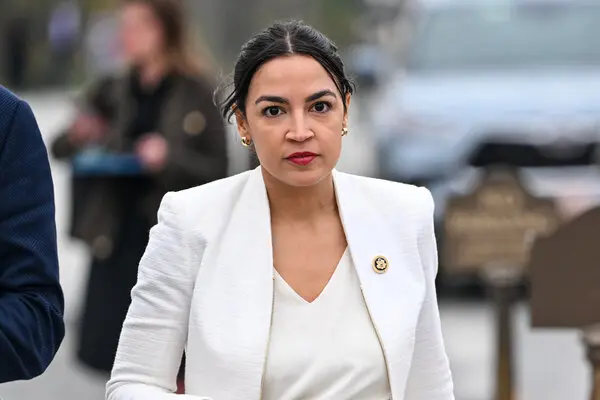
New York Representative Alexandria Ocasio-Cortez sharpened a dividing line within the Democratic Party on Friday, publicly calling former Georgia Representative Marjorie Taylor Greene a “proven bigot and antisemite” and warning that aligning the progressive movement with figures like Greene would not serve the left’s broader goals.
The remarks came during a conversation at the University of Chicago Institute of Politics moderated by former Obama strategist David Axelrod, when a student asked Ocasio-Cortez whether she stood by previous comments about white supremacist sympathisers in the House, and why she had worked with some Republicans despite that view.
Ocasio-Cortez confirmed she stood by those earlier remarks and expressed willingness to work across the aisle, pointing to her collaboration with Republican Representative Tim Burchett of Tennessee as an example of productive bipartisan outreach on specific issues.
But she drew a firm line when it came to Greene, saying she did not trust her on what is good for Gazans and Israelis and that she did not believe it benefited the progressive movement to align the left with white nationalists in that particular context.
Greene, who resigned from Congress in January 2026 and has increasingly positioned herself as a populist outsider critical of both Trump and what she calls the “Epstein class,” responded on Monday by calling Ocasio-Cortez’s characterisation “very hypocritical,” denying she is an antisemite, and reiterating that her opposition is to US funding of Israel rather than any ethnic or religious group.
The exchange drew a notable response from several progressive voices who criticised Ocasio-Cortez rather than Greene, with Drop Site News editor Ryan Grim writing on X that Greene had sacrificed her political career to stand against genocide and against the Epstein class, a characterisation that illustrated how much the political alignment on certain issues has shifted in the Trump era.
The confrontation exposed a clear strategic split on the left between Ocasio-Cortez, who appears unwilling to bracket Greene’s broader record in service of issue-by-issue coalition building, and California Representative Ro Khanna, another prominent potential 2028 presidential candidate, who has specifically partnered with Greene to force a vote on releasing the Jeffrey Epstein files.
Khanna told NBC News on Monday that he was raised with Midwestern values, still believes in finding common ground as Americans to stay out of foreign wars and hold the Epstein class accountable, while remaining uncompromising in his commitment to multiracial democracy.
The progressive advocacy group Our Revolution declined to take sides in the dispute but noted that in a polarised environment, issue-based coalition building around anti-corruption, monopoly power, and endless war can be effective, even when the ideological overlap is limited.
Greene’s history includes posting a Facebook image of herself holding a gun alongside images of Ocasio-Cortez and members of the so-called “Squad,” using language like “jihad squad” and “Hamas Caucus” to refer to progressive lawmakers, and a lengthy record of amplifying conspiracy theories that House Democrats had previously moved to censure her over.
The debate reflects a broader tension within the Democratic Party about how to rebuild political power during Trump’s second term, specifically over whether shared populist grievances with certain right-wing figures can be productively harnessed, or whether doing so erases records that the progressive base regards as disqualifying.
