
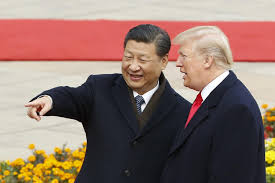
President Donald Trump is preparing to visit China for a high-stakes summit with President Xi Jinping scheduled for May 14 and 15, with the ongoing conflict in Iran expected to dominate discussions alongside longstanding tensions over trade and Taiwan.
The summit, which Trump delayed in March due to the Middle East conflict, will be his first visit to China since 2017. Officials on both sides have framed it as an opportunity to stabilise a relationship that has been strained by tariffs reaching as high as 145 percent on Chinese goods entering the United States. However, the unresolved Iran war is widely expected to complicate efforts to make substantive progress on those core economic issues.
US Treasury Secretary Scott Bessent has confirmed that Iran will be on the agenda at the Beijing meetings. The situation in the region has dominated the diplomatic backdrop in the days leading up to the visit, with China hosting Iranian Foreign Minister Abbas Araghchi in Beijing on May 6 for the first time since the US-Israeli war on Tehran began in late February. Chinese Foreign Minister Wang Yi used that meeting to call for an immediate end to hostilities and pressed for the Strait of Hormuz to be reopened to shipping traffic.
Beijing has positioned itself as a voice for stability throughout the conflict, with Xi repeatedly calling for peace and pledging support for developing countries suffering from the energy disruption caused by Hormuz-related supply disruptions. That positioning has arguably strengthened China’s global standing, with several Western governments stepping up engagement with Beijing in recent months.
Analysts have suggested Xi may seek to use Trump’s weakened negotiating position, given his desire to end the war before arriving in Beijing, to extract concessions on key issues including Taiwan’s status, US restrictions on Chinese access to advanced technology, and tariffs on Chinese goods. Trump warned last month that he would impose an additional 50 percent tariff on Chinese goods if Beijing provided military assistance to Iran. China has called US-Israeli strikes on Iran illegal, while also criticising Iranian attacks on Gulf states.
Beijing’s core priorities at the summit are expected to include tariff relief, technology access, and a more stable long-term framework for the bilateral relationship. Analysts say China will approach the talks with cautious pragmatism, seeking small concrete outcomes rather than a broad reset that would be unlikely given Trump’s unpredictable negotiating style.
The Iran war’s shadow over the summit raises concerns that it could crowd out progress on the economic agenda, including efforts to resolve the rare earths dispute and address ongoing complaints from US companies about Chinese market access conditions. Both governments have nonetheless signalled a desire to use the meeting to demonstrate that dialogue remains open.
