
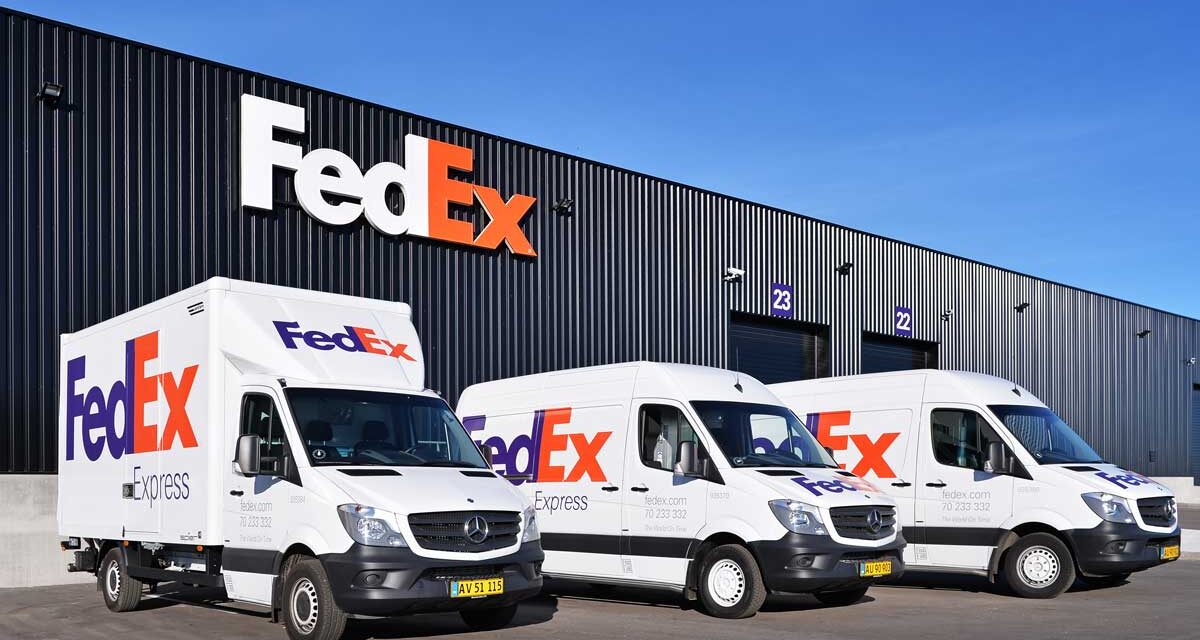
FedEx (FDX) traded between $373.46 and $381.00 on Thursday, settling around $376 in a session that reflected the company’s current position: a business executing a credible multi-year transformation while simultaneously absorbing fresh competitive noise from a rival that simply does not stop expanding. The Amazon logistics announcement from earlier in the week cast a shadow over the sector that FDX had not yet fully shaken by Thursday’s close.
Amazon’s launch of Amazon Supply Chain Services — opening its full logistics network of warehouses, freight forwarding, ocean freight, and parcel delivery to third-party businesses — was the headline that rattled both FDX and UPS on Monday and Tuesday.
The market reaction was swift, and several analysts who cover the logistics sector argued that the selloff was likely exaggerated. Amazon’s air network, while large, cannot replicate FedEx’s 650-plus aircraft global fleet overnight. FedEx generates a premium revenue mix relative to its volume, and the global express segment remains structurally advantaged for time-sensitive shipments that Amazon’s network is not yet designed to handle reliably.
What gets underappreciated in the Amazon narrative is the scale and ambition of FedEx’s own transformation. The DRIVE cost-reduction programme has already exceeded its original $4 billion savings target and has been extended to a $6 billion goal by fiscal 2027. Network 2.0 — the consolidation of the historically separate Express and Ground operations into a single intelligent network — is expected to add another $2 billion in cumulative savings by end of 2027. The company is closing approximately 475 facilities as part of this consolidation, rerouting volume through a more efficient hub-and-spoke architecture that reduces cost per package on the express and ground side simultaneously.
The FedEx Freight spin-off, scheduled to complete on June 1, 2026, is the other major structural catalyst in the near term. FedEx Freight is being carved out as an independent public company with 26,000 doors, 355 service terminals, and 39,000 employees. Management has outlined medium-term revenue growth guidance of 4% to 6% CAGR for the standalone Freight entity, which helps investors separately value the LTL business. The spin-off will also clarify the margin profile of the remaining express and ground network, potentially improving the investment story for both pieces.
The FDX data and technology strategy is also worth attention. The FedEx Dataworks partnership with ServiceNow, announced this week, embeds FedEx logistics intelligence directly into commercial procurement and supply chain workflows — positioning FedEx not just as a carrier but as a data layer inside its customers’ operations. The company processes approximately 2 petabytes of data daily, which is a genuine competitive asset if monetised effectively through the fdx commerce platform for AI-powered demand forecasting and route optimisation.
Q3 fiscal 2026 results showed net income of $1.06 billion and a revenue beat of 2% above consensus. The 52-week range from $213 to $404 reflects the dramatic recovery the stock staged through 2025, which has now given way to consolidation. With analyst consensus at Buy and a price target around $388, the market is pricing in moderate upside from Thursday’s close. The Amazon overhang is real but not necessarily fatal to the FedEx thesis. The company’s global air network, the Freight spin-off value unlock, and the DRIVE cost trajectory collectively make the stock interesting at current prices — assuming the June capex story around Network 2.0 continues to track to plan.
