
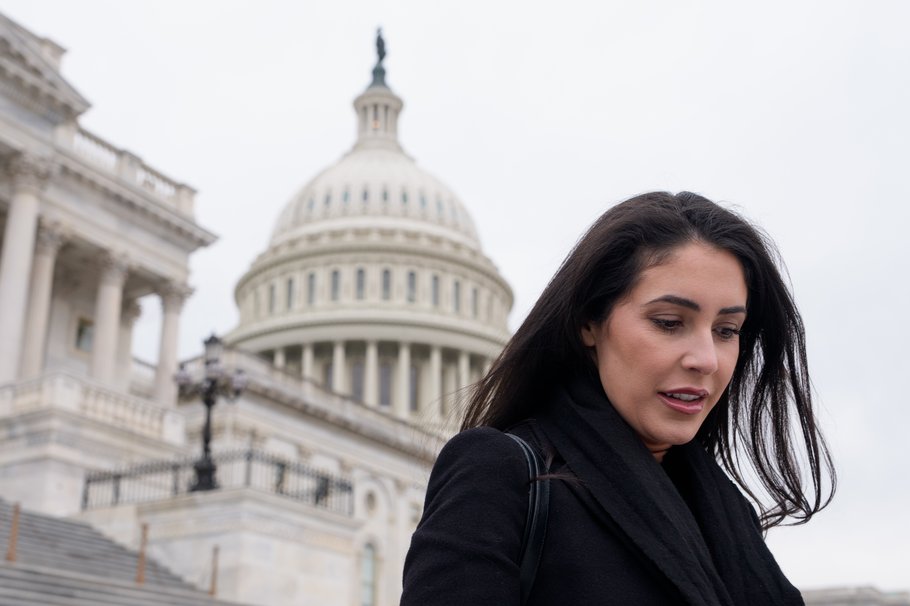
Florida Congresswoman Anna Paulina Luna has gone public with a pointed rebuke of the bipartisan coalition that passed legislation mandating AI-powered driver monitoring systems in all new vehicles sold in the United States from 2027, posting on social media that she voted against the measure and expressing frustration that a significant number of House Republicans crossed the aisle to ensure it passed.
“I voted against this. Unfortunately, too many Republicans sided with Democrats and it passed,” Luna wrote, a statement that reflects her broader positioning as a civil liberties-focused conservative willing to challenge her own party when she believes it is moving in the direction of expanding government surveillance capabilities over ordinary Americans.
The legislation, which traces its legislative roots to Section 24220 of the 2021 Infrastructure Investment and Jobs Act, requires the National Highway Traffic Safety Administration to mandate driver alcohol detection systems and impairment monitoring technology in all newly manufactured passenger vehicles by the 2027 model year, with automakers given a two to three year implementation window after final regulations are published.
The technology works through a combination of passive breath sensors that continuously measure the driver’s blood alcohol concentration without requiring any physical interaction, and infrared cameras that monitor eye movement, head position, and steering behaviour patterns to detect signs of impairment from alcohol, drugs, fatigue, or medical events, with the system capable of restricting speed or locking the ignition if it determines the driver poses a safety risk.
Supporters of the legislation argue the public health case is straightforward: drunk driving kills approximately 13,000 people in the United States annually, a figure that has remained stubbornly stable for decades despite extensive enforcement efforts, and passive impairment detection represents the kind of structural prevention that could materially move a statistic that conventional methods have failed to reduce.
Critics, including Luna and at least 57 Republican members who according to Townhall voted against an amendment to strip the provision from broader legislation, frame the system differently: as government-mandated surveillance hardware embedded in a private vehicle, capable of collecting biometric data including eye movement patterns and breath chemistry that could be stored, sold to third parties, or shared with insurance companies without any existing federal requirement for disclosure or consent.
NHTSA’s own progress reports to Congress have acknowledged that the underlying detection technology faces significant accuracy challenges, with the agency conceding that detection technology near the legal blood alcohol limit “continues to have an error rate that would be unacceptably high” given the billions of driving trips that occur in the country each year, a technical admission that automakers have been citing in their own resistance to the mandate timeline.
The false positive risk is the element of the debate that resonates most viscerally with ordinary drivers: a system that misidentifies a sober but tired parent driving their children to school as impaired and restricts the vehicle’s speed, or a breath sensor malfunction that prevents a driver from starting their car entirely, represents a quality-of-life disruption that is qualitatively different from other driver assistance mandates that have preceded it.
Senator Mike Lee posted on X in support of the repeal push: “Raise your hand if you don’t want a government-surveillance hub and kill switch in your car,” while Representative Keith Self of Texas wrote that “Americans want freedom, not remote controls and mass surveillance” and called on Congress to move to repeal the mandate before it takes effect.
Luna’s frustration with the 57 Republicans who voted against repeal reflects a larger intraparty tension between the deregulatory, anti-surveillance instincts of the libertarian and populist wings of the Republican coalition and the more establishment-aligned members who supported the measure on safety grounds, a divide that is becoming increasingly visible as AI-driven surveillance technologies begin intersecting with consumer hardware that Americans use in their daily lives.
