
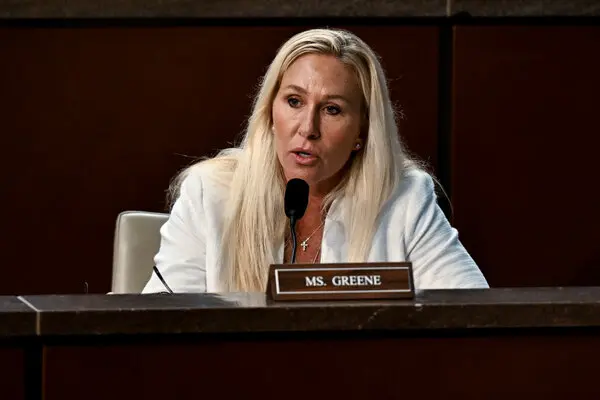
Former Republican Congresswoman Marjorie Taylor Greene has reignited one of the most charged controversies in recent American political memory, posting on X to demand answers about the July 2024 assassination attempt on Donald Trump in Butler, Pennsylvania, and questioning why the president himself is not leading a public investigation into the circumstances of the attack that killed supporter Corey Comperatore.
Greene, who resigned from the House of Representatives on January 5, 2026 following a public falling-out with Trump that began over her support for releasing the Epstein files, wrote: “Corey Comperatore’s family deserves to know the truth about Matthew Crooks and what happened in Butler on July 13, 2024. President Trump, of all people, should be leading the charge. Why isn’t he? That’s the question.”
In a follow-up post, she sought to draw a distinction between doubting the event occurred and questioning whether the full facts are known, writing: “I’m not calling the Butler assassination a hoax. But there are a lot of questions that deserve public answers. I’m asking why won’t Trump release the information about Matthew Crooks? Did he actually act alone? If not, who is behind him and who helped him? Why the cover up?”
The posts represent a significant escalation in Greene’s post-congressional positioning, where she has increasingly aligned herself with narratives that put her at odds with the mainstream Republican party and the Trump White House simultaneously, while carving out an audience among voters who feel neither party is providing honest accountability.
Greene’s split from Trump has been accompanied by a series of positions that place her outside the current GOP consensus, including calling for Trump to be removed from office under the 25th Amendment over his handling of the Iran war, arguing the conflict was started as a distraction from Epstein disclosures, and criticising Trump’s threats to strike Iran’s electrical infrastructure as landing hardest on ordinary civilians.
The political context in which she is making these statements also involves the special election to fill her vacated Georgia 14th Congressional District seat, which was won by Trump-backed Republican Clay Fuller after a runoff against Democrat Shawn Harris, a retired Army brigadier general who raised $6.4 million but could not overcome the district’s 37-point Republican lean.
On the Piers Morgan Uncensored programme, Greene said Trump had “shown no compassion” after she told him her family was receiving death threats, claiming he responded by saying the threats would be her fault if her son was killed, a characterisation the White House has not formally responded to.
Critics from the right have framed Greene’s amplification of Butler-related questions as a gift to the political left, arguing that every time she raises doubt about an official account her former allies rely on, she provides ammunition to media outlets that treat her as a useful disruptor of conservative unity.
The broader picture that has emerged since her resignation is of a politician who retains a significant social media following and a clear appetite for controversy, but who has moved from the corridors of institutional power into a space where influence operates primarily through the friction of public attention rather than legislative action.
Whether Greene parlays this period into a Senate run, a media role, or another congressional campaign remains to be seen, but the consistent thread through her recent output is an attempt to position herself as the only figure willing to ask questions that the Republican establishment and the White House both want to remain dormant.
