
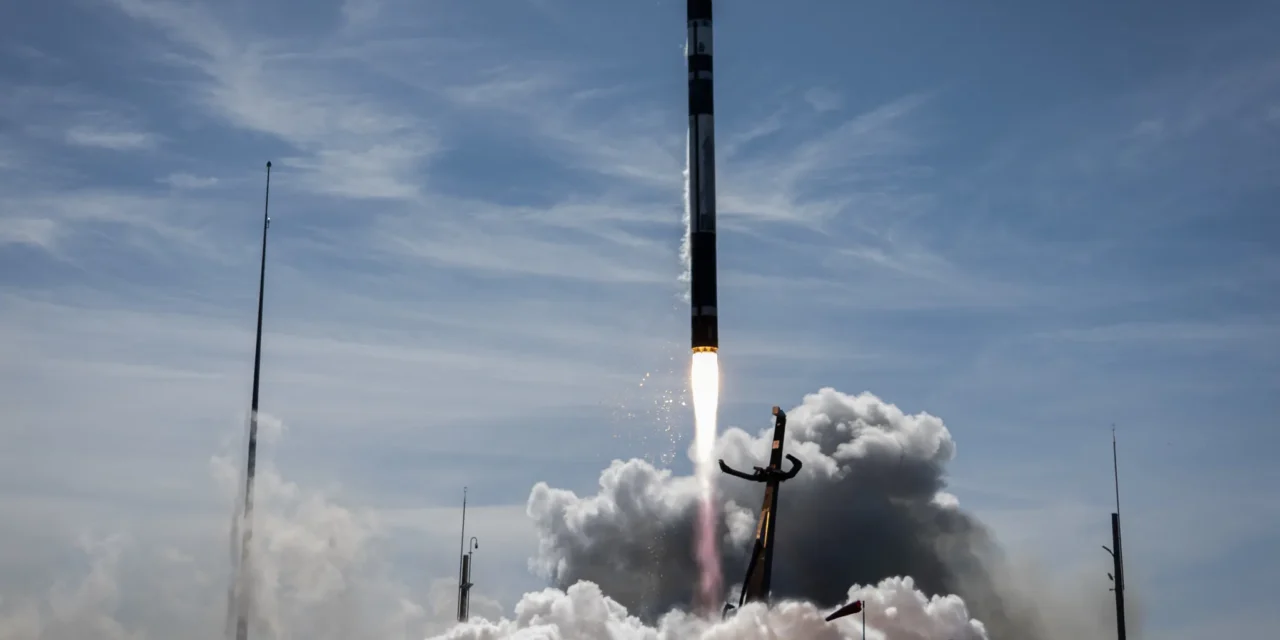
Rocket Lab Corporation (NASDAQ: RKLB) shares pulled back nearly 2 percent in pre-market trading on Monday April 21, not on any company-specific news but on contagion from AST SpaceMobile’s (NASDAQ: ASTS) satellite failure over the weekend, where a BlueBird 7 satellite entered an incorrect orbit before de-orbiting, adding pressure across the broader space sector.
The move was characterised by analysts as short-term sentiment noise rather than anything that speaks to Rocket Lab’s own trajectory, with Stifel Nicolaus on Monday reiterating its Buy rating and lifting its price target from $90 to $105, pointing to roughly 21 percent upside from the stock’s April 16 close of $82.93. Roth Capital had already raised its target from $90 to $100 the previous week, and Morgan Stanley’s Overweight call with a $105 target, initiated in January, remains in place.
The fundamental picture has changed meaningfully over the past year. Rocket Lab’s stock is up approximately 322 percent over the last twelve months, building from a 52-week low of $18.21 to a recent high of $99.58, as a combination of launch cadence milestones, defence contract wins and strategic acquisitions converted scepticism into momentum.
The most significant recent transaction was the April 14 closing of the Mynaric AG acquisition for $155.3 million in cash and shares, which gives Rocket Lab its first European operational footprint and adds laser-based optical communications terminal technology to its vertical stack. Rocket Lab plans to scale Mynaric’s production to supply optical comms hardware for satellite constellations across Europe, the US and other markets, positioning the combined entity more competitively in next-generation multi-orbit network architectures.
On the launch side, the company has completed six Electron missions in 2026 so far including the 85th career flight, and secured a $190 million block-buy contract for 20 HASTE hypersonic test flights over four years under the MACH-TB 2.0 programme. Analyst Sujeeva De Silva at Roth Capital specifically highlighted the launch segment’s momentum, estimating approximately 20 percent year-on-year growth in Electron launch count for 2026.
The longer-term catalyst is Neutron, the company’s 43-metre partially reusable rocket designed for satellite mega-constellation deployment, cargo and potentially human spaceflight. Key components including the “Hungry Hippo” fairing and thrust structure are ready for final assembly, with a first launch expected in late 2026 or early 2027. If Neutron achieves operational status on that timeline, it would position Rocket Lab as the most credible Falcon 9 (SpaceX) competitor outside of government-backed launch programmes.
FY2025 revenue reached $601.8 million with a total backlog of approximately $1.85 billion, and the company ended Q4 with approximately $977 million in cash, cash equivalents and marketable securities, providing substantial runway to fund Neutron development and integration activities. Q1 2026 results are due May 7.
