
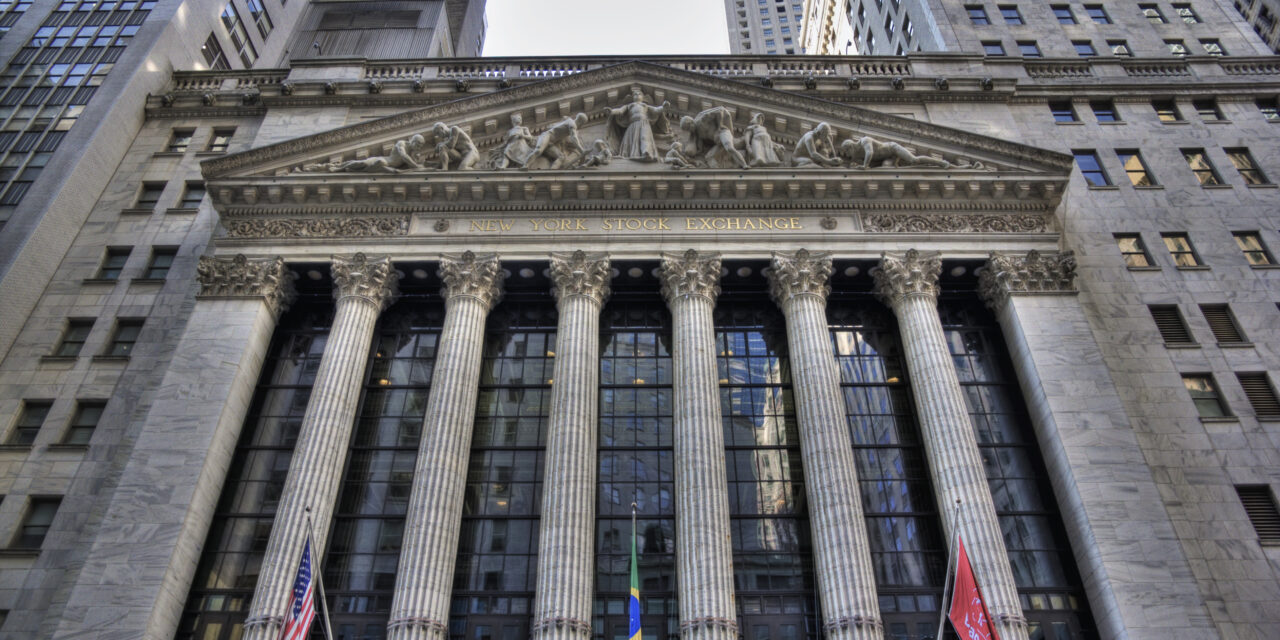
The week ending April 17 was one of the strongest in 2026 for US equities, with the Dow Jones closing at 49,447 and the S&P 500 extending its record run above 7,000. Within that rally, these five names had distinct individual narratives shaping their moves.
Oracle Corporation (ORCL) — ~$174, recovering from prior week lows
Oracle (NYSE: ORCL) had a significant week earlier, surging more than 11 percent on April 13 after announcing an expanded partnership with Bloom Energy that could see Oracle procure up to 2.8 gigawatts of fuel cell systems for its data centres, with 1.2 gigawatts already contracted. The stock pulled back by Friday to around $174 after touching intraday highs near $185 on April 18, but analysts remain broadly constructive. D.A. Davidson’s Gil Luria said Oracle is “in very good shape in the AI landscape but still needs execution.” The stock has a 52-week range of $121 to $345, reflecting how dramatically its fortunes have swung as AI data centre demand expanded and then investors grew cautious. Earnings are due June 16.
Applied Digital Corporation (APLD) — ~$31, up significantly from lows
Applied Digital (NASDAQ: APLD) has recovered from a March selloff to trade around $30-$31, giving it a market cap of approximately $9 billion. The AI data centre operator posted stronger-than-expected fiscal Q3 results in April, with revenue of $126.6 million versus a $76.6 million estimate, and delivered adjusted EPS of nine cents against expectations for a loss of ten cents. The company amended its CoreWeave data centre lease in March and has been building out capacity at pace. The 52-week range of $3.81 to $42.27 illustrates the violent swings the stock has been through. Twelve analysts carry a Strong Buy consensus with a $37.75 average price target. With 205 employees, APLD is a lean operator in a capital-intensive business.
The Boeing Company (BA) — $223.38, +2.06% on the week’s close
Boeing (NYSE: BA) closed Friday at $223.38, up 2.06 percent on the day, benefiting from a relief rally as Iran’s announcement of a Strait of Hormuz reopening lifted commercial aviation sentiment across the sector. Lower fuel cost expectations improve airline profitability and therefore the financing capacity for new aircraft orders, giving Boeing’s order backlog a more optimistic near-term outlook. The stock is up 38 percent over the past twelve months from its 52-week low of $156.47, though it remains well below its 2019 all-time high of $430. Earnings are due April 22 and losses are expected given ongoing production and cost challenges. Morningstar’s fair value estimate of $352 implies significant long-term upside from current levels.
D-Wave Quantum Inc (QBTS) — gaining within broader quantum sector rally
D-Wave (NYSE: QBTS) participated in the Nvidia-driven quantum sector rally this week, with QBTS gaining 0.79 percent on Friday as part of a multi-day run triggered by Nvidia’s introduction of its Ising Calibration and Decoding models. D-Wave has a differentiated position within the quantum space as a provider of annealing-based quantum computers, which have found commercial use in logistics and optimisation problems and give it a nearer-term revenue profile than gate-based rivals. The stock remains highly volatile and sits well below 2024 peak levels, but the broader sector momentum from Nvidia’s validation of quantum computing’s commercial relevance has improved sentiment for the entire category including D-Wave.
Rivian Automotive Inc (NASDAQ: RIVN) — ~$17.23, +2.01%
Rivian (NASDAQ: RIVN) closed the week around $17.23, gaining 2 percent in the latest session as EV sector sentiment improved alongside the broader market risk-on move. The stock has been trading in the $14-$22 range throughout 2026, recovering from lows but struggling to find sustained upward momentum. The Q4 2025 earnings per share loss of $0.53 came in better than the $0.71 estimate, a 24.7 percent positive surprise that provided some reassurance on the cost reduction trajectory. Rivian’s next earnings report is due April 30, which will be closely watched for updates on the R2 ramp timeline, gross margin progress and any updates on the Volkswagen partnership that remains one of the more significant strategic relationships in the EV sector. Market cap sits around $21.4 billion.
