
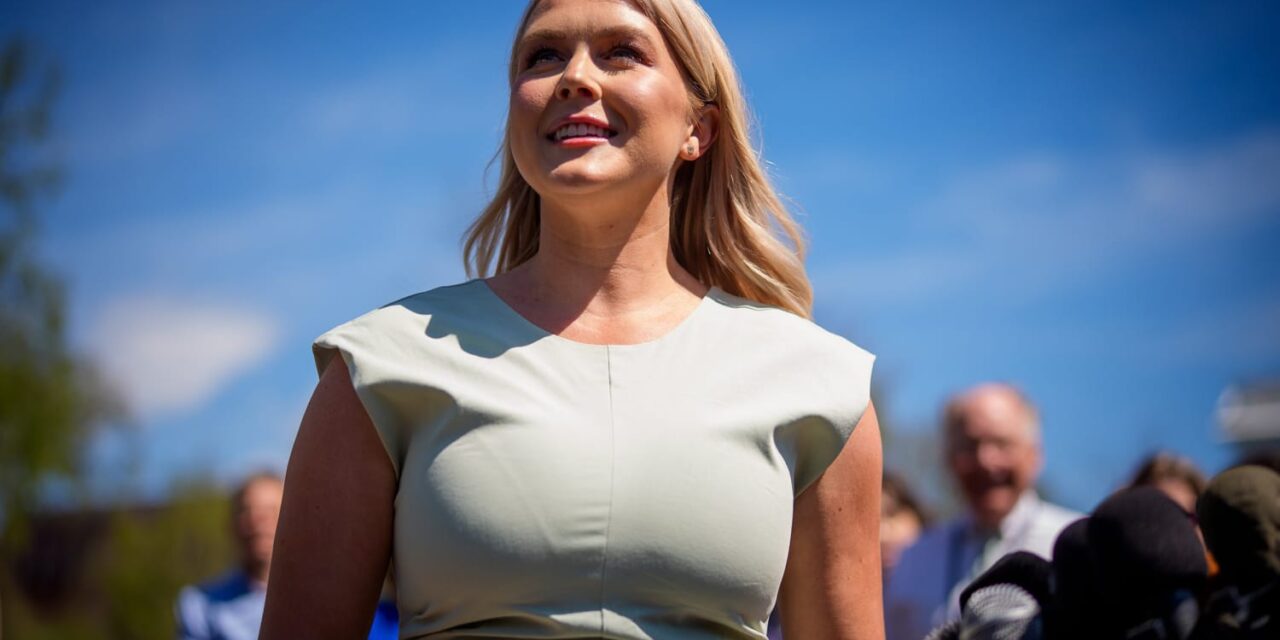
The White House is managing a communications environment that has grown increasingly chaotic, driven in large part by President Trump’s habit of taking calls from journalists on his personal cellphone without briefing his own press team, a dynamic that has reportedly left press secretary Karoline Leavitt repeatedly blindsided by statements that contradict her public positions.
According to a Wall Street Journal report, Trump has taken to taunting Leavitt by telling her he has leaked information to a journalist without revealing what he said or to whom, leaving her to “wait and see” like the rest of the country.
The pattern has created a cycle of contradictions that has been difficult to manage publicly. Trump told CNN the US was “ahead of schedule” in its bombardment of Iran, then told Time magazine two days later there was “no time limit.” He told Axios there was “practically nothing left to target in Iran” before threatening on Truth Social to wipe out a “whole civilization.”
White House aides have reportedly taken turns warning Trump against the calls, which have sown confusion across the government and among allies, but the behaviour has continued despite those efforts.
Leavitt, described as the youngest press secretary in White House history, was present in the Situation Room in February when Trump first discussed launching strikes on Iran. Communications director Steven Cheung reportedly warned the president a war would create a public relations crisis given past statements, while Leavitt told him the press team would manage it as best they could.
Despite the operational strain, Leavitt has publicly defended Trump’s conduct throughout, describing him as “a steady leader our country needs.” She said he “campaigned proudly on his promise to deny the Iranian regime the ability to develop a nuclear weapon, which is what this noble operation accomplishes.”
The president reportedly told an adviser after his profanity-filled Easter Sunday Truth Social post demanding Iran “open the F—n’ Strait” that he deliberately improvised the post to appear “unstable and insulting” as a negotiating tactic with Tehran.
The war has killed 13 US servicemembers and thousands of others, and carries a price tag that the Center for Strategic and International Studies estimates at close to $30 billion. Whether Leavitt can continue to be an effective voice for an administration that keeps its own communications team guessing is becoming one of Washington’s more openly discussed questions.
