
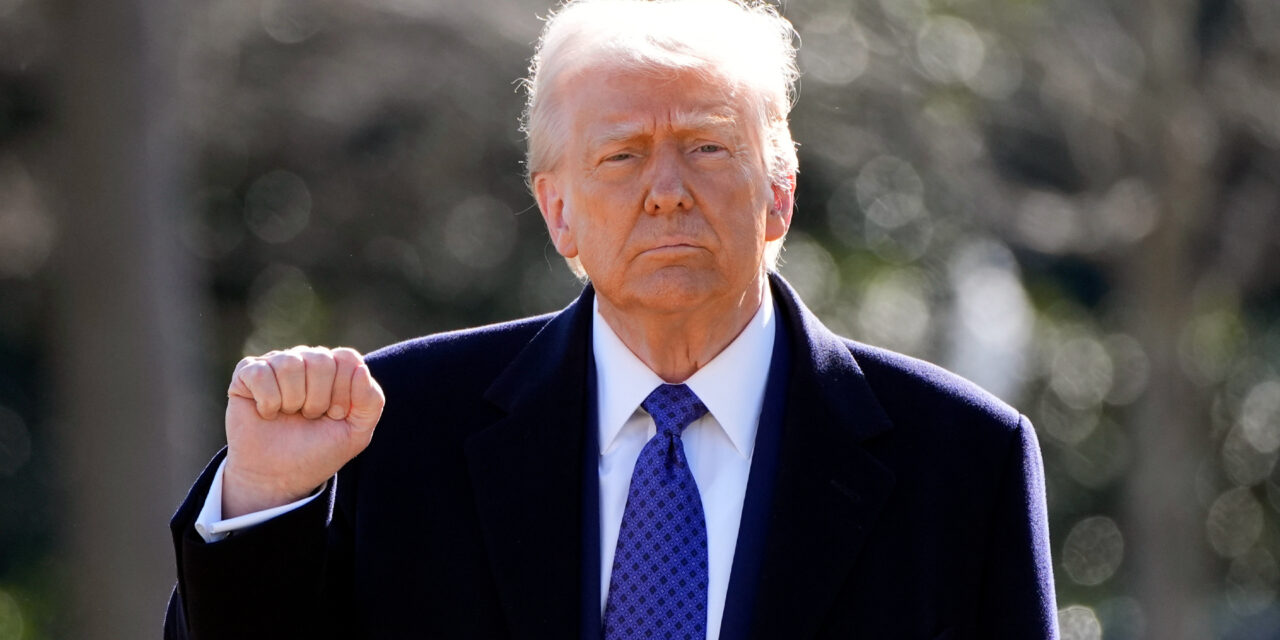
Donald Trump is entering the third week of April 2026 with approval ratings hovering near the lowest sustained levels of his second term, according to a cluster of independent national surveys that paint a consistent picture of a president whose political standing has been significantly eroded by the Iran war’s economic knock-on effects, with some tentative signs of stabilisation but no meaningful recovery.
The most Republican-friendly pollster in regular operation, Rasmussen Reports, had Trump at 43% approval and 54% disapproval in its April 17 daily tracking figure. Its Presidential Approval Index, which measures strong approvers minus strong disapprovers, stands at minus 18. Rasmussen typically produces the most favourable readings of any major pollster for Trump, making those numbers a reasonable ceiling on how his support currently stands rather than a central estimate.
The aggregate picture from broader methodologies tells a more damaging story. The Quinnipiac University poll of 1,028 registered voters conducted April 9 to 13 put overall approval at 38% against 55% disapproval, matching an all-time second-term low in Quinnipiac’s history of tracking Trump. The Economist/YouGov survey ending April 13 found 41% approval against 58% disapproval, down from 43% before the Iran war began. Reuters/Ipsos placed him at 36%. CNN’s SSRS poll found 35% overall, one point off Trump’s all-time low in that pollster’s history. The RealClearPolling average across more than 14 national surveys stands at approximately 41.3% approval versus 56.1% disapproval as of April 17, down from 43.5% before the Iran conflict.
Silver Bulletin’s polling aggregator, run by Nate Silver’s team, placed Trump’s net approval at minus 16.6 on April 16, essentially unchanged from the minus 16.3 recorded when the two-week Iran ceasefire was announced on April 7. The stability of that number over the past week is the most notable recent development in the polling. After a sharp decline in the early weeks of the conflict, the deterioration appears to have stopped rather than continued, but there is no corresponding evidence of recovery either.
The economic numbers embedded in these surveys are the administration’s most acute problem. CNN’s SSRS polling found Trump’s approval on the economy at 31%, a new second-term career low, and his inflation approval at just 27%, down from 44% a year earlier.
Silver Bulletin’s tracker puts his net approval on the economy at minus 22 and his inflation approval at minus 34, both near second-term lows. CNN data analyst Harry Enten noted that Trump’s disapproval rating on inflation now exceeds the comparable figures for both Jimmy Carter and Joe Biden at similar points in their presidencies, a historical data point that carries obvious electoral resonance given the fates of both those administrations.
The war itself has produced some of the worst single-issue polling of Trump’s combined six years in the White House. Quinnipiac found 64% of voters considered Trump’s social media threat that “a whole civilization will die tonight” to be unacceptable language for a sitting president. Only 28% found it acceptable. On a simpler question about the war’s effect on America’s global standing, 45% said the military action had left the country in a weaker position, against 30% who said stronger. YouGov and Economist polling recorded Trump’s Iran handling approval at 30%, down from 39% in early March. CBS News found just 23% of Americans had “a lot” of confidence in Trump to make the right decisions about the conflict.
Among independent voters, the trajectory has been particularly sharp. YouGov and Economist polling recorded Trump’s approval with independents at 22%, down from 31% in early March and 25% in late February. Quinnipiac’s April survey showed a modest technical improvement from the March trough, with independent approval at 27% against 63% disapproval, a net of minus 36. That compares unfavourably to January’s minus 26 among independents but represents the first improvement since the start of the year, which the White House has pointed to as a stabilisation signal. The question heading into November is whether that stabilisation holds or proves fragile if gas prices remain elevated through the summer.
Within the Republican base, the erosion has been meaningful if not yet alarming. The share of Republicans strongly approving of Trump’s performance fell from 52% in January to 43% by April in CNN polling. His economic approval rating among Republicans dropped 14 points across the same period. YouGov and Economist data showed Trump down 5 points to 81% approval among Republicans overall since just before the Iran conflict began, and down 5 points to 92% among self-described MAGA supporters. In a party where governing margins are tight and enthusiasm is operationally important for turnout, even modest softening in base intensity can matter.
Yale University’s Youth Poll, which surveyed 3,429 registered voters in March including 2,008 aged 18 to 34, found large majorities of younger voters disapproving of Trump across every age bracket below 35. Among 18 to 22-year-olds, disapproval stood at 68%. Among 23 to 29-year-olds, 72% disapproved. Among 30 to 34-year-olds, the figure was 75%, a double-digit premium above his overall disapproval level of 57% among all voters 18 and over. The poll found 52% of 18 to 22-year-olds intend to vote Democrat in November’s midterms, rising to 58% among 23 to 29-year-olds and 62% among 30 to 34-year-olds.
The historical precedent is not encouraging for the administration’s midterm position. Presidents whose approval sits below 45% entering their first midterm elections have consistently seen their party lose significant ground in Congress. The House Republican majority, already at 216-213 with at least 36 incumbents not seeking re-election, provides almost no margin before control changes.
The White House has pushed back on the polling narrative by pointing to Trump’s 2024 electoral victory and noting that record stock market highs this week, driven partly by the Strait of Hormuz reopening, could improve the economic picture if sustained. Whether Friday’s oil price collapse and market rally will show up in improved approval data over the coming days is the short-term polling question analysts are watching most closely.
