
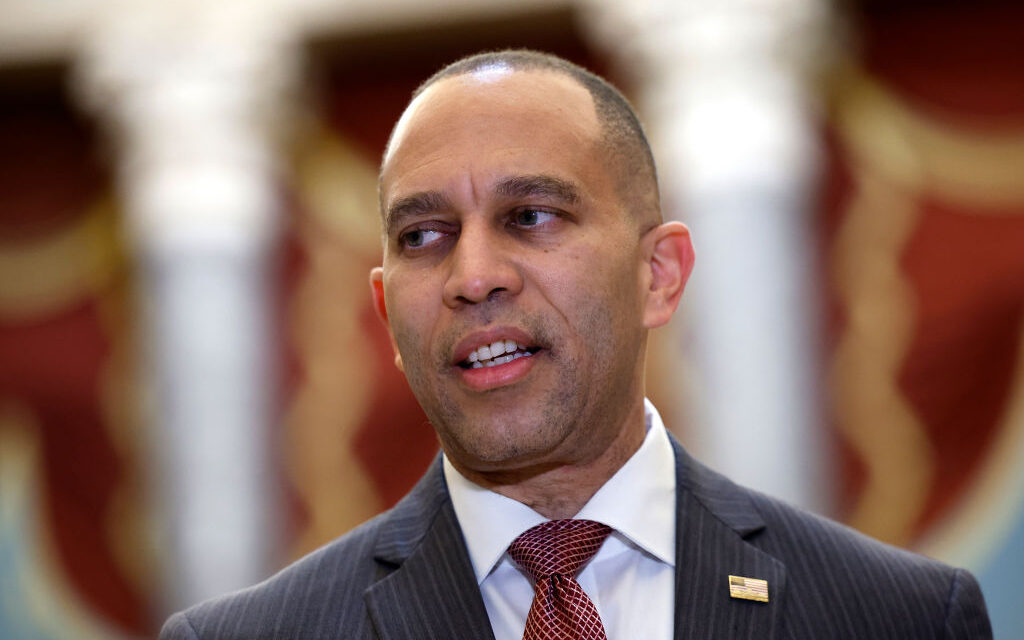
House Democratic Leader Hakeem Jeffries used a Tax Day press conference on April 16 to draw a sharp contrast between Democratic and Republican fiscal priorities, tying the cost of the Iran war to domestic spending cuts in a message that is becoming the central frame for how Democrats intend to run in this November’s midterm elections.
Jeffries opened his remarks by connecting the calendar moment to the legislative record: “Yesterday was Tax Day, and House Republicans decided to celebrate the fact that, in connection with their One Big Ugly Bill, they enacted the largest cut to Medicaid in American history, ripping healthcare away from 14 million Americans.” He cited hospital closures in rural communities, cuts to SNAP food assistance totalling $186 billion, and rising costs across the board as direct consequences of Republican governance. “Republicans are unwilling to spend a dime to make life more affordable,” he said.
The war message has been a constant thread through Jeffries’ communications since February. Appearing on CNBC’s Squawk Box on April 15, he responded directly to a guest who presented the administration’s case for the military campaign. “This reckless war of choice that Donald Trump never came to Congress to get authorized in the first place,” he said, arguing that the administration “has presented no evidence, zero evidence, privately or publicly, that there was an imminent threat to the United States of America in terms of Iran’s ballistic missile capacity.”
Democrats forced a War Powers Resolution vote on April 9 upon the House returning from recess, and Jeffries has pledged to bring another such resolution to the floor. The votes have not cleared Republican opposition in the House, where the party holds a 216-213 majority following the resignation of Eric Swalwell and the death of one Republican member. Every vote in that environment is operationally difficult for leadership on both sides.
The political strategy around Jeffries’ positioning is clear. With gas prices remaining elevated despite Friday’s oil price pullback, the domestic economic impact of the Iran war is a live cost-of-living issue in competitive districts. Democrats believe the combination of war costs, healthcare cuts under the One Big Ugly Bill, and household budget pressure from tariff-driven inflation creates a midterm environment comparable to 2018, when Republicans lost 40 House seats. The 36 Republican retirements announced so far underline how many incumbents have already decided the electoral map is unfavourable.
