
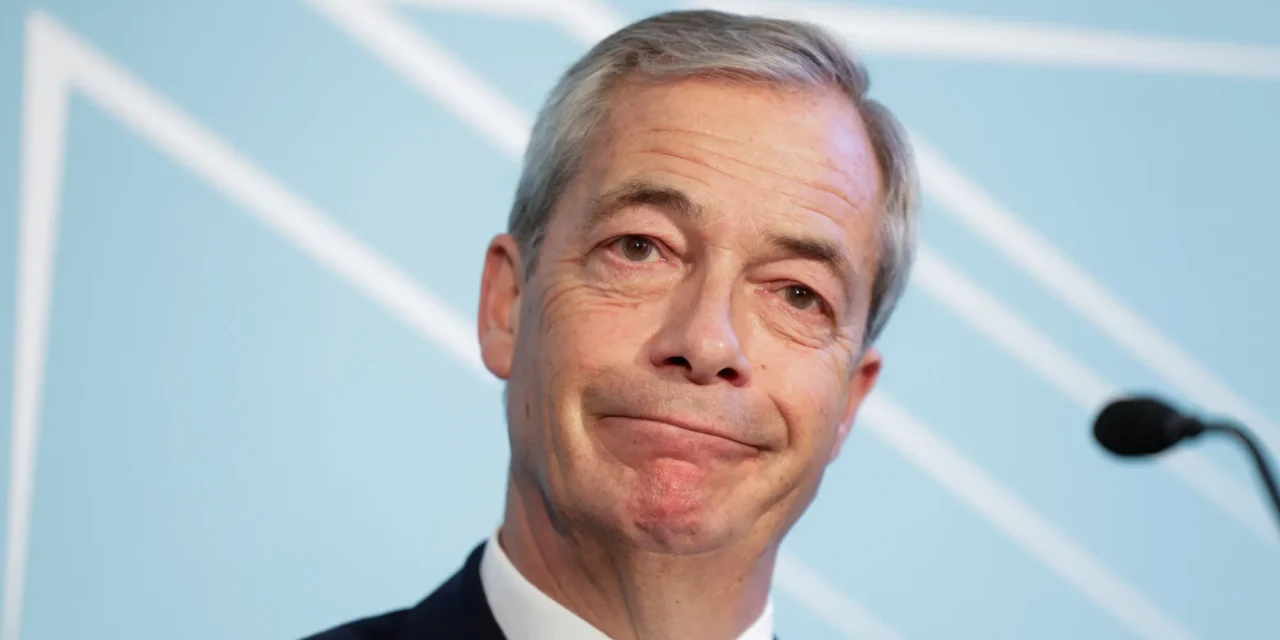
Nigel Farage faced a sharp public broadside from the Cabinet on Sunday after Health Secretary Wes Streeting described the Reform UK leader as a “plastic patriot” whose pattern of travelling to Washington to criticise Britain in front of American audiences was “utterly shameful.”
The intervention came as the government’s plans to transfer sovereignty of the Chagos Islands to Mauritius formally collapsed, with the legislation removed from the upcoming King’s Speech after Donald Trump withdrew his backing for the deal he had initially endorsed — a development that Farage has taken considerable credit for engineering through his lobbying of senior Trump administration figures.
Speaking on Sky News’s Sunday Morning With Trevor Phillips programme, Streeting did not hold back in addressing Farage’s role in the affair. “As for Mr Farage, the extent to which that man, that plastic patriot, is prepared to fly to Washington on a regular basis to slag off his own country to American audiences is utterly shameful, and why we should take his claims to be a patriot with a pinch of salt,” Streeting told viewers.
The Health Secretary also attacked Farage and Conservative leader Kemi Badenoch for initially voicing support for Trump’s aggressive position toward Iran during the conflict, framing both as willing to cheer on American foreign policy regardless of the consequences for British households. “There’s nothing patriotic about cheering on a foreign leader whose illegal war is sending British families’ energy bills through the roof,” Lib Dem leader Ed Davey had said in a similar vein weeks earlier.
Farage’s involvement in the Chagos situation has been sustained and high-profile over several months. In March he attended a “Save Chagos Boat Party” event organised by political outlet Guido Fawkes, where he told attendees: “We think this is the central plan for this government’s foreign policy and we are beating them back. President Trump has almost understood the deal, but I will be dining at Mar-a-Lago tomorrow night and we will reinforce the message.”
The trip that followed produced its own embarrassment — the Financial Times reported that Farage had been invited to Mar-a-Lago by a club member rather than given a formal White House invitation to meet Trump, and when Trump changed his itinerary and chose to remain at Doral, roughly an hour’s drive away, Farage was left without the meeting he had publicly billed.
The substantive argument Farage has pressed — that handing sovereignty to Mauritius would give a non-Western-aligned country effective veto power over the use of Diego Garcia, the strategically critical military base that has supported two Gulf operations and continues to serve as one of the most important US-UK joint assets in the Indo-Pacific — has nonetheless gained considerable traction in Washington. Trump’s pivot from describing the original deal a “monumental achievement” to calling it “an act of GREAT STUPIDITY” closely followed a period during which Farage, alongside Conservative MPs and some American commentators, were actively briefing against it. With Mauritius having called for an immediate ceasefire during the Iran conflict, the case Farage and others had made about alignment risks became more concrete.
For the government, the collapse of the Chagos bill is a significant setback carrying both policy and political costs. Ministers are now engaged in a holding operation — continuing to maintain in principle that the deal serves UK and US interests while acknowledging that proceeding without Trump’s backing is not possible. Wes Streeting, when asked directly on Sunday whether the deal was dead, replied: “We have been clear throughout.
The objective is to make sure that we secure the Chagos Islands for the long-term and for British and American interests.” The phrase was noted as conspicuously non-committal by observers who heard it as a careful way of neither confirming the deal’s collapse nor pretending a live path forward still exists.
The episode illustrates a broader dynamic in British politics that has become defining in 2026: Farage’s access to and influence over Trump-world gives him a lever that no other UK opposition politician possesses, and one that neither the government nor the Conservative Party can easily neutralise.
Whether that constitutes patriotism or the exploitation of foreign influence for domestic political purposes is a debate that Sunday’s exchanges reopened with considerable intensity, and one that is unlikely to be settled before May’s local elections — at which Farage has pledged to spend everything in Reform’s campaign war chest.
