
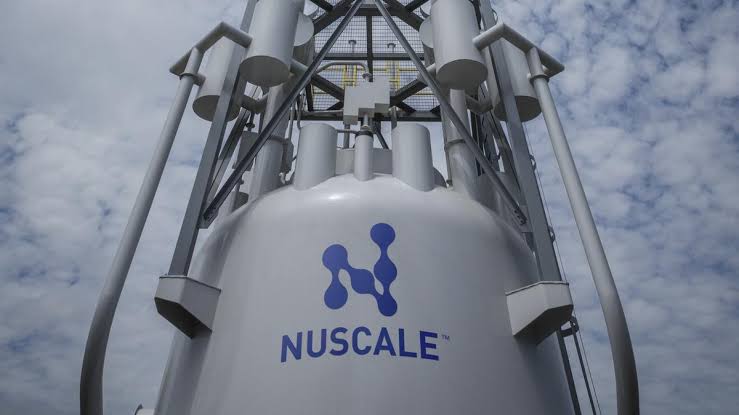
A nuclear company sitting on $1.9 billion in cash reported just $281,000 in third-quarter revenue, and that tension is defining where NuScale Power (NYSE: SMR) goes next.
That Q3 2026 figure, disclosed on November 5, represented a 96.6% collapse from the prior-year period and fell short of analyst expectations, leaving the company without any financial guidance.
Despite the dismal top line, NuScale’s loss of $0.11 per share actually beat estimates, a thin consolation for shareholders who have watched the stock shed 33% over the past month to $3.53.
The shares were trading at $5.27 as recently as October 26, and a 9% midday bounce has done little to close that gap, leaving investors to calculate which price level the stock reaches first.
What the company does hold is a structural advantage that no rival SMR developer can claim: the only design certification issued by the Nuclear Regulatory Commission, a regulatory head start that management argues justifies its long-duration investment case.
CEO John Hopkins framed the quarter in operational rather than financial terms, saying “This was a significant quarter for NuScale as we progressed from development to physical production of our first commercial NuScale Power Module.”
That physical production rests on a fabrication agreement with Doosan Enerbility covering the upper reactor coolant system, the central component of NuScale’s first commercial unit.
The commercial breakthrough investors are actually waiting for is a definitive power purchase agreement between partner ENTRA1 Energy and the Tennessee Valley Authority, though management declined to set a deadline and the deal could drift into 2027.
CFO Ramsey Hamady added a further wrinkle on the November 5 call, noting that “the PPA in itself is not the sale of modules,” since module revenue would only flow through a separate OEM agreement with ENTRA1.
The revenue drought became acute after engineering work on Romania’s RoPower project wound down in late 2025 without a comparable contract filling the gap, exposing how fully the company’s income depends on its partners’ timelines.
Much of NuScale’s $1.9 billion cash cushion was assembled through equity issuances, a funding method that has already diluted existing shareholders and that the company acknowledges could recur given its listed risks around future funding needs and authorized share limits.
Peer performance over the same one-month period puts NuScale’s slide in perspective, with Oklo (NYSE: OKLO) falling a comparatively modest 20% to $20.71 and Centrus Energy (NYSE: LEU) dropping 13% to $85.42.
Oklo’s business model differs fundamentally from NuScale’s, as it plans to own and operate its reactors and sell electricity directly rather than supply hardware through third-party partners.
A customer pipeline of roughly 14 gigawatts, anchored by a 12-gigawatt master power agreement with Switch, underpins Oklo’s commercial story, and structural steel was rising at its Aurora-Idaho site as of November 6, with first commercial power targeted for late 2027 or early 2028.
Centrus Energy, a uranium enrichment business whose fortunes are not tied to any single reactor program, reported Q3 2026 revenue of $55.5 million on November 4 and has an Investor Day scheduled for December 7.
The fact that all three names declined together over the month points to broad sector sentiment doing much of the heavy lifting, while NuScale’s sharper fall reflects risks specific to its revenue gap and partner-dependent commercial structure.
A recovery toward $5 would require ENTRA1 Energy and TVA to finalize their agreement, followed by an OEM order that converts NuScale’s certified design into actual module revenue.
A retreat toward $2 becomes the more probable path if the TVA deal slips into next year, additional equity sales dilute the share count further, and the nuclear power trade remains out of favor with investors.
