
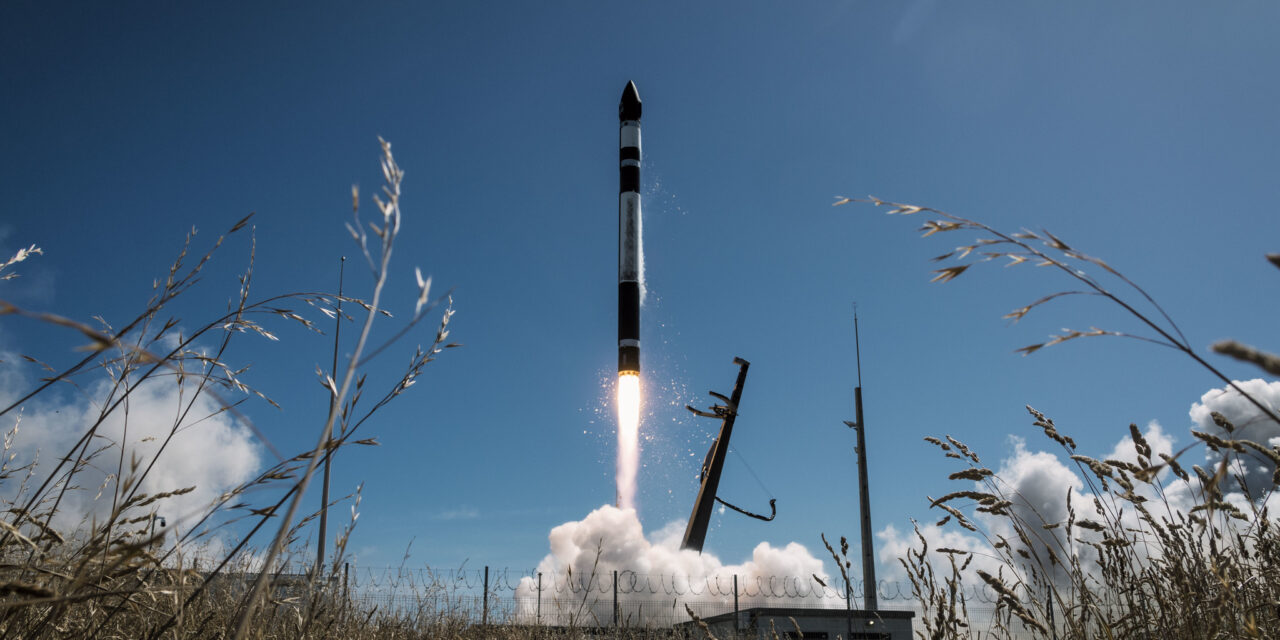
A $3.57 billion order backlog, swollen by 52% since the second quarter alone, has become the most compelling argument for Rocket Lab (NASDAQ: RKLB) bulls heading into next year.
That pipeline dwarfs the company’s projected full-year 2026 revenue of $983 million, underscoring a structural demand advantage that analysts say few space-sector peers can match.
Eighteen HASTE hypersonic test launch contracts won from Space Force Systems Command, combined with selection for the Golden Dome Space Based Interceptor program alongside Raytheon, illustrate the depth of Rocket Lab’s Pentagon relationships.
More than 55 spacecraft are simultaneously in development and build across NASA, the Space Force, and commercial constellation customers, broadening the revenue base well beyond launch services.
Third-quarter revenue of $267.83 million, reflecting year-over-year growth of 72.7%, delivered what CEO Peter Beck described as “a defining quarter for Rocket Lab.”
The company has now surpassed revenue consensus estimates in each of the past seven consecutive quarters, giving analysts confidence that the 2027 forecast of $1.35 billion could prove conservative.
That $1.35 billion figure represents 37% growth over this year’s projection, and the Neutron medium-lift rocket program could push results materially higher if its inaugural launch, targeted for no earlier than 2027, proceeds on schedule.
Sixteen Neutron launches are already reserved at a base price of $70 million each, and management has committed to achieving positive adjusted EBITDA within six months of a successful first Neutron flight.
The fully funded acquisition of Iridium Communications (NASDAQ: IRDM) adds a recurring-revenue satellite constellation to the portfolio, a business model that contrasts with the lumpier economics of launch services.
Electron, meanwhile, has compiled a 96% reliability rate across 99 flights, and management has signaled expectations for higher pricing on both Electron and HASTE contracts as launch supply remains constrained.
Wall Street’s average price target sits at $93.15, implying roughly 88% upside from the recent share price of $49.58, with analyst ratings comprising five strong buys and 13 buys and not a single sell recommendation.
Reaching a $95 share price would require the stock to nearly double, pushing the price-to-sales multiple from roughly 23 times 2027 revenue estimates to approximately 45 times, a premium that demands flawless execution.
The shares have demonstrated the volatility to support such a move in either direction, with a 52-week trading range spanning $39.30 to $151 and a beta of 3.176.
Despite the operational momentum, three headwinds deserve scrutiny: Neutron has faced prior schedule delays, non-GAAP gross margin compressed to 38.4% from 41.9% a year earlier, and 36.8 million shares were issued through at-the-market offerings, diluting existing holders.
The stock is down 28.93% year to date even as its five-year return stands at 219.87%, a divergence that captures the tension between near-term execution risk and the longer-term infrastructure story investors are pricing.
