
Both Oklo Inc. (NYSE: OKLO) and NuScale Power (NYSE: SMR) have shed roughly three-quarters of their value so far in 2026, making the question of which survives as a viable business more urgent than ever.
OKLO has held up marginally better, declining 73.2% year to date against a 76.7% drop for SMR, a gap of only 3.5 percentage points that offers investors little meaningful comfort.
Yet despite that thin outperformance and a significantly larger cash position, OKLO carries only a Zacks Rank of 3 (Hold), while SMR has earned a Rank of 2 (Buy).
The two companies are chasing the same opportunity in supplying reliable electricity to data centers, but they are structured to profit from that market in fundamentally different ways.
OKLO intends to construct and retain ownership of its power plants, collecting revenue by selling electricity to customers once those facilities are operational.
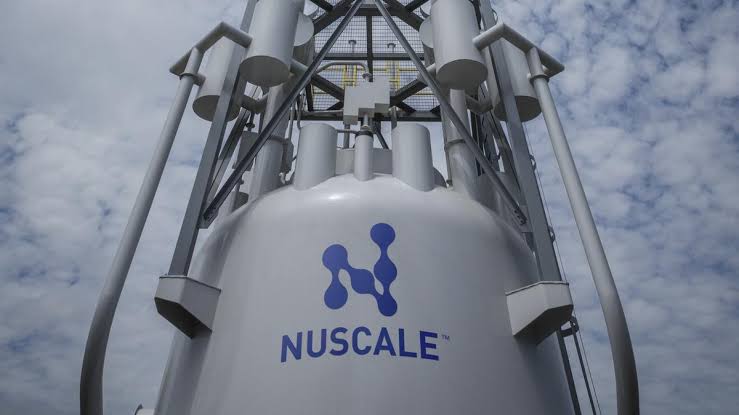
NuScale, by contrast, is positioning itself as a supplier of reactor modules and associated services to utilities and project developers, meaning a signed order is its key commercial milestone, not a running plant.
On the construction front, OKLO has begun structural work at its first Aurora facility in Idaho, after the U.S. Department of Energy approved the preliminary safety analysis, clearing the path for safety-related construction to proceed.
The company still requires a final safety review, a plant-readiness check, and regulatory permission to operate before it can generate a single dollar of electricity revenue from that site.
Beyond Idaho, OKLO has an agreement with Meta tied to an Ohio campus targeting up to 1.2 gigawatts of capacity, a fuel supply arrangement with Centrus, and the Energy Department’s clearance of its Groves-1 test reactor for research and operator training purposes.
OKLO finished the third quarter with $3.1 billion in cash, equivalents, and marketable securities, having raised approximately $2.3 billion through share issuances in the first nine months of 2026 alone.
Operating cash consumption ran to roughly $111 million over that same period, a figure that excludes construction outlays, which are considerable for a company that plans to own every plant it builds.
NuScale reported a far thinner liquidity position of approximately $1.9 billion at the end of September, and its quarterly revenue collapsed to just $300,000 from $8.2 million in the same period a year earlier.
That sharp revenue drop reflects the absence of engineering work for Romania’s RoPower that inflated the prior-year figure, illustrating how a single contract can dominate the top line at this stage of development.
On the manufacturing side, NuScale has engaged Doosan Enerbility to fabricate a key component for its first reactor module, a move intended to surface production issues before any commercial order must be fulfilled.
NuScale’s commercial partner ENTRA1 Energy is still negotiating a power purchase agreement with the Tennessee Valley Authority, while talks with RoPower remain ongoing, leaving the company without a signed anchor order.
Where NuScale gains ground on OKLO is in its earnings trajectory: its per-share loss is projected to narrow 72.8% to 59 cents in 2026, compared with $2.17 in 2025, while OKLO’s expected loss widens 37.5% to 99 cents from 72 cents.
On a price-to-book basis, NuScale trades at 0.72 times compared with 0.98 times for OKLO, meaning NuScale offers a steeper discount to net assets at a time when neither company is generating meaningful profit.
The combination of a lower valuation multiple, a shrinking loss estimate, and NRC-approved reactor designs tips the analytical balance toward NuScale, even as OKLO’s deeper cash reserves give it greater runway to fund development without immediately returning to capital markets.
