
Behind the euphoria of Monday’s neocloud rally, a pointed warning from inside the industry cast a long shadow over the sector’s security standards.
Databricks co-founder Patrick Wendell disclosed that after evaluating several leading neoclouds, he found only a single provider whose safeguards were robust enough to trust with customer workloads.
“At the neocloud layer I’ve spoken to ‘top’ neoclouds that lack basic understanding of tenant isolation mechanisms or physical datacenter security practices,” Wendell wrote on X, raising questions about how well these platforms separate one customer’s data from another’s.
Wendell also flagged a pattern of AI providers pledging not to retain customer data, only to later introduce features that quietly undermined those commitments.
His advice to businesses evaluating the space was direct: “Make sure you understand where your data is flowing and which layer has which responsibilities.”
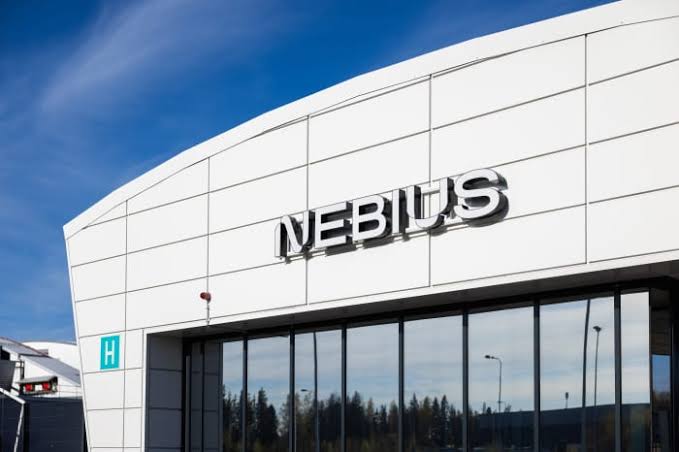
Nebius (NASDAQ: NBIS) emerged as the apparent exception in Wendell’s assessment, having already disclosed in its shareholder letter that Databricks selected its cloud platform, stating the choice “demonstrates our ability to support demanding AI R&D workloads.”
The warnings arrived on the same day that CoreWeave (NASDAQ: CRWV), NBIS, and IREN (NASDAQ: IREN) each climbed more than 20%, fueled by the return of Nvidia’s Jensen Huang as CEO just 11 days after the company had announced his resignation.
IREN led the three-way surge at 24%, with CoreWeave advancing 22% and Nebius posting a 20% gain, while Nvidia itself jumped 32% on the news.
Futurum CEO Daniel Newman captured the mood simply, writing on X: “Good day for the neoclouds. The show must go on…”
Huang’s reinstatement carried particular weight for all three companies because Nvidia has made substantial financial commitments across the neocloud sector, investing $2 billion in CoreWeave (NASDAQ: CRWV) in January and announcing another $2 billion investment in NBIS in March.
With IREN (NASDAQ: IREN), Nvidia structured a five-year option to acquire up to 30 million shares at $70 each, representing a potential $2.1 billion stake tied to chip deployment and regulatory conditions.
Newman noted that by the time the board acted, Nvidia and its broader ecosystem of suppliers, neoclouds, and partners had already shed trillions in market capitalization, and directors voted unanimously to reinstate Huang as president, CEO, and a board member, though an independent investigation continues.
Beyond the Nvidia relationship, CoreWeave holds a $6.3 billion agreement under which Nvidia can purchase computing capacity that CoreWeave has not yet sold to other clients.
Nebius faces its own operational timing challenges, with four new U.S. and European sites beginning to generate revenue in Q3, though a New Jersey facility serving Microsoft was delayed by a transition from temporary to permanent power, with more than half of contracted capacity expected by year-end and the remainder pushed to Q2 2027.
IREN reported quarterly AI cloud revenue of $200 million, up sharply from $71 million, after bringing its first Horizon data center online for Microsoft, though a customer-requested design change and supplier delays shifted its next capacity target from year-end to as late as February, with that capacity representing more than $4 billion in contracted annualized revenue.
A separate argument for the neocloud model came from World Trade Securities CEO Nicholas Mugalli, who pointed out that despite Elon Musk’s public skepticism toward the sector, SpaceX rents computing power to Anthropic and Google, two direct rivals to Musk’s own Grok AI.
Mugalli asked pointedly: “So when someone tells you neoclouds are a bubble, ask them why Elon just became one??”
Musk himself reportedly told SpaceX engineers in an August group chat reviewed by The New York Times: “If you can’t pay for your GPUs, then you either go bankrupt or you become a computer rental company.”
Anthropic’s prospectus added a concrete price to that demand, with the company disclosing it expects to pay SpaceX roughly $3.1 billion per month once it receives all contracted computing capacity, with full delivery anticipated in December.
On Stocktwits, retail traders reflected divided convictions heading into Tuesday, with IREN drawing bullish sentiment on high message volume, NBIS sitting neutral on high volume, and CRWV registering bearish on low volume.
Year-to-date performance tells a mixed story: NBIS is the only one of the three in positive territory, up 17%, while CRWV has fallen 33% and IREN has shed 61% since January.
