
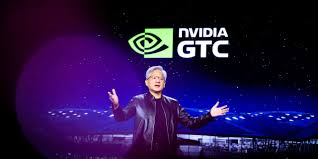
Twelve days was all it took for Nvidia (NASDAQ: NVDA) to reverse one of the most consequential leadership decisions in recent tech history, and the fingerprints of the White House appear to be all over it.
The company’s board voted unanimously to reinstate founder Jensen Huang as chief executive, a stunning reversal that sent shares surging nearly 33% in early trading Monday.
Nvidia’s own statement alluded to Washington’s role in the outcome, an unusually candid acknowledgment that political forces had shaped a private company’s boardroom decision.
EMJ Capital founder and president Eric Jackson argued the China espionage narrative that surrounded Huang’s ouster was a distraction, framing the episode instead as a battle between open-source AI advocates and powerful closed-model frontier labs including Anthropic, OpenAI, and Google.
Secretary Bessent and Howard Lutnick had also reportedly shifted their positions on chip sales to China in recent days, executing what observers described as a complete reversal on the question of severing technology ties with Beijing.
Huang himself struck a measured tone in his reinstatement statement, saying “I am honored to return to Nvidia and lead one of the most consequential technology companies in the world at the beginning of a new industrial revolution. I take this responsibility with the greatest humility and renewed commitment.”
New Street Research technology infrastructure analyst Antoine Chkaiban described the outcome as the best possible result, pointing to a new independent oversight committee and Nvidia’s reported search for a chief compliance officer who will report directly to the board.
Harvey Jones remains board chair under the new structure, and Chkaiban told Yahoo Finance he remains a buyer of Nvidia stock even with shares opening around $160, citing projected earnings of roughly $25 per share in 2028 and a valuation he still considers cheap at below ten times that figure.
The broader AI trade caught a powerful updraft from the news, with Advanced Micro Devices rising 7.12%, Broadcom gaining 3.01%, and Intel jumping 15.46%, though AMD had initially sold off sharply before recovering as investors reassessed the competitive landscape.
Moor Insights and Strategy chief analyst Patrick Moorhead cautioned that the competitive dynamics between Nvidia and AMD are unlikely to shift meaningfully for at least 18 months, regardless of who sits in the chief executive chair.
Ejaz, host of “In the Loop,” highlighted the episode as a stark reminder of key-man risk at a company whose GPU infrastructure underpins virtually the entire AI industry, noting that AI systems had solved significant mathematics and science problems just over the preceding weekend.
Neo-cloud stocks rallied sharply on the reinstatement news, given Huang’s reputation as the most aggressive champion of financing smaller cloud operators, a group that alongside enterprises accounts for roughly half of Nvidia’s total revenue against the top five customers who represent the other half.
The future of chief financial officer Colette Kress, who served as interim chief executive during the twelve-day interregnum, remains an open and uncomfortable question after a board that reportedly kept her in place then bypassed her entirely by restoring the founder.
Julie Hyman of Yahoo Finance raised pointed questions about whether Kress, described by multiple observers as one of the few effective checks on Huang’s spending instincts, would choose to remain at a company whose board had so visibly undercut her standing.
Governance concerns extend well beyond the CFO question, with Yahoo Finance’s Brian Sozzi arguing the board has effectively signaled it functions as a vehicle for its founder rather than as an independent oversight body, and that no succession plan exists for either the chief executive or chief financial officer roles.
Huang is scheduled to testify before three House committees on December 1st, where questions about China relationships and personal conduct are both expected to feature, adding a political dimension to what already promises to be a turbulent return.
Chkaiban projected more than $4 trillion in AI data center capital expenditure by 2030, a figure he said sits at the high end of what Huang himself had guided for roughly a year to eighteen months ago, suggesting the underlying investment thesis remains intact regardless of the boardroom drama.
Jackson, who framed Huang’s return as a win for open-source AI development, pointed to Nvidia’s roughly $20 billion in combined acquisitions of Hugging Face and Poolside as evidence that Huang will return with unfinished business and a sharper sense of purpose after 33 years building the company.
