
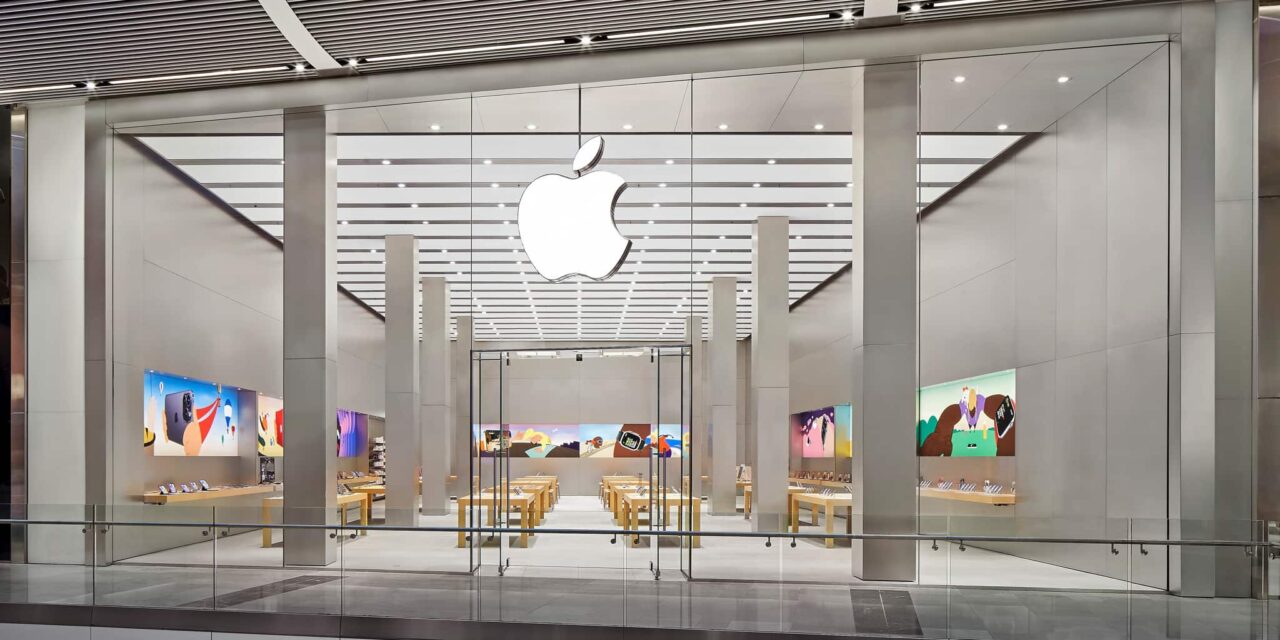
Anthropic (ANT) shares tumbled nearly 5% in late Thursday trading, falling below the floor set during the company’s first session as a public company, after a leaked Apple job posting shook confidence in AI incumbents.
Meta (NASDAQ: META) also slid roughly 1%, while Apple (NASDAQ: AAPL) shares moved higher on the same news, a divergence that widened further into Friday’s session against a weakening Nasdaq-100.
The trigger was a job listing, since removed, that described Apple building “an AI agent that can use a computer the way a capable person does,” capable of browsing the web, working across apps, and writing code.
Bloomberg’s Mark Gurman, who first reported the listing Thursday, later noted on X that “Apple killed the job listing, which is typical when they reveal too much about future plans.”
The deletion did little to contain the signal, as investors quickly read the posting as confirmation that Apple is moving to challenge the AI agent market directly rather than cede it to competitors.
CEO John Ternus, who took over from Tim Cook on September 1, has been pushing software chief Craig Federighi to accelerate development, according to Bloomberg, with a potential product launch targeted for as early as late next year.
The urgency is visible inside Apple’s own App Store, where AI assistants from rival companies now occupy four of the top six free application slots, with Meta’s Muse agent sitting at No. 2.
AMD CEO Lisa Su captured the scale of that competitive pressure when she told Yahoo Finance that Muse had achieved “over 10 million people activating in the span of 45 days — I mean, that’s pretty incredible.”
What makes Apple’s AI push unusual is how little it has spent compared to peers, with capital expenditure falling nearly 30% to around $9 billion in its latest fiscal year, even as Microsoft, Meta, Alphabet, and Amazon collectively deployed more than $600 billion over four quarters.
Rather than build, Apple has largely rented, paying Google roughly $1 billion annually for the Gemini model that now powers a revamped Siri, following a partnership announced in January.
Research spending told a different story, jumping approximately $11 billion in the same period, actually exceeding Apple’s entire capex budget and signaling where the company believes its advantage lies.
An autonomous agent would stress-test that lean model, since agents executing multistep background tasks consume far more computing resources than simple query-and-response interactions.
CFO Kevan Parekh acknowledged the uncertainty, saying Apple is “in very, very early stages of understanding the kind of mix of those costs,” a comment that leaves Wall Street with limited visibility into future infrastructure commitments.
On his first earnings call as CEO, Ternus offered a measured but directional statement about the technology, saying, “As far as agentic capabilities, we think these are promising tools for users.”
Apple has also been tightening its platform controls around rival AI tools, with a forthcoming Mac update set to require users to complete 14 steps to authorize ChatGPT to operate their computer, compared to just four steps currently.
Apple stock has gained nearly 30% in 2026, a run that contrasts sharply with declines of roughly 9% to 13% for Meta and Alphabet, making it Wall Street’s preferred way to gain AI exposure without bearing direct infrastructure risk.
That calculation may be shifting, as Sherwood News analyst Luke Kawa put it plainly to Yahoo Finance: “even if you’re not interested in the AI boom, the AI boom is interested in you.”
