
Two high-growth technology companies with starkly different financial profiles are competing for investor attention as portfolio decisions for 2027 come into focus.
IonQ (NYSE: IONQ), valued at $10 billion, posted revenue growth of roughly 201.9% in fiscal year 2025, averaging an extraordinary 452% year-over-year expansion rate that dwarfs nearly any peer in the technology sector.
Cerebras Systems (NASDAQ: CBRS), carrying a $19 billion market cap, grew fiscal 2025 revenues to approximately $510.0 million, an increase of about 75.7%, with an average annual growth rate of 84%.
Despite IonQ’s faster top-line momentum, Cerebras holds a commanding advantage in liquidity, sitting on $6.4 billion in net cash compared to IonQ’s $0.9 billion, giving it a far longer runway to reach sustained profitability.
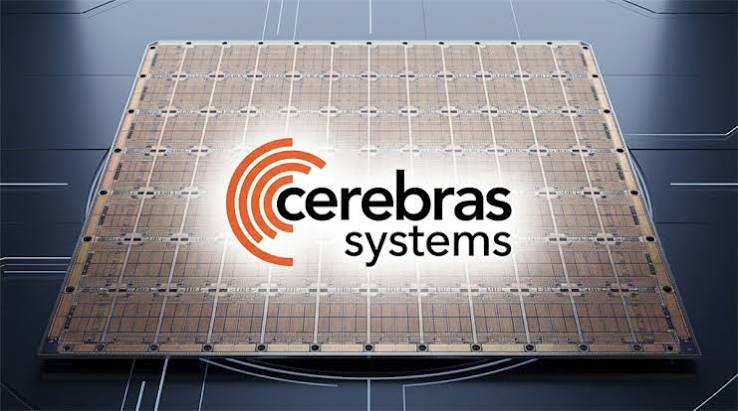
Cerebras builds AI computing systems around the Wafer-Scale Engine, described as the largest processor ever constructed for high-performance computing, serving clients in medical research, cryptography, energy, and agentic AI.
IonQ takes a fundamentally different technological path, deploying trapped-ion quantum computing systems distributed through partnerships with Amazon, Microsoft, and Alphabet to researchers, defense contractors, and logistics firms.
The two companies’ cost structures could hardly be further apart: Cerebras posted a gross margin of 36.39% and net income of approximately $237.8 million for fiscal 2025, while IonQ reported a staggering gross margin of -4,358.78% and a net loss of roughly $510.4 million.
IonQ’s net margin of approximately -392.6% reflects the enormous capital demands of scaling nascent quantum hardware, while free cash flow at both firms remains deeply negative, at -$299.6 million for IonQ and -$392.8 million for Cerebras.
On valuation, IonQ trades at a price-to-sales multiple of 23.6x versus Cerebras at 29.6x, making IonQ marginally cheaper on that measure despite its far loftier forward price-to-earnings ratio of 302.3x against Cerebras’s 81.4x.
Cerebras confronts serious competitive pressure from entrenched chipmakers, while IonQ risks technology obsolescence if rivals including Intel, Amazon, or Microsoft achieve breakthroughs in competing quantum architectures before IonQ can fully commercialize its platform.
IonQ’s balance sheet offers some reassurance, with a current ratio of approximately 15.5x and virtually zero debt, compared to Cerebras’s current ratio of 2.1x and a debt-to-equity ratio of roughly -0.5x.
Weighing revenue velocity against financial resilience, the analytical case ultimately favors IonQ heading into 2027, with its superior growth rate and slightly lower valuation multiple tipping the scales despite the considerable risks that remain for both companies.
