
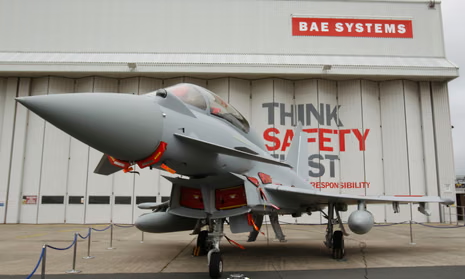
Britain’s biggest defence contractor is eliminating more than 1,070 positions across its head office and air division, exposing a sharp disconnect between government spending rhetoric and industrial reality, according to Sky News.
BAE Systems (LON: BA.L), which fields a workforce of roughly 50,000 across the United Kingdom, confirmed the cuts will target staff within its air sector of approximately 18,500 employees and its corporate head office of around 1,000 people.
The company specified that shopfloor manufacturing workers, personnel maintaining aircraft at RAF bases, and employees on early careers programmes will be shielded from the reductions.
Unite general secretary Sharon Graham delivered a blunt warning in response, stating: “We won’t have a manufacturing industry left if the Government doesn’t start making critical decisions.”
Graham argued that prolonged delays in defence procurement decisions have been quietly pushing companies across the sector toward workforce reductions, with BAE’s announcement arriving just one day after the government celebrated a major expansion of apprenticeships.
The union is pressing ministers to immediately award contracts for British-built Typhoon jets and Collaborative Combat Aircraft, and separately calling on the government to assign the Skynet 6 satellite contract to Airbus, which Graham said would protect thousands of skilled positions in Portsmouth and Stevenage.
An Airbus spokesperson confirmed the company’s position, saying: “Airbus remains fully committed to the Skynet WSS competition and we continue to comply with all requirements and timelines set by the Ministry of Defence.”
BAE itself framed the job cuts as a structural efficiency drive, with a spokesperson explaining the move represents “the next stage of our ongoing focus on enhancing our agility and competitiveness, so we can help to maximise the value of every pound our customers spend on defence.”
The manufacturer, whose product range spans missiles, artillery systems, armoured vehicles, warships, and combat aircraft including the Eurofighter Typhoon and F-35 Lightning II, insisted it would pursue reductions through voluntary means and maintain close dialogue with trade unions throughout the process.
The Ministry of Defence pushed back against criticism, pointing to £4 billion in defence investments secured since July, a £708 million contract extension awarded to BAE to lead Global Combat Air Programme development, and an £8 billion deal to supply Turkey with 20 Typhoon jets that sustains 6,000 jobs across two BAE facilities.
The announcement landed just weeks after the Chancellor and Defence Secretary travelled to BAE’s Glasgow site to unveil new procurement rules requiring overseas firms that win major UK defence contracts to reinvest domestically through job creation, apprenticeships, and supply chain commitments.
Shadow defence secretary James Cartlidge seized on the news, accusing the Labour government of allowing the defence sector to “recede” at a moment when NATO allies are expanding their industrial bases and the government itself has warned of potential conflict with Russia by 2030.
Reform UK defence spokesman Angus MacIntyre also attacked ministers, arguing the losses were preventable had the government honoured its commitment to increase defence expenditure.
The scale of the cuts, affecting roughly two percent of BAE’s total UK headcount, has intensified calls across party lines for a more coherent national strategy linking defence procurement decisions directly to industrial employment outcomes.
