
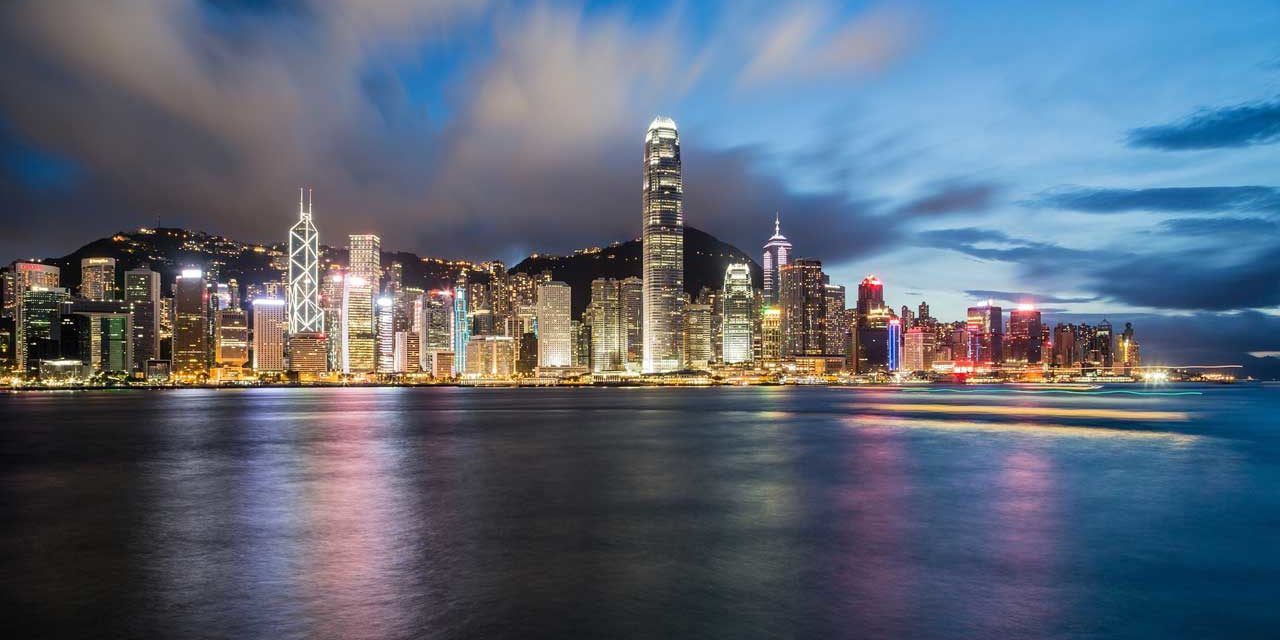
Roughly 600,000 Nvidia H200 chips are warehoused in Hong Kong, cleared by Washington but still awaiting a green light from Beijing that has yet to come.
The White House approved the shipments, yet China’s deliberate silence on import authorization is telling analysts something significant about how Beijing calculates its long-term technology strategy.
Karson Elmgren, research manager at the Institute for AI Policy and Strategy in Washington, draws a pointed conclusion: “To me, this suggests that China does not view short-term advantages as decisive and is confident in its ability to replace US chips over the medium term.”
At $27,000 per unit and with estimated Chinese demand running to 2 million chips, the H200 alone represents a potential $5.4 billion revenue stream for Nvidia (NASDAQ: NVDA), making Beijing’s hesitation all the more striking to outside observers.
The H200 falls short of Nvidia’s highest-performance tier, yet it outpaces competing Chinese products by a meaningful margin, which has made it commercially attractive despite the fraught geopolitical environment surrounding it.
That environment grew considerably more fraught after Jensen Huang’s resignation as Nvidia CEO, triggered by revelations of extramarital relationships, one of which involved a businesswoman whom U.S. authorities suspect of spying on behalf of Beijing.
Huang, 63 and Taiwan-born, had cultivated near-celebrity standing in China and served as a key AI adviser to President Donald Trump during his second term, consistently advocating for fewer restrictions on chip sales to Chinese buyers.
Beijing flatly denied orchestrating any effort to compromise Huang, with Chinese Foreign Ministry spokesperson Mao Ning stating on November 13: “China has consistently opposed the misuse of export control measures that jeopardize the stability of global industrial and supply chains, as this is not in the interest of either party.”
State media outlet Global Times was blunter still, running an editorial that asked: “Jensen Huang cheated on his wife. What does that have to do with China?” — accusing U.S. journalists of constructing a “Hollywood thriller” without “hard evidence to back up the central allegations.”
On Weibo, Chinese users were equally skeptical, with one attributing Huang’s exit to “the result of political maneuvering within the United States” and another dismissing the entire narrative by asking: “Could a love affair really cause Mr. Huang to resign? Isn’t this plot a little too melodramatic?”
The scandal has nonetheless accelerated Washington’s push for tighter controls, with the administration said to be crafting additional restrictions designed to close loopholes that currently allow Chinese firms to obtain advanced American semiconductors.
Those controls operate against a backdrop of systematic Chinese investment in domestic chip alternatives, with military hardware leading the way — the Chengdu J-20 fighter jet and the Dongfeng-41 intercontinental ballistic missile both run exclusively on Chinese-made chips.
Tiantian Wang of the Harbin Institute of Technology argues this approach serves a dual purpose, writing that domestic chips “effectively mitigates the risks of cyberattacks by foreign actors” while also fulfilling a national security imperative she described as “strengthening autonomy and control over national defense and critical infrastructure.”
Wang contends that China has engineered “a closed ecosystem that encompasses data, algorithms, computing power, and chips, thereby reducing systemic dependence on foreign chips such as Nvidia.”
A critical gap remains, however: China still lacks the lithography equipment required to manufacture leading-edge chips at commercial scale, after ASML, the Dutch machinery giant, halted advanced machine exports to Beijing under sustained U.S. pressure.
The Center for Technology and Statecraft warned that had China continued importing ASML systems at the pace it maintained through 2024 and 2025, “its annual production could be sufficient to wipe out much of the US lead and, under certain scenarios, even surpass it.”
Consulting firm Deloitte notes that Beijing is responding with a sweeping capital commitment, with the strategy’s “focus on supporting companies through long-term capital provision and research-oriented incentives to build sustainable innovation in key technologies.”
Vice Premier Ding Xuexiang, who chairs the Communist Party’s Commission on Science and Technology, carries primary responsibility for translating that investment into the kind of technological leap that could, over time, render the chip import debate moot entirely.
The central question facing Ding is whether China can sustain dependence on American silicon long enough to develop domestic alternatives capable of matching them — a calculation that those 600,000 waiting chips in Hong Kong now embody in concrete form.
